
Lieferung heute & morgen

Qualitätsgarantie

Willkommens-Angebote freischalten: KOSTENLOSE Lieferung | Bis zu 80 % RABATT | Kostenlose 30-Tage-JoyPlus-Testphase
App herunterladen
LED wall lights can be used as decorative wall lighting, indirect background lighting or practical outdoor lights. Before you buy, though, it’s worth taking a closer look at installation, the IP rating, controls and power supply. Many models look similar on product pages, but can differ considerably in how they work in practice.
An LED wall light with RGB colours can display a wide range of shades, but that doesn’t automatically mean it can be controlled via an app or voice assistant. Check whether the product specifically mentions an app, remote control or compatibility with Alexa and Google Assistant. Music synchronisation isn’t available with every RGB LED wall light, either.
For balconies, patios and gardens, the IP rating is key. IP65 outdoor lighting is protected against dust and jets of water from different directions. However, this doesn’t mean the light can be kept permanently underwater or installed in any position without protection. When planning where to place solar lights, you should also consider the solar panel, cable, battery and housing.
LED wall light strips and flexible light strips are often attached using double-sided adhesive tape. Dust, textured wallpaper, moisture and uneven surfaces can affect how well they stick. Heavier or rigid lights need suitable wall plugs and screws. Choose the fixings to suit the type of wall rather than basing your decision on appearance alone.
For bedrooms, living rooms, gaming rooms or home cinemas, indoor lights don’t need a specified weatherproof rating. An LED neon wall light, for example, is usually intended as decorative accent lighting. For outdoor areas, look for a clearly stated IP rating such as IP65. Don’t use an indoor light on a balcony or in a garden if the manufacturer says it isn’t suitable.
A smart LED wall light may offer several ways to control it:
A large number of colours alone tells you nothing about app quality, range or connection stability. Check that the light supports your smartphone’s operating system and your existing smart home setup.
Mains-powered models provide a constant power supply, but need a socket or a fixed installation. USB-powered products are easy to position, but need to be charged or plugged in regularly. An outdoor solar LED wall light needs a spot where its panel gets as much sunlight as possible.
Also check:
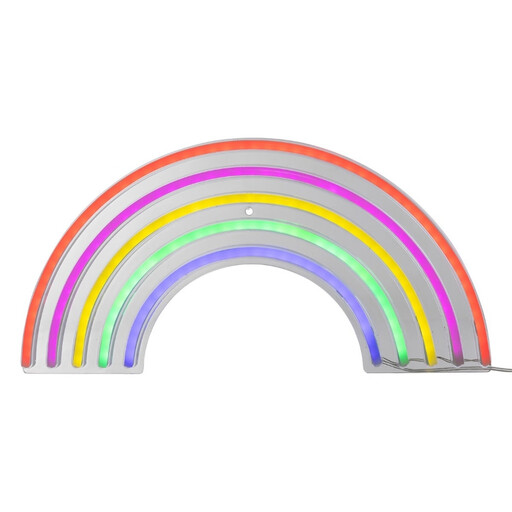
Why this product suits this need: The decorative rainbow design is made for bedrooms and living spaces. Its USB connection means it doesn’t need fixed electrical installation.
The product description clearly states that it’s for indoor use only, helping you avoid installing it somewhere unsuitable outdoors. Choose fixings separately to suit your wall.
38 cm long, with five neon tubes, a 200 cm USB-C cable and a stated LED colour temperature of 4949 K.
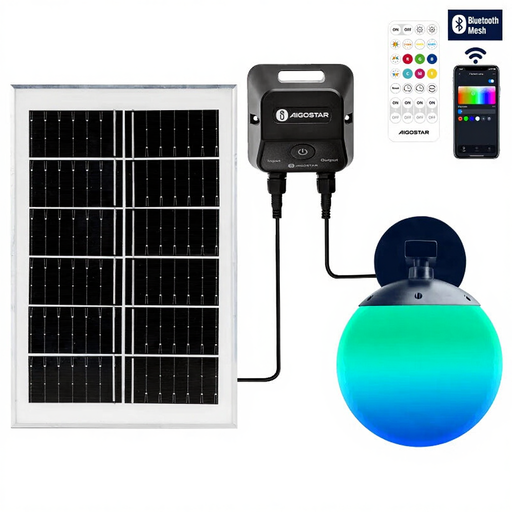
Why this product suits this need: Designed for outdoor areas, this model combines solar power, RGBCCT lighting control and Bluetooth Mesh in a light explicitly described as suitable for outdoor use.
The IP65 rating is specified. The product details also list a 5-metre cable to the solar panel and an operating temperature range of -10 °C to 50 °C.
20 W, 200 lm, RGB plus 2700–6500 K, a 5 W solar panel, a 4000 mAh battery and Bluetooth Mesh for over 200 devices, according to the product details.
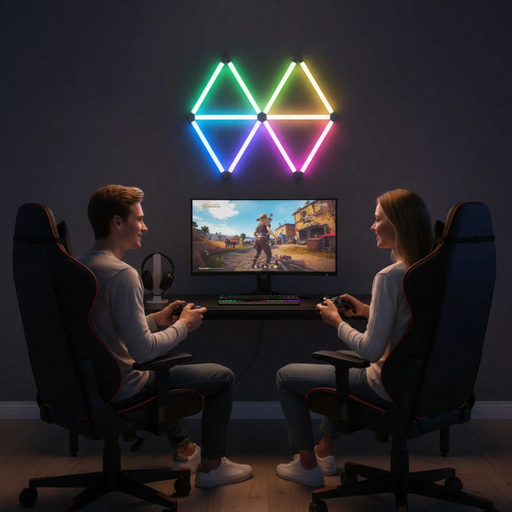
Why this product suits this need: The six flexible LED strips are ideal if you want to customise a gaming room, home cinema, party room or TV backdrop.
App, remote and voice controls are all specifically mentioned. The product description also specifies dry indoor areas and a smooth, dust-free mounting surface.
16 million RGB colours, over 40 dynamic scenes, music synchronisation and support for Smart Life, Alexa and Google Assistant.
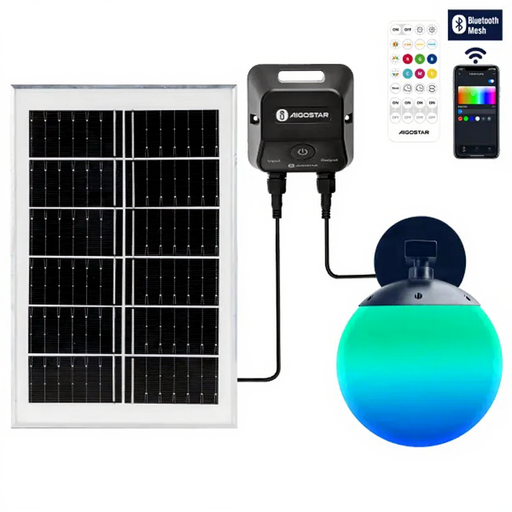
Why this product suits this need: The combination of a solar panel, battery and Bluetooth Mesh is useful if you want to coordinate several outdoor lights without traditional wiring.
The product description specifically mentions the solar panel, 4000 mAh battery and Bluetooth Mesh. Before installation, check that the stated IP rating is sufficient for your chosen location.
RGB plus 2700–6500 K, automatic lighting in the dark, a 5-metre cable and connectivity for over 200 devices, according to the supplier.
We’ve put together a complete, regularly updated list of products that meet these strict selection criteria and fully comply with the safety regulations in force in the EU.
First, check the wall material, weight of the light and fixing points. Adhesive strips are suitable only for appropriate, smooth and dry surfaces. A fixed light needs suitable wall plugs and screws. Outdoor lights should be installed so that water can’t continually get into the connections or housing.
Lifespan depends on the LED module, heat dissipation, operating time, power supply and ambient temperature. One model, for example, is rated for 30,000 hours. These manufacturer figures are guidelines, not a guarantee for every individual use. With solar lights, the battery may also lose capacity before the LED module does.
Energy use depends on power, brightness, operating time and standby consumption. Outdoor solar LED wall lights get their energy from the panel during the day. Switch off mains- or USB-powered models completely if you won’t be using them for a while. Lower brightness and using a timer can help reduce ongoing energy use.