For cooks who need leek rings
If you want distinct strips or rings rather than chopped leek, first check whether a mini chopper is actually the right type of tool.


For chopped leek, you could use an electric or manual mini chopper, depending on whether you have a suitable socket and how much you want to prepare. If you want distinct rings or strips, a knife is the more straightforward choice: the Federal Centre for Nutrition’s guidance explains how to slice prepared leek, while the choppers considered here use chopping blades.
If you want distinct strips or rings rather than chopped leek, first check whether a mini chopper is actually the right type of tool.
If you want to chop vegetables in your holiday accommodation without relying on a dependable power supply, a manual chopper or kitchen knife could be a good option.
For small portions, consider not only the container size but also the appliance’s footprint, storage space and how easy the removable parts are to clean.
A good fit if: You want to chop washed, pre-cut leek using electricity, and your portion is within the working capacity of the specific model.
Things to weigh up: The appliance, cable and removable parts all need space and cleaning. A chopping blade won’t produce evenly sized rings.
A good fit if: You want to chop small quantities without electricity and are happy to operate the pull handle.
Things to weigh up: With the models described, you can influence how finely the ingredients are chopped by pulling repeatedly, but they still won’t produce distinct leek rings.
A good fit if: You want distinct strips or rings, or don’t want to make room for another appliance that you’ll only use occasionally.
Things to weigh up: You’ll do the slicing yourself, but there’s no container, motor or extra appliance to clean.
| What to consider | What to check before buying | Who will find this especially important? |
|---|---|---|
| Cutting style | Chopping or slicing into strips; check which blade or cutting function is actually included. | If you want distinct rings or strips, the cutting style matters more than a chopping appliance. Around 31% of consumers put this question first. |
| Power supply | Check whether a suitable socket is available. For manual appliances, consider how they operate and whether they stand securely. | If you can’t be sure of having a socket in your accommodation, you’ll want to prepare vegetables without a motor. Around 23% of consumers prioritise chopping without electricity. |
| Portion size and storage | Compare the dimensions and the specific model’s stated working capacity with your usual portion. | If you’re preparing a particular quantity and have limited worktop space, both need to suit the appliance. Around 23% of consumers make portion size and storage their main considerations. |
| Cleaning | Check the care instructions for the container, blade and lid separately, and consider what facilities are available where you’re staying. | If you want to minimise handwashing after cooking, check which parts are dishwasher-safe. Around 23% of consumers put cleaning effort first. |
The mini appliances considered here use chopping blades. For strips, the Federal Centre for Nutrition instead recommends slicing the washed leek.
Decide on the cut you want first. If you need distinct rings or strips, stick with a knife unless the appliance specifies a suitable slicing function.
Philips lists a total capacity of 0.7 l for the HR1393/00 and HR1393/90 models, but a chopping capacity of 0.5 l.
Compare your usual portion with the working capacity in the instructions for the specific model, rather than relying on the container size alone.
Some parts of the pull-cord choppers described here aren’t dishwasher-safe: Tefal lists the bowl and blade, but not the lid; Tescoma also excludes the pull-cord lid.
Check the care instructions for each part individually, especially if there’s no dishwasher where you’re staying.
For these examples, the drive lid needs to be cleaned by hand.
The following product ranges offer a point of reference for different container sizes, power options and care requirements. Their inclusion isn’t a blanket recommendation for any of these brands.
The Easy Chop CHP61.100WH is an electric mini chopper with a 500 ml container, according to Kenwood, and two speed settings.
The KÜCHENminis chopper is an electric option with a 0.3 l container, according to WMF.
According to Tefal, the manual 5-Second Chopper K13304 has a 500 ml container and a pull handle.
Bosch lists the MMR08A1 universal chopper as having a 400 W motor, a plastic container, a pulse switch and dimensions of 250 × 195 × 195 mm.
The MZ 400 is a larger electric option with a 1.0 l glass container, according to Rommelsbacher.
These product options are for chopping small quantities of vegetables. They include electric and manual appliances, including options for situations where you can’t rely on a steady power supply. Before use, check the details of any parts that come into contact with food; EU requirements apply to these materials, as explained by EUR-Lex.
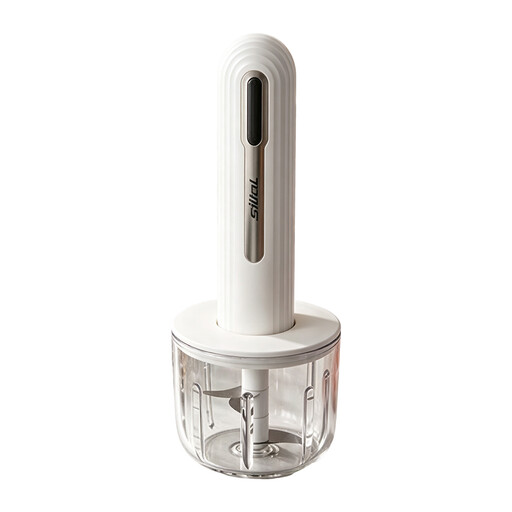 No image available
For chopping vegetables without a socket; the appliance is described as cordless and rechargeable.
The product description recommends short operating intervals.
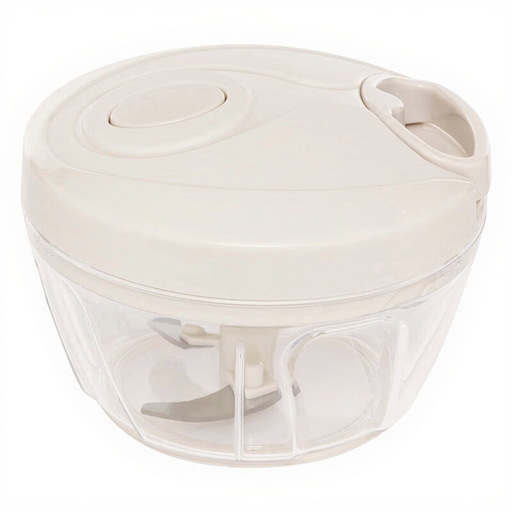 No image available
For small quantities of vegetables without electricity; the product description says you can influence how finely ingredients are chopped by pulling the handle.
Manual pull mechanism, stainless steel blades and transparent container.
 No image available
For chopping different quantities of vegetables electrically; according to the product details, the set includes two containers and two sets of blades.
0.6 l and 2 l glass containers, two speeds and 300 W. The containers and lids are not heat-resistant or microwave-safe; avoid temperature changes of more than 50 °C.
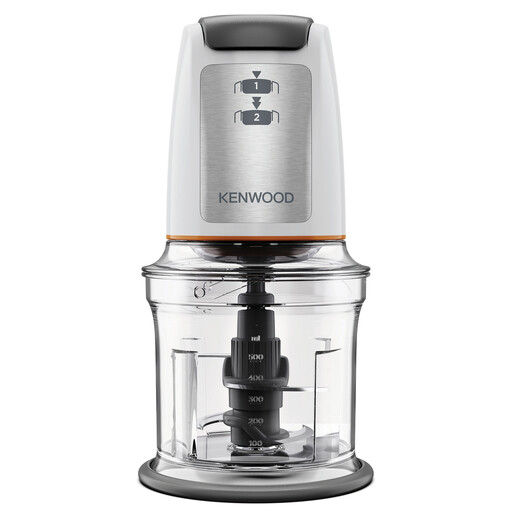 No image available
For smaller quantities that you want to chop electrically, with the option to adjust the speed setting.
0.5 l container, two speed settings and 500 W.
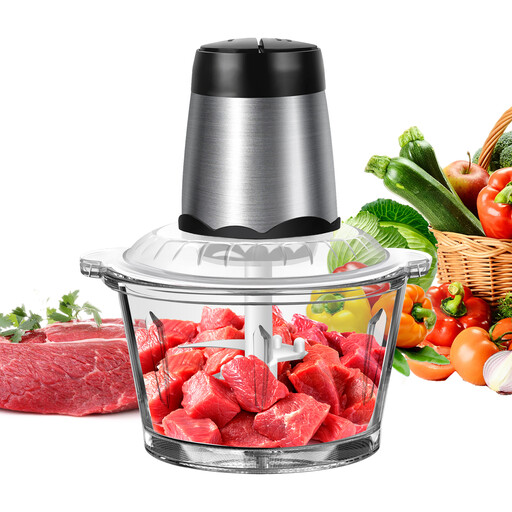 No image available
For chopping vegetables electrically if you’re considering a larger container.
2 l glass bowl, stainless steel blades, two speeds and pulse function; removable parts are described as dishwasher-safe.
Yes. The Federal Centre for Nutrition recommends removing the root end and any coarse outer leaves, halving the leek lengthways, fanning it out and washing it under running water. For strips, it recommends slicing the green parts more finely than the white parts.
Not without checking the instructions for the specific model. For the HR1393/00 and HR1393/90, Philips distinguishes between a total capacity of 0.7 l and a chopping capacity of 0.5 l; this doesn’t tell you how much leek the appliance has been tested to process.
Not in the examples described here. For the K13304, Tefal lists the bowl and blade as dishwasher-safe, but not the lid. Tescoma also excludes the pull-cord lid on its HANDY model. Always follow the instructions for your specific model.
Your statutory rights are generally against the seller, and are separate from any voluntary guarantee. If a product is faulty, the first step may be to ask for it to be repaired or replaced. The Verbraucherzentrale explains the difference; for your specific purchase, the seller, purchase date and terms and conditions will all matter.
EU requirements for food-contact materials apply to parts that come into contact with food. Electric models that fall within the scope of the EU Low Voltage Directive must also meet its safety and conformity requirements, including CE marking. These requirements don’t automatically apply to manual appliances, and a product’s name alone doesn’t establish that it complies.