Families cooking with several pans
You want to make leek soup and side dishes at the same time. Check how many cooking zones you can use at once and whether they suit the bases of your pans.


For leek soup and side dishes, a hob with enough zones for simultaneous cooking makes sense. Whether a built-in model or a portable hob is right for you depends on your available space, connection and how you plan to use it. Induction is an option if your soup pot has a suitable magnetic base; otherwise, a conventional electric hob or a suitable portable hob may be the right choice.
You want to make leek soup and side dishes at the same time. Check how many cooking zones you can use at once and whether they suit the bases of your pans.
You need an extra or occasional cooking spot and are comparing portable single and double hobs by their footprint and connection type.
You want to keep using your large pot. If you choose induction, check that the base material and diameter are suitable for the cooking zone.
A good fit if: you have a suitable space for a built-in hob and often cook several things at once using induction-compatible pans.
Bear in mind: the cut-out and connection must suit the specific model, and your existing cookware may not be induction-compatible.
A good fit if: you’re looking for a built-in hob and don’t want to choose your soup pot based on induction’s material requirements.
Bear in mind: heating technology, zone shape, installation dimensions and connection vary by model.
A good fit if: you’re not planning a permanent installation or need an extra cooking spot from time to time. A double hob can accommodate two pans.
Bear in mind: portable induction still requires suitable cookware; check the available space and connection details before buying.
A good fit if: you’re looking for an occasional cooking spot and don’t want to choose your pot based on induction requirements.
Bear in mind: allow for the space you’ll need and the number of plates you can use at the same time.
| What you need | What to check when buying | Who it matters most to |
|---|---|---|
| Space for several pans | Make sure the number of usable zones works for your soup pot and side dishes. Bosch lists four cooking zones and two flexible zones for the PXX675DC1E. | If I’m cooking soup and side dishes at the same time, I want room for several pans at once; around 33% of consumers would prioritise having enough cooking zones. |
| Built-in or portable use | For a built-in model, check the cut-out and connection requirements for the exact model. Siemens lists niche dimensions of 560 × 490–500 mm for the EX675LXC1E and says it has no plug and must be connected by a qualified electrician; Severin specifies a Schuko plug for the DK 1031. | If I don’t have a permanent space for a hob or need an extra cooking spot, I want to choose a suitable design and connection; around 25% of consumers would make this a priority. |
| A suitable soup pot | With induction, check the base material and diameter, not just the top rim of the pot. Rommelsbacher lists a 120–230 mm cooking zone for the CT 2010/IN. | If I want to keep using my existing soup pot, I want to check that it’s suitable for the heating technology I choose; around 25% of consumers would put pan compatibility first. |
| Controls and safety | Check whether the specific model has the locking and control features you want. Electrolux describes a child lock and locking function for the CIB60424CK. | If I want to avoid accidental changes while cooking for the family, I look for straightforward controls and suitable locking functions; around 17% of consumers would make this a priority. |
A ceramic-glass surface alone doesn’t tell you whether a hob uses induction or another type of electric heating. The actual heating technology is what matters when choosing a soup pot.
Check the details for the exact model to see whether it explicitly states induction or another type of heating.
The appliance width, cut-out dimensions and connection type are different specifications. Siemens states that the EX675LXC1E has no plug and must be connected by a qualified electrician.
Before you decide, compare your existing cut-out and connection with the installation instructions for the exact model.
An unsuitable cut-out may need to be altered; an appliance without a plug must be connected correctly by a professional.
An available zone won’t help if the base of your pan isn’t compatible with the heating technology, or if you don’t have enough worktop space for a portable hob.
Plan for the pans you’ll use at the same time, including their base diameters, as well as the space available for the hob.
Built-in induction for households comparing the number of cooking zones and flexible areas on a specific model.
Built-in induction with model-specific installation and connection details, such as those for the EX675LXC1E.
Built-in hobs, including conventionally heated electric models such as the T16SDF9L0.
Portable hobs, including the DK 1031 double induction hob and the DK 1014 double cast-iron hob.
Portable single-zone induction for a soup pot or as an extra cooking spot, such as the CT 2010/IN.
The Joybuy options below are built-in hobs for cooking with several pans. For ceramic-glass models, check the heating technology of the specific model, as the surface alone doesn’t determine it.
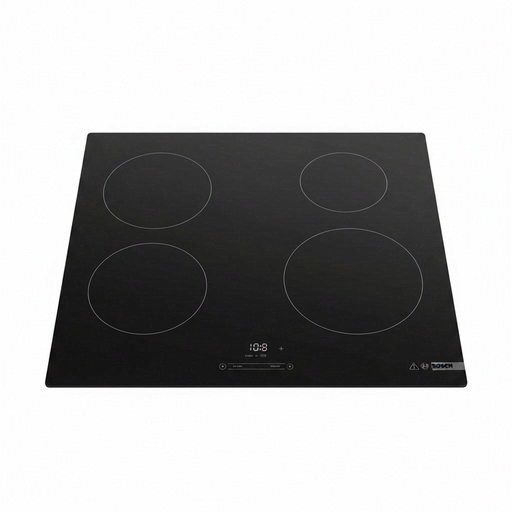 No image available
An option if you’re looking for a built-in induction hob; your cookware must be suitable for induction.
Before buying, check the installation dimensions and connection details for the specific model.
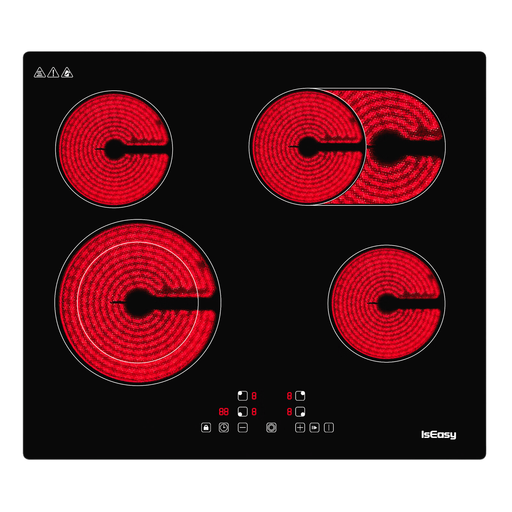 No image available
The product name lists four zones for cooking with several pans. Before installation, check the exact heating technology, cut-out dimensions and connection requirements.
The product name also specifies 6600 W.
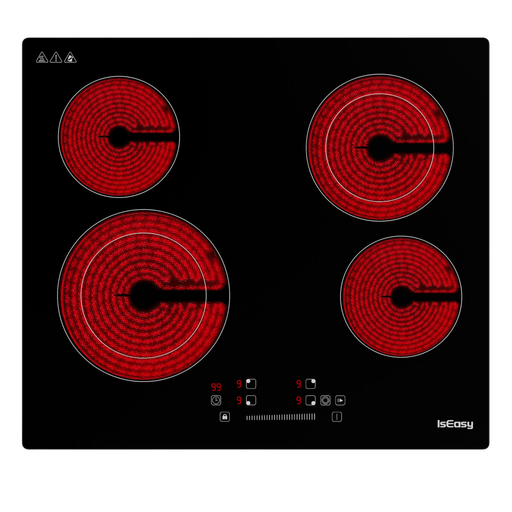 No image available
The product name lists four cooking zones, including dual-circuit zones. Check that the heating technology and installation dimensions suit your kitchen and cookware.
The product name also lists 6600 W and nine power levels.
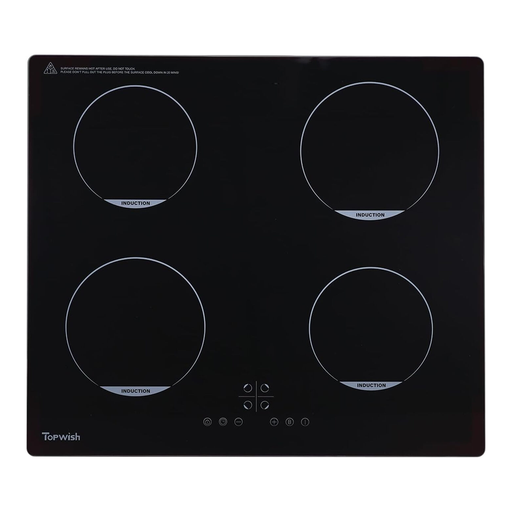 No image available
An option for cooking with several pans if a built-in model suits your kitchen and your cookware is suitable for induction.
The product name lists touch controls, Boost and a child lock. Check the cut-out and connection details for the exact model.
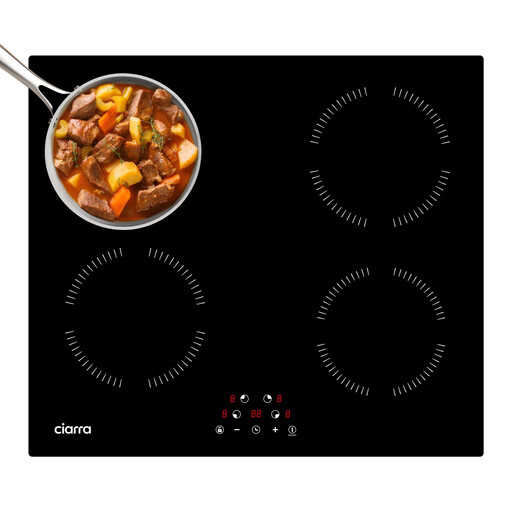 No image available
Designed for cooking with several pans at once; with induction, their bases must be suitable.
The product name lists nine power levels and a child lock. Before choosing, check that the cut-out and connection suit the specific model.
Only if the base is suitable for induction and its size matches the cooking zone. Measure the base, not just the top rim of the pot. With stainless steel, suitability depends on the specific construction of the base.
Compare the dimensions of the existing cut-out and the connection details with the documentation for the exact model. Appliance width and cut-out dimensions aren’t the same; a model without a plug may need to be connected by a qualified professional.
For work on electrical installations, § 13 (2) of the Low Voltage Connection Ordinance states that, apart from the network operator, only an installation company registered in a network operator’s installer register may carry out the work. This is different from a portable hob that is explicitly supplied ready to plug in.
No. An induction hob can also have a ceramic-glass surface. Check the stated heating technology of the specific model before deciding whether your pot can be used on it.
The name of a keep-warm function doesn’t tell you the temperature throughout the soup or guarantee that it’s safe. The German Federal Institute for Risk Assessment recommends keeping heated food at a temperature of at least 60 °C throughout until it is eaten; this doesn’t demonstrate the performance of any specific hob.