If you’re making leek soup in one pot to serve for several lunches, a portable single hotplate is a natural place to start. Induction is a good choice if the base of your pan is compatible with the specific appliance; if you want to use existing cookware that isn’t induction-compatible, consider a conventional electric hotplate. A double hotplate or built-in hob makes most sense if you regularly cook two things at once and have the space and suitable connection.
Which type of hob is right for you?
Batch-cooking soup in one pot
If you’re making several lunch portions one after another in the same pot, you’ll need a suitable hob with easy-to-use settings for bringing the soup to the boil and then simmering it. You don’t necessarily need a second cooking zone.
Making use of the pans you already own
If you want to keep using your current soup pot, check its base and the pan-size range specified for the model before choosing a type of hob.
Cooking two things at once
If you regularly have another dish on the hob while making soup, two usable cooking zones are important. Take into account the space available, the connection and, for a built-in appliance, your kitchen plans.
What to look for when buying
| What matters |
What to check |
Who it matters most to |
| Simmering after bringing to the boil |
Check whether the power can be turned down appropriately on the specific model. The presence of power levels or a timer alone doesn’t tell you what temperature the soup will reach. |
When I simmer soup after bringing it to the boil, I want to be able to use a lower setting easily. Around 33% of consumers put heat control when simmering first. |
| Continuing to use an existing pan |
Check the base and diameter of your pan against the requirements of the hob in question. Induction requires a suitable ferromagnetic base. |
If I want to keep using my soup pot, the hob needs to work with it, rather than forcing me to buy new cookware first. Around 25% of consumers prioritise compatibility with their existing pan. |
| Cooking two things at once |
Consider whether you’ll actually use two pans at the same time. Compare the extra space required and the connection requirements for a double hotplate. |
If I regularly prepare a second dish alongside the soup, I need two zones I can use at the same time. Around 25% of consumers prioritise being able to cook two things at once. |
| Space and connection |
Check the dimensions, intended location and connection requirements for the specific model. A built-in hob isn’t automatically a portable, plug-in solution. |
If I’m choosing between a portable hotplate and a permanent built-in hob, the space and connection need to suit my kitchen. Around 17% of consumers prioritise space and connection. |
Common buying mistakes to avoid
-
Choosing induction based on the cooking zone alone
With the single induction hotplates we looked at, you’ll need a suitable pan base and a pan that falls within the size range specified for the model. If your pan isn’t compatible, you may not be able to use it as planned.
Check the base and diameter of your soup pot against the specifications for the model you’re considering. If it isn’t suitable, compare it with a conventional electric hotplate.
-
Automatically choosing two zones for one pot of soup
A second zone is only useful if you’ll actually use it at the same time. The Severin portable double induction hotplate we looked at has a stated total output of 3400 W and needs more counter space than a single hotplate.
Choose based on how many pans you’ll have on the hob at once, not how many lunch portions you’re preparing.
-
Assuming a timer or keep-warm setting means food is safe to store
An appliance setting doesn’t tell you what temperature the soup reaches throughout. The Federal Institute for Risk Assessment warns of the risks of inadequate cooling during transport and storage.
Plan how you’ll chill portions for later and keep the soup cool in transit. If you keep the soup hot, the Federal Institute for Risk Assessment recommends keeping it at a minimum of 60 °C throughout until it’s eaten.
-
Planning to use a built-in hob as a portable hotplate
According to Bosch, the NIF645CB5E model must be used with a suitable built-in cooker. It comes without a plug and is intended to be connected by a qualified electrician.
Before ordering, check the exact model variant, installation dimensions, cooker compatibility and connection requirements.
Selected models from well-known brands
Rommelsbacher
The CT 2020/IN is a portable single induction hotplate. The details below refer to this model.
- Rommelsbacher lists 10 power levels, a switch-off timer and a cooking zone with a diameter of 120–230 mm.
- The pan must have a ferromagnetic base. The stated settings don’t demonstrate how accurately the appliance controls heat when simmering.
CASO Design
The ProMenu 2100 portable single induction model has documented settings and pan-size specifications.
- CASO lists 12 power levels, a timer from 1–180 minutes and a suitable pan size of 12–24 cm.
- These manufacturer specifications don’t provide an independent comparison of how well the appliance simmers.
Severin
The DK 1033 and DK 1042 are examples of two different types of portable double hotplate.
- According to the manufacturer, the DK 1033 has two induction zones and a total output of 3400 W. The DK 1042 has two conventional heating rings with separate controls.
- These features apply to the models named and can’t automatically be assumed to apply to other Severin hotplates.
Bosch
The NIF645CB5E is a built-in induction hob, not a freestanding hotplate.
- Bosch lists four induction zones.
- According to Bosch, the model must be used with a suitable built-in cooker. It comes without a plug and is intended to be connected by a qualified electrician.
Joybuy products for different cooking needs
The Joybuy products below include single and double hotplates, as well as a model specifically described as a built-in appliance, to suit different cooking needs.
 No image available
Induction hob with two cooking zones
The two zones are worth considering if you regularly want to prepare another dish alongside your soup.
The product title lists five temperature settings, as well as keep-warm, boil and simmer functions.
View at Joybuy
 No image available
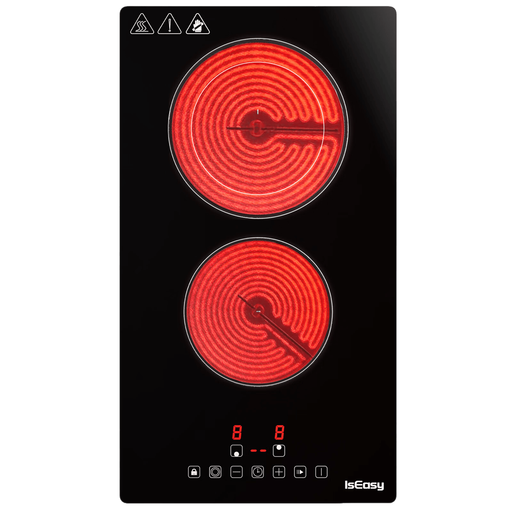
2-zone ceramic hotplate, 3200 W
Two zones are a good fit if you want to have soup and another dish on the hob at the same time.
The product title lists 3200 W, nine power levels, a pause function, child lock and overheating protection.
View at Joybuy
 No image available
DTL06 infrared hotplate, 3500 W
This portable infrared hotplate is worth considering if you’re looking for a cooking appliance that works with heat-resistant cookware made from different materials.
The product details list a timer, touch controls and a rotary knob. According to the product description, the appliance is designed for indoor and domestic use.
View at Joybuy
 No image available
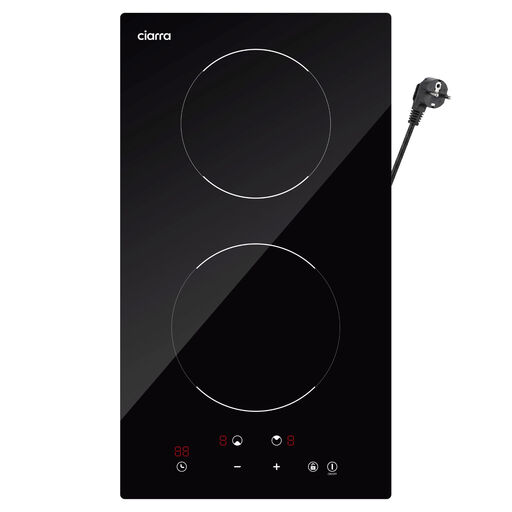
CIARRA CRGDBIH2 built-in induction hob, 3000 W
As a built-in model, it’s an option if you want to integrate two cooking zones into a suitably planned kitchen.
The product title lists 3000 W, nine power levels, touch controls and a timer. According to the product description, installation should be carried out by a qualified professional; the stated cut-out size is 270 × 490 mm and the fuse rating is 16 A.
View at Joybuy
 No image available
Ochama induction hob, 2000 W
This portable single hotplate is an option if you’re making leek soup in one pot and want a portable solution.
The product details list 10 power levels and six functions, including a soup function. According to the product description, magnetic cookware is required.
View at Joybuy
Frequently asked questions
Is one cooking zone enough for several portions of leek soup?
Yes, if you make the portions one after another in a suitable pot and don’t need to cook anything else at the same time. More portions alone don’t call for a second zone; the size of your pot must be within the range specified for the appliance.
Can I connect a built-in induction hob like a portable hotplate?
No, you can’t assume that will be possible. According to Bosch, the NIF645CB5E must be used with a suitable built-in cooker. It comes without a plug and is intended to be connected by a qualified electrician. Check the installation and connection requirements for the model you choose.
How should I store soup for later in the week?
Keep portions for later refrigerated, and make sure you can keep them cool during transport too. The Federal Institute for Risk Assessment warns of the risks of inadequate cooling during transport and storage. If you keep food hot instead, it recommends maintaining a temperature of at least 60 °C throughout until it’s eaten. A timer or keep-warm setting on the hob doesn’t confirm that the food has reached this temperature.
What does the CE mark tell me about a hob?
According to the Federal Network Agency, the manufacturer uses the CE mark to declare on its own responsibility that the relevant requirements have been met. It isn’t an independent quality mark, so also check the product identity, manufacturer’s information and instructions supplied with the appliance.


