For regular batch cooks
If you freeze several portions at a time, check the freezer capacity and container sizes against the space available. The consumer advice centre recommends a suitably large freezer if you often freeze large quantities.


If you regularly want to freeze portions of soup, you’ll need a suitable four-star freezer compartment or a separate freezer; a standard ice box won’t do. Compare fridge and freezer capacity separately, then choose between a fridge freezer and two separate appliances based on how much space you have for each. The German Federal Institute for Risk Assessment recommends dividing large quantities of soup into shallow portions to cool them down — no appliance feature can replace this step.
If you freeze several portions at a time, check the freezer capacity and container sizes against the space available. The consumer advice centre recommends a suitably large freezer if you often freeze large quantities.
If you mainly chill soup for meals over the next few days, easy-to-reach fridge space and room for shallow containers are important. The German Federal Institute for Risk Assessment recommends cooling leftovers to below +7 °C within a few hours and eating them within two to three days.
If floor space is limited, check the appliance dimensions, door clearance, and fridge and freezer capacities separately. The consumer advice centre and manufacturers list these figures separately; the total capacity alone won’t tell you how much room there is for your portions.
Right for you if: You already have a suitable freezer and mainly need fridge space for portions that have cooled down.
Things to consider: Factor in the energy use and the space both appliances actually take up.
Right for you if: You occasionally freeze a few portions and space is limited.
Things to consider: Check the freezer capacity and container dimensions; a small compartment may not have enough room for larger quantities.
Right for you if: You regularly use both fridge and freezer space and want to install just one appliance.
Things to consider: The fridge and freezer share the total capacity, so compare their capacities in litres separately.
Right for you if: You often freeze larger quantities at once and have room for a separate appliance.
Things to consider: You’ll need space for two appliances; compare their energy requirements and annual consumption.
| Buying criterion | What to look for | Who is it important to? |
|---|---|---|
| Chilling soup | Check the fridge capacity and shelves against the size of your shallow containers; monitor the actual temperature during use. | If I want to cool several portions quickly and store them for the next few meals, usable fridge space matters to me. Around 36% of consumers put short-term chilling first. |
| Freezing portions | Check the four-star rating, freezer capacity and drawer dimensions; for larger batches, also check the freezing capacity in kg/24 h. | If I want to stock the appliance with several portions I’ve made, the compartment needs to be suitable and large enough. Around 29% of consumers put freezing batches first. |
| Space requirements | Measure the height, width, depth and door clearance where the appliance will go; take separate compartment capacities, shelves and drawers into account. | When kitchen space is limited, I want to know whether the appliance will actually fit and whether my containers will fit inside it. Around 21% of consumers focus first on the space it takes up and the compartment layout. |
| Energy use and maintenance | For appliances of a suitable size, compare annual consumption in kWh; consider NoFrost if you’d like to reduce maintenance. | If the fridge space and freezer function meet my needs, I can give more weight to energy use. Around 14% of consumers put running costs first. |
The right balance depends on how much soup you need to chill first and how much you want to freeze. A large total capacity doesn’t tell you how much space is available in each compartment.
Compare the fridge and freezer capacities in litres separately, and check whether your containers will fit on the shelves and in the drawers.
A freezer compartment that’s too small may not have room for all the portions you plan to store; an oversized appliance could use more electricity than necessary.
For freezing food you’ve prepared yourself, the consumer advice centre recommends looking for a four-star rating. The words ‘ice box’ alone don’t confirm that a compartment is suitable for this purpose.
Check the star rating and usable space, or plan for a suitable separate freezer.
A compartment that isn’t suitable or is too small may mean you can’t freeze your home-cooked portions as planned.
NoFrost prevents frost from building up inside the appliance; quickly cooling large quantities of soup is still a separate step. The German Federal Institute for Risk Assessment recommends using several shallow dishes.
Divide large quantities into shallow portions to cool them down, and consider NoFrost separately as a maintenance feature.
A comparison updated by F.A.Z. Kaufkompass in July 2026 named the Siemens KG39N2IAF iQ300 and the Miele KFN 4898 A-10 D. Siemens and Miele now list these models as unavailable on their German product pages.
Check the full model name and current product details; a similarly named model isn’t necessarily the same product.
The KGN39EXCF is an example of a freestanding fridge freezer with separate capacities listed for each compartment.
The KGN 52Vb03 is an example of a fridge freezer with published external dimensions and NoFrost.
The RB53DG706AB1EF is an example of a wider freestanding fridge freezer with a large total capacity.
The KG39N2IAF iQ300 is a documented example showing separate compartment capacities and annual energy consumption.
The KFN 4898 A-10 D is an example of a fridge-freezer concept described by Miele as featuring Freeze&Cool.
The selection includes fridge freezers for different space and storage needs, as well as a mini fridge for small amounts of chilled food. If you want to freeze portions of soup, you’ll also need a suitable freezer; the mini fridge isn’t a freezer.
 Image unavailable
The separate compartments make it easier to plan how much fridge and freezer space you’ll need for several portions.
Total capacity 333 l; 220 l of fridge space and 113 l of freezer space. Features listed include Total No Frost and energy efficiency class C.
It has three fridge shelves and three freezer drawers.
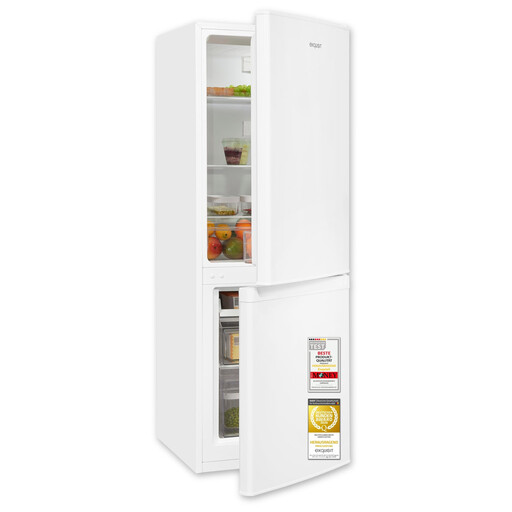 Image unavailable
The separate compartment capacities and four-star freezer compartment make it easier to plan for portions you want to chill or freeze.
173 l total usable capacity: 121 l of fridge space and 52 l of freezer space. The freezer compartment is rated four stars and described as −18 °C.
External dimensions are 142,5 × 49,5 × 56,0 cm. It has three glass shelves, one of which is adjustable, and two freezer drawers.
 Image unavailable
The separate fridge and freezer capacities, along with the four-star compartment, are useful when planning portions to chill and freeze.
173 l total usable capacity: 121 l of fridge space and 52 l of freezer space. The freezer compartment is rated four stars and described as −18 °C.
Dimensions are 142,5 × 49,5 × 56,0 cm. It has three glass shelves and two freezer drawers.
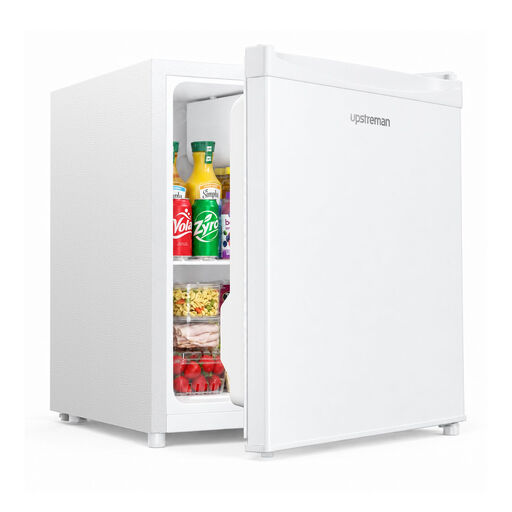 Image unavailable
For small amounts of food you want to chill; you’ll need a separate, suitable freezer to freeze portions of soup.
Listed features include a capacity of 46 l, five temperature settings and a control range of 0–12 °C. The appliance has a fridge compartment but no freezer compartment.
The German Federal Institute for Risk Assessment recommends cooling large quantities of food to below +7 °C within a few hours. Check the actual temperature; the stated control range goes up to 12 °C.
 Image unavailable
Compare the separate compartment capacities with the space you need for chilled portions and frozen supplies.
Total capacity 375 l: 262 l of fridge space and 113 l of freezer space. Features listed include Total No Frost, Express Freeze and energy efficiency class A.
Adjustable shelves and a reversible door are also listed.
Divide the soup between several shallow dishes to cool it down. The German Federal Institute for Risk Assessment recommends cooling large quantities of food to below +7 °C within a few hours and eating leftovers kept in the fridge within two to three days. For portions you plan to eat later, you’ll need a freezer compartment or freezer suitable for freezing food.
No. For freezing food you’ve prepared yourself, the consumer advice centre recommends a four-star compartment. Also check that your containers will fit and that there’s enough freezer space available.
Yes, as long as the jar is suitable for freezing and there’s enough room for the contents to expand. The consumer advice centre recommends filling containers with liquid foods such as soup to only three-quarters full, so they don’t crack when frozen. Label each container with its contents and the date it was put in the freezer.
For appliances with a suitable usable capacity, compare the annual consumption in kWh on the EU energy label. To estimate your own costs, multiply the difference in kWh per year by your electricity price in €/kWh.
New refrigeration appliances use the EU scale from A to G. The European Union notes that the former plus classes have not been used for this product group since 2021. The label helps you compare appliances; it doesn’t require you to buy one with a particular efficiency class.