Households with different mealtimes
If people eat at different times, you’ll need space in the fridge for several cooked portions, covered and stored separately.


A fridge without a freezer compartment is enough for portions of soup you’ll eat soon, provided there’s plenty of accessible fridge space. If you regularly want to freeze some soup for later, you’ll also need suitable freezer space, which leaves less room for chilling food. Compare fridge and freezer capacities separately, check the appliance dimensions and annual energy consumption, and store soup covered and properly chilled.
If people eat at different times, you’ll need space in the fridge for several cooked portions, covered and stored separately.
If you cook more soup than you’ll eat soon, allow for extra freezer space for portions to enjoy later.
You’ll need to balance usable interior space, appliance dimensions and ongoing energy consumption.
A good fit if: you want to chill portions of soup for the next few meals and don’t need extra freezer space.
The trade-off: You’ll need another way to freeze portions you want to keep for longer.
A good fit if: you regularly want to freeze some of a larger batch of soup.
The trade-off: The freezer compartment takes up space that would be available for chilling in a fridge without a freezer compartment.
For perishable foods, the German Federal Institute for Risk Assessment (BfR) recommends keeping your fridge between 2 °C and 7 °C at most. The right type of appliance depends mainly on whether you only need to chill food for a short time or also want to freeze portions.
| What you need | What to check before buying | Who it matters most to |
|---|---|---|
| Keeping individual portions safely chilled | Space for shallow, covered containers and a fridge temperature you can check while the appliance is running. | If I’m preparing cooked soup for several people to eat at different times, I want to chill the portions separately and keep them protected. Around 36% of consumers put safely chilling individual portions first. |
| Fridge space and easy access | The stated fridge capacity and shelves that keep containers within easy reach. | If you’re chilling portions for several meals at once, you’ll want to reach each one easily without having to move containers around. Around 29% of consumers prioritise fridge space and easy access. |
| Freezing soup for later | Compare freezer capacity separately from fridge capacity, and take any existing freezer space into account. | If I cook a large batch and want to freeze portions for later, extra freezer space matters. Around 21% of consumers prioritise freezing food. |
| Space for the appliance and energy consumption | Check the external dimensions against the space available and compare annual energy consumption in kWh. | If kitchen space is limited and my energy budget is tight, I don’t want to choose an unnecessarily large appliance. Around 14% of consumers focus primarily on the space it takes up and running costs. |
With a fridge-freezer, some of the total capacity is taken up by the freezer compartment, so it isn’t available for soup containers in the fridge.
Compare the stated fridge and freezer capacities separately, and check how the shelves are arranged.
A fridge-freezer may take up more floor space without giving you more of the fridge space you need.
NoFrost relates to defrosting the freezer compartment. Freshness drawers may be designed for certain other foods; neither feature replaces prompt cooling or hygienic storage.
Consider appliance features separately from the temperature and protection your stored food needs.
A fridge runs continuously, and both appliance size and stated annual energy consumption vary between models.
For appliances of a suitable size, compare energy consumption in kWh per year. You’ll also need your electricity tariff to work out your individual running costs.
The models considered include a fridge without a freezer compartment and a freestanding fridge-freezer.
The CNsdc 5203 Pure NoFrost is a freestanding fridge-freezer.
The RB38C7B5AB1/EF is a fridge-freezer for kitchens with enough space for its dimensions.
The BCHA275K4SN is a built-in model for kitchens that need an integrated fridge-freezer.
The Joybuy products below are fridge-freezers. They may suit you if you need freezer space for later as well as room to chill portions.
 No product image available
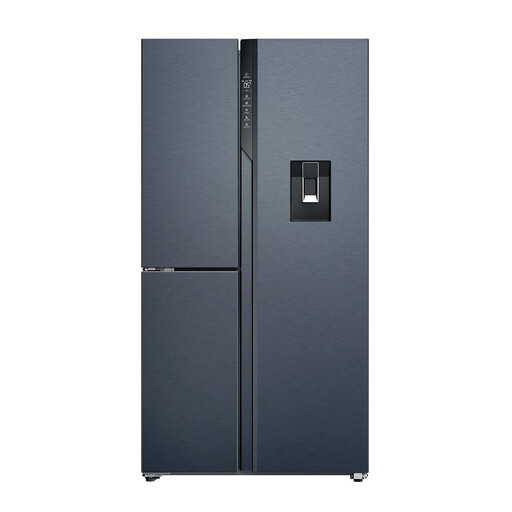
Suitable if you want to chill portions of soup and need extra freezer space for later.
220 l fridge space and 113 l freezer space.
Three safety glass shelves; stated annual energy consumption: 169 kWh.
Reversible door and adjustable front feet.
 No product image available
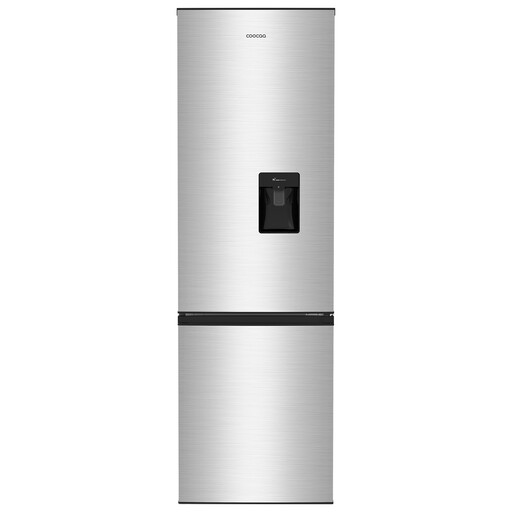
With separate fridge and freezer capacities, it’s an option for households that want to chill plenty of portions and freeze more for later.
384 l fridge space and 189 l freezer space; the Switch Zone can be used as either a fridge or freezer compartment, as needed.
External dimensions: 905 × 1775 × 707 mm; stated annual energy consumption: around 302 kWh.
 No product image available
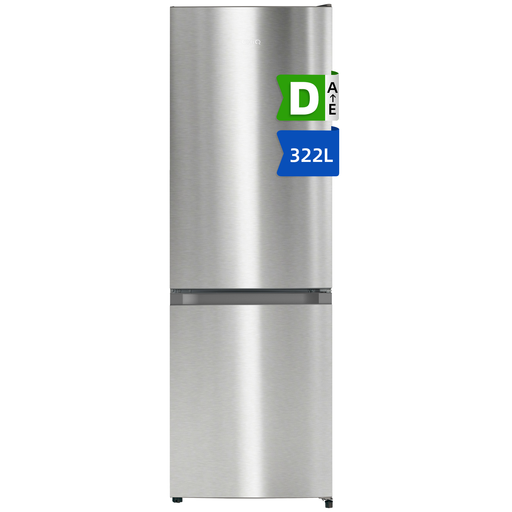
An option if you want one appliance with space for chilled portions of soup and an additional freezer compartment.
197 l net fridge capacity and 71 l net freezer capacity.
Three fridge shelves; adjustable shelves are listed.
External dimensions: 550 × 586 × 1750 mm.
 No product image available
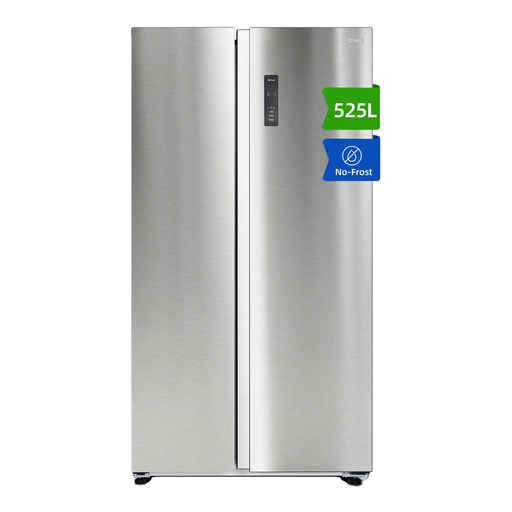
Suitable if you need space for chilled portions and extra freezer capacity in a freestanding appliance.
226 l fridge space and 96 l freezer space; stated annual energy consumption: 196 kWh.
External dimensions: 59,5 × 185,5 × 63,5 cm. At 63,5 cm deep, the product description says the appliance extends beyond a 60-cm worktop.
 No product image available
For households that want to chill plenty of portions and have a large freezer compartment for food to store alongside them.
333 l fridge space and 192 l freezer space.
No Frost, Multi-Airflow and touch controls are listed as features.
The product description lists adjustable feet and a reversible door.
Don’t leave soup at room temperature for an extended period. The German Federal Institute for Risk Assessment recommends cooling hot food quickly to below 7 °C and storing perishable food in the fridge between 2 °C and 7 °C at most. Covered, separate containers help protect food from contamination.
Divide leftover soup into manageable portions, cool them quickly and store them covered. Reheat only the portion you need, making sure it’s thoroughly heated. The German Federal Institute for Risk Assessment recommends heating food to at least 70 °C for two minutes throughout.
You don’t need a freezer compartment just to store portions that will be eaten soon, as long as they’re kept at a suitable temperature. If you regularly want to freeze larger amounts for later, the consumer advice centre recommends choosing freezer space that suits your needs. When freezing liquid foods, fill freezer-safe containers to around three-quarters full at most to leave room for expansion.
Compare the stated annual energy consumption in kWh for appliances that suit your space requirements. To estimate your individual running costs, multiply the annual consumption by your electricity price per kWh. The consumer advice centre points out that larger fridges and fridge-freezers can use more electricity.
Use the EU energy label to compare appliances by their stated efficiency class and energy consumption. The old plus-rated classes have not been used for refrigeration appliances since 2021. The label helps you compare appliances, but it doesn’t tell you whether a particular model can cool a large, hot pot of soup quickly enough.