Housemates with a tight laundry schedule
If you need your leggings again soon, compare the available hanging space and the airer’s footprint. You can’t work out how quickly your particular items will dry from the model specifications alone.


A heated clothes airer may be worth considering if you need to dry several pairs of leggings between back-to-back laundry days and have enough space to set it up. A compact heated airer could also work for just a few items. A standard, unheated airer is enough if you have more time or the care label says not to use additional heat. A heating function doesn’t guarantee a particular drying time for your leggings, and the German Environment Agency recommends airing rooms especially regularly when drying wet laundry indoors.
If you need your leggings again soon, compare the available hanging space and the airer’s footprint. You can’t work out how quickly your particular items will dry from the model specifications alone.
If you want to preserve their stretch and performance, check the care label on your leggings first. A general product description isn’t a substitute for doing so.
If you’ll be setting up the airer in a shared area and putting it away afterwards, compare its dimensions when open and folded, as well as the usable rails.
A good choice if: you regularly need to hang several pairs of leggings between back-to-back laundry days and have room to set it up.
The trade-off: The heating function uses electricity, and doesn’t guarantee a particular drying time for leggings.
A good choice if: floor space is limited in your shared room and you usually only dry a few items at a time.
The trade-off: Less hanging space could become a bottleneck when you have several pairs of leggings to dry.
A good choice if: you have more time to dry your clothes, don’t want to use electricity for the airer or can’t use additional heat on your leggings.
The trade-off: The rails aren’t heated, and you’ll still need to consider moisture in the room.
| What matters | What to check before buying | Who is this especially important to? |
|---|---|---|
| Drying time | How many pairs of leggings can be hung up at once and whether the rails are heated; don’t treat manufacturer specifications as measured drying times for leggings. | If I need my leggings again soon, I look for enough hanging space and a suitable heating option. Around 24% of consumers say drying time matters most to them. |
| Heat and fabric care | Check the care label and material of your leggings; don’t assume they’re suitable based on a general product description. | If I own delicate sports leggings, I want to make sure the way I dry them is right for those particular items. Around 24% of consumers put fabric care first. |
| Space and storage | Compare the dimensions when open and folded, along with the number of rails and the spacing between them. | In a shared room, the airer needs to fit the available space and be easy to put away afterwards. Around 19% of consumers say available space matters most to them. |
| Room humidity | Check whether you can ventilate the room as needed while your clothes are drying. | If I dry laundry in a shared room, I want to take the extra moisture into account. Around 19% of consumers put room humidity first. |
| Electricity use | Compare the rated power, actual running time and your electricity tariff on the same basis. | If I plan to use the airer often, I want to be able to estimate how much electricity the heating function uses. Around 14% of consumers say running costs matter most to them. |
Materials and care instructions vary. A general claim from an appliance manufacturer about gentle drying doesn’t necessarily apply to your leggings.
Check the care label first. Don’t treat a manufacturer’s claim about gentle drying as an independent textile test.
Heated rails don’t remove moisture from wet laundry from the room. The German Environment Agency recommends airing rooms especially regularly when drying wet laundry indoors.
Choose a suitable place to dry your clothes and make sure you ventilate as needed. Decide separately whether you need the heating function.
The airer needs to fit when it’s open and in use. For heated models, the rated power alone won’t tell you how much one drying session costs without knowing the running time and your electricity tariff.
Compare the dimensions when the airer is in use and the number of usable rails. To estimate electricity use, you can compare the rated power and running hours on the same basis.
The AD 7821 is a folding clothes airer with heated rails. Adler gives this model a power rating of 220 W and says it has 18 heating elements.
The range includes different heated airers: model 850-032 has five rails, while model 850-048 has two tiers.
According to the manufacturer, the DOMO DO7117DR is a compact heated airer with a timer that can be freestanding or wall-mounted.
The unheated Classic 100 Easy is a folding, electricity-free alternative for comparison. Leifheit gives it 10 m of drying line.
This selection includes a folding clothes airer with a heating function, other airers and a wall-mounted washing line for drying clothes. Compare the hanging space and footprint, and consider whether additional heat is suitable for your leggings.
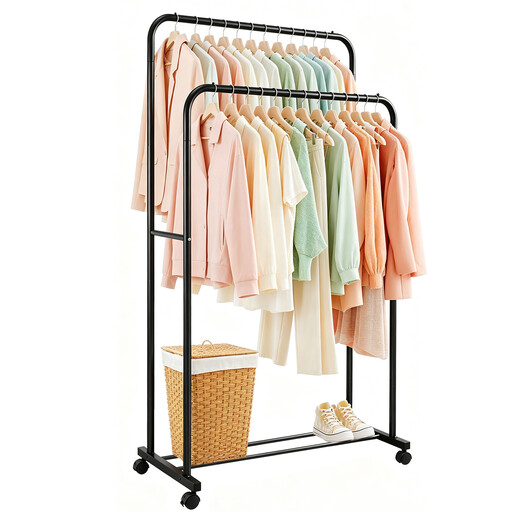 No image available
For air-drying several garments; the castors make it easier to move the rail.
Two hanging rails; dimensions: 80 × 48 × 150 cm.
 No image available
Worth considering if you want to use additional heat and it’s suitable according to the care label on your leggings.
Folding design; stated temperature range: 45–55 °C; dimensions: 144 × 53 × 96 cm.
Before buying, check the model-specific information on electrical safety and CE marking.
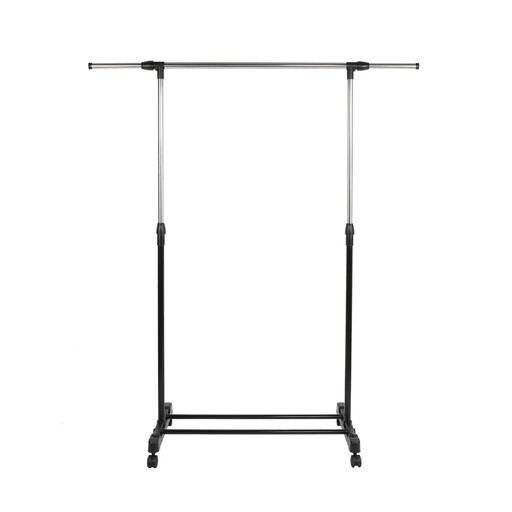 No image available
The adjustable height and width can be useful if you want to adapt the hanging space to fit the room.
Width according to the product description: 80–145 cm; folding and mobile.
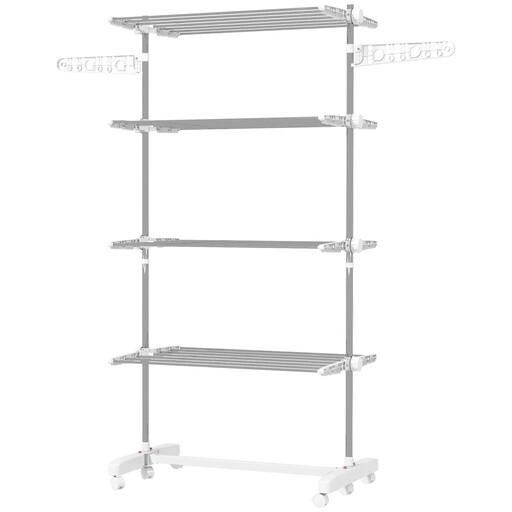 No image available
Four tiers and two side wings provide several areas for hanging laundry.
Dimensions when open: 142 × 55 × 172 cm; six castors, two of which lock; 13 cm deep when folded.
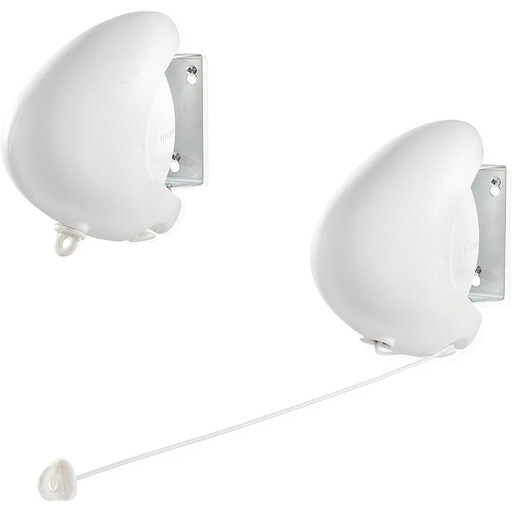 No image available
This wall-mounted line is worth considering if floor space is limited and you have suitable walls.
Retractable line up to 8 m; according to the product description, the casing sits flat against the wall when not in use.
The line must be fitted between suitable walls and securely fastened.
No. You can’t assume they’re suitable based on the product description alone. Check the care label on your particular leggings; sportswear can contain delicate synthetic fibres and elastane.
Yes. If you dry laundry indoors, you should take the additional moisture into account. The German Environment Agency recommends airing rooms especially regularly when drying wet laundry indoors; how often you need to do so depends on the room and how you use it.
Compare the rated power, actual running time and your electricity tariff. Divide the power in W by 1,000, then multiply by the number of hours used to calculate the energy in kWh. Multiply this by your price per kWh. This is an estimate based on rated values, not a measurement of the energy used to dry clothes.
In Germany, consumers generally have a statutory right to claim against the seller for faulty goods for two years from delivery. Online purchases also usually come with a 14-day right to cancel. The Verbraucherzentrale (German consumer advice centre) points out that a guarantee and statutory rights are separate entitlements.
Electrical equipment designed for 50 to 1,000 V AC generally falls within the scope of the EU Low Voltage Directive. According to the European Commission, manufacturers must meet the applicable requirements and affix the CE marking before placing a covered product on the market. The CE mark is not an independent test rating and, on its own, doesn’t prove that a product is particularly suitable for leggings.