
Lieferung heute & morgen

Qualitätsgarantie

Willkommens-Angebote freischalten: KOSTENLOSE Lieferung | Bis zu 80 % RABATT | Kostenlose 30-Tage-JoyPlus-Testphase
App herunterladen
A green LEGO baseplate might seem like a simple product at first glance. However, anyone who has tried to build a detailed structure on an unstable or incompatible plate knows the pitfalls. The wrong choice can not only lead to frustration but also compromise the stability and presentation of your creations. As your Joybuy Product Recommendation Officer, I'll help you avoid the common traps and make an informed decision.
Many buyers focus solely on price or appearance, overlooking crucial technical details. This often leads to three problems:
To avoid these problems, you should check three core parameters before buying. These define the functionality and longevity of your baseplate.
The most important criterion is a perfect fit with the building system you use. Check carefully whether you need a plate for LEGO System bricks (Classic, City, Friends, etc.) or for LEGO DUPLO bricks.
The size of the plate should match your planned project. A green LEGO baseplate with 32x32 studs (25 x 25 cm or 10" x 10") is a versatile standard for gardens, parks, or small landscapes. For larger cities or dioramas, you can combine multiple plates or consider larger formats like 48x48 studs (38 x 38 cm or 15" x 15"). The material thickness is crucial for a stable LEGO foundation. A high-quality plate will retain its shape even under the weight of many bricks.
The colour of the plate sets the thematic foundation for your creation. A green baseplate is the classic choice for representing lawns, forests, or rural scenes. It's an essential LEGO accessory for anyone wanting to create natural-looking environments. Other colours like blue (water), grey (streets, concrete), or white (snow) allow for the design of diverse worlds.
Based on these objective criteria, we have compiled a selection of products suitable for different user profiles and projects.
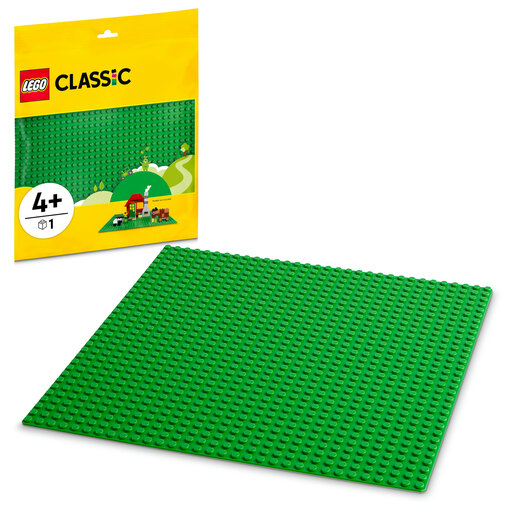
Why This Fits Their Persona: The standard choice for builders aged 4 and up who need a reliable and perfectly fitting base for gardens, forests, or fantasy landscapes using classic LEGO bricks.
As an original product, this plate guarantees a precise fit and strong clutch power. It is explicitly designed for the LEGO System, thus avoiding any incompatibility issues.
With 1,024 studs (32x32), it offers a stable and warp-resistant base. The bricks hold firm at any angle, yet are still easy to remove.
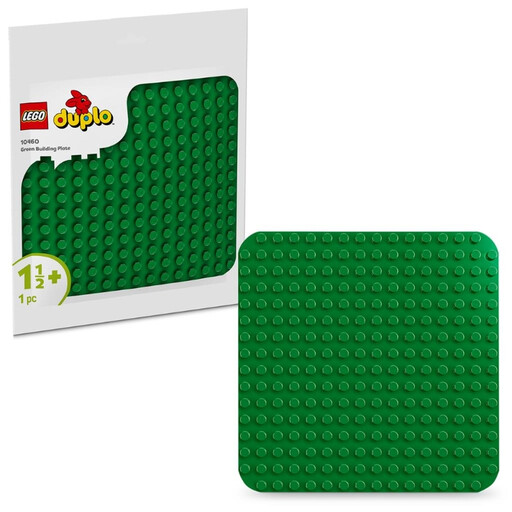
Why This Fits Their Persona: Ideal for parents of toddlers aged 18 months and up who are looking for a safe and stable building surface for their first creative projects with large DUPLO bricks.
Eliminates the risk of buying the wrong, incompatible plate for DUPLO bricks. Its robust construction is specifically tailored to the motor skills and play style of young children.
The 16x16 large studs provide a secure grip for DUPLO bricks, playfully promote fine motor skills, and allow finished models to be transported safely.
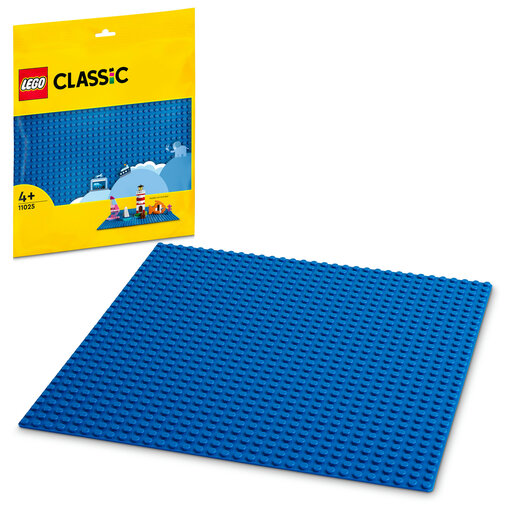
Why This Fits Their Persona: Perfect for builders who want to expand their green landscapes with bodies of water. Ideal for coastal scenes, lakes, or rivers to create a more diverse and realistic world.
This accessory encourages systems thinking. Instead of being limited to one colour, it shows how different baseplates can be combined to build complex scenarios.
Vastly expands creative possibilities. The combination of green and blue plates forms the foundation for detailed coastlines, islands, and river landscapes.
We have compiled a complete, up-to-date list of products that fully meet these strict selection criteria and UK safety regulations.
No, the two systems are generally not directly compatible. LEGO Classic baseplates have small studs designed for standard LEGO bricks. LEGO DUPLO bricks cannot be attached to them. Conversely, Classic bricks do not fit on a DUPLO baseplate with its large studs. Each system requires its own corresponding baseplate.
According to the manufacturer, LEGO parts should be cleaned by hand at a maximum of 40°C (104°F). Use a soft cloth or sponge and a mild soap solution. Then, rinse the plate with clear water and let it air-dry. Avoid cleaning it in the washing machine or dishwasher, and do not dry it in an oven, microwave, or with a hairdryer, as high temperatures can warp the plastic.
It is not recommended to cut, glue, or otherwise permanently modify LEGO baseplates. Such an action can damage the plate, compromise the clutch power along the cut edges, and negatively affect its fit with other plates. For flexible layouts, it is advisable to combine several smaller plates.