
Lieferung heute & morgen

Qualitätsgarantie

Willkommens-Angebote freischalten: KOSTENLOSE Lieferung | Bis zu 80 % RABATT | Kostenlose 30-Tage-JoyPlus-Testphase
App herunterladen
LEGO building sets can combine creative play, building together and decorative projects. The selection ranges from simple LEGO Classic bricks for children aged 4 and over to highly detailed models for adults. However, this variety can make comparisons difficult: a high piece count does not automatically mean the right level of challenge, and a decorative model is not necessarily suitable for regular play.
A large number of bricks may seem appealing at first glance. What matters, however, is whether they can be used to build several models, moving features or original creations. With a LEGO Creator 3-in-1 set, for example, three models are built one after another using the same pieces. They cannot be built simultaneously. So, if you want to display several figures permanently, you will need additional sets or separate bricks.
The recommended age is an important guide, not just a marketing detail. Sets for children aged 4 and over often contain larger, easy-to-identify elements and simple building ideas. A LEGO Wednesday set for ages 9 or 10 and over, on the other hand, uses many small pieces, figures and details. A miniature building kit for adults aged 14 or 18 and over may also require delicate wooden parts, tools or glue.
Some models are primarily intended for a shelf or desk. LEGO Botanicals flowers and a DIY miniature house can be used as decoration once built, but they are not automatically robust enough to be moved frequently or used for intensive role play. Before buying, it should be clear whether the set is mainly intended for playing with, collecting or displaying.
Sets with small components are not suitable for children under 3 because of the risk of swallowing them. Depending on the complexity, older children may also benefit from some support. Magnetic building blocks require particular care: strong magnets must not be swallowed. If parts are damaged or magnets are visible, the product should no longer be used.
For children aged 4 and over, the LEGO Classic Medium Creative Brick Box 10696 is a suitable option, for example. For children aged 5 and over, LEGO Disney Princess offers a themed introduction with Ariel’s Mini Palace. Sets such as a LEGO animal building set from LEGO Creator are aimed at children aged 7, 8 or 9 and over, depending on the model.
The number of pieces helps you assess the scope of a set, but it should be considered alongside the amount of time you have available:
A model with 145 pieces can be more varied, thanks to moving elements and several building options, than a larger set containing just one static model.
LEGO building sets are made mainly from plastic elements. Wooden models such as the Robotime Rolife Baking Kitchen DIY Dollhouse Kit, by contrast, use precisely cut wooden parts, paper components and accessories. A dry, well-lit workspace should be available for these projects. Some sets also require additional tools such as tweezers, scissors or glue.
The dimensions of the completed model are also important. A large model needs a stable surface and should be protected from direct sunlight, moisture and heat. A storage box or labelled bags can help prevent small parts from going missing.
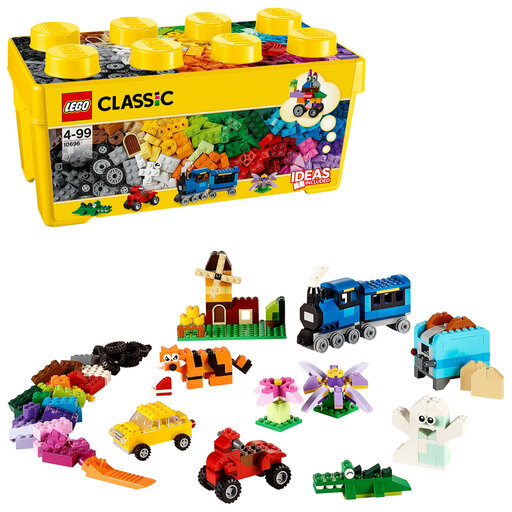
Why this product suits the profile: The box is designed for children aged 4 and over and contains 484 elements in 35 colours. Windows, eyes, wheels and building plates make it easier to get started with free building.
The focus is not on one short set of building instructions, but on reusable standard bricks and original creations.
484 elements, a colourful selection, a building plate and a practical plastic storage box.

Why this product suits the profile: This set for adults contains 749 pieces and 15 artificial flowers. Adjustable stems allow you to create different arrangements for your desk, shelf or living space.
Its purpose is clearly identified as a building and decorating project for ages 18 and over. This prevents a delicate display model from being mistaken for a children’s toy.
15 different flowers, adjustable stems and a cymbidium orchid measuring approximately 32 cm in length.
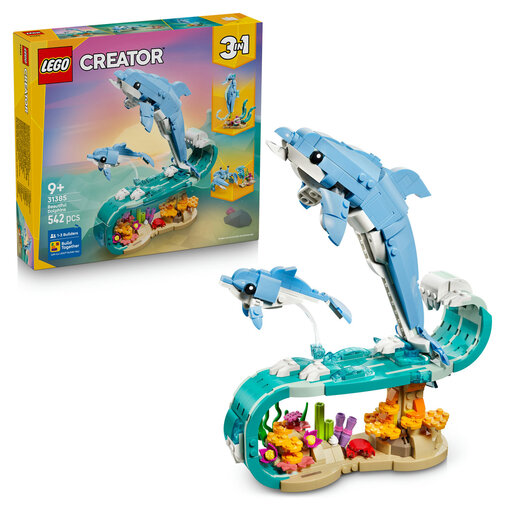
Why this product suits the profile: This animal building set for ages 9 and over contains 542 bricks. A dolphin, seahorse and hermit crab can be built one after another and then displayed as decoration.
The three building options are clearly described, so buyers can plan to switch between a play model and a display piece rather than expecting all three to be built at once.
Three models, moving elements and digital 3D building instructions via the LEGO Builder app.
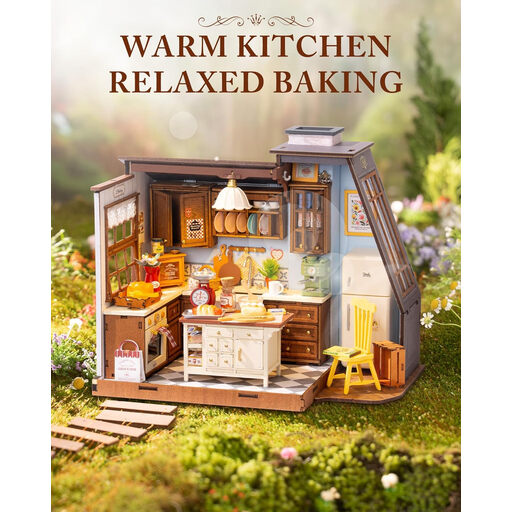
Why this product suits the profile: This DIY miniature house is designed as a detailed model for teenagers and adults aged 14 and over. Its 62 laser-cut wooden parts create a baking kitchen suitable for display on a table or bookshelf.
The recommended age, small parts and model-like nature are clearly stated. This prevents the set from being mistakenly bought as a standalone children’s toy.
Wooden construction, baking kitchen theme and, according to the product description, assembly without glue.
For fans of TV-inspired themes, options also include a LEGO Wednesday set, such as the Wednesday Backpack 76787 for ages 9 and over or Nevermore Academy 76788 for ages 10 and over. Both models combine play opportunities with a design suitable for displaying in a bedroom. A compact LEGO Disney Princess set such as Ariel’s Mini Palace 43285 is aimed at children aged 5 and over and contains 179 pieces.
We have put together a complete, regularly updated list of products that fully meet these strict selection criteria and the safety regulations applicable in the EU.
For this starting age, LEGO Classic bricks with simple building ideas and a clear age recommendation are suitable. The Medium Creative Brick Box 10696 contains 484 elements and a storage box. Even so, small parts should be kept away from younger siblings.
Their lifespan depends on how they are stored, how often they are rebuilt and how much strain is placed on the connections. Dry storage away from light and keeping the pieces sorted can help preserve their condition. Decorative models should be kept away from direct sunlight and moisture, and moved as little as possible.
That depends on the specific model. The Baking Kitchen building kit featured here is recommended for ages 14 and over and contains small, delicate wooden parts. Children may not be able to assemble it independently; adult supervision and a suitable workspace are advisable.