
Lieferung heute & morgen

Qualitätsgarantie

Willkommens-Angebote freischalten: KOSTENLOSE Lieferung | Bis zu 80 % RABATT | Kostenlose 30-Tage-JoyPlus-Testphase
App herunterladen
LEGO building toys can give children plenty of opportunities to build, rebuild and play. But a high price or a familiar theme does not automatically mean a set is the right choice. The key factors are the recommended age, piece size, type of play and whether the set will suit your child’s everyday life in the long term.
The age recommendation on the box is an important starting point. A set for ages 4 and up may still be challenging for a child with little building experience, while an older child may quickly get bored with a very simple set. Parents should also check whether the set contains small parts and whether an adult may need to help with the build.
A high piece count may look appealing at first. However, it tells you little about whether a child can bring their own ideas to life. A set with 80 versatile, mix-and-match bricks may be better suited to everyday play than a larger model that can only be built by following the instructions and then put on display.
LEGO Disney, LEGO Marvel, LEGO NINJAGO, ONE PIECE and Bluey are designed to appeal to fans of particular shows and characters. That can make them a suitable gift for children. Even so, it is worth looking at the features: are there moving parts, several figures and open-ended building options, or is it just a single display model?
Larger bricks, such as those in LEGO DUPLO sets, are easier for toddlers to handle. According to the product information, the LEGO DUPLO Classic 10479 Colorful Creative Box is intended for children aged 18 months and over, and contains 80 pieces. Depending on their stage of development, children aged 3 and over may also enjoy magnetic building blocks or simple building sets.
Important: Sets containing small parts are not suitable for children under 3. Always follow the manufacturer’s warning for the specific set. With magnetic building blocks, you should also check that the magnets are securely enclosed. Swallowed magnets can cause serious injuries.
A set with lots of pieces needs a dedicated storage solution. A box or bag can help prevent pieces from going missing. Before buying, also consider the dimensions of the finished model and how much space your child has to play. ABS plastic can usually be cleaned with a dry or slightly damp cloth; many sets are not designed to be soaked in water or cleaned with harsh products.
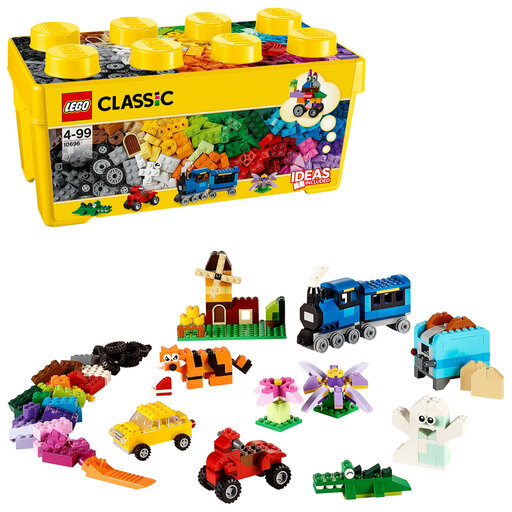
Why this product suits this buyer: The box is intended for children aged 4 and over and contains 484 pieces, including wheels, windows, eyes and a green baseplate. It makes a great introduction to open-ended building and can be combined with other LEGO bricks.
The contents are not limited to a single themed model. The included building ideas make it easy to get started, while still leaving room for children to create their own designs.
484 pieces, a storage box and versatile special elements for vehicles, animals and free builds.
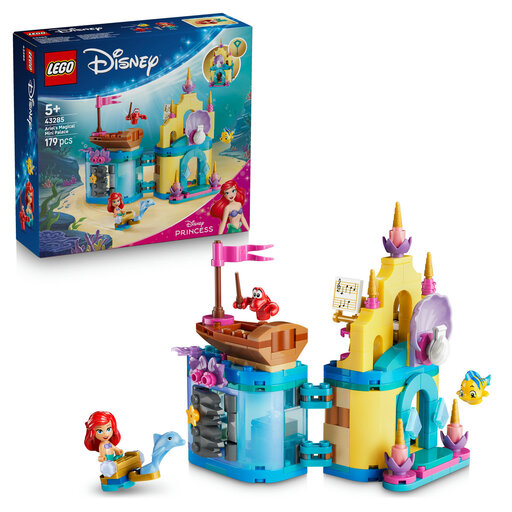
Why this product suits this buyer: Designed for fans aged 5 and over, this set combines 179 bricks with an opening mini palace, a boat, a cave and three figures or characters for role play.
There are several features and play areas to explore beyond the theme itself. At 13 cm tall, the finished model is relatively compact.
A compact Disney set with a key, music room and boat, plus digital 3D building instructions in the LEGO Builder app.
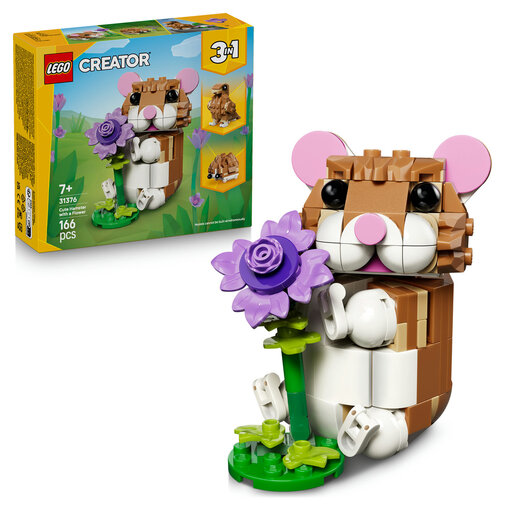
Why this product suits this buyer: This 3-in-1 set for children aged 7 and over can be built as a hamster, hedgehog or eagle, each with its own details. It’s a great choice for children who enjoy rebuilding models and then using them as decorations.
The three model options add variety without the need for a second set. They are built one at a time, not all at once.
166 bricks, moving parts and three build options in one set.
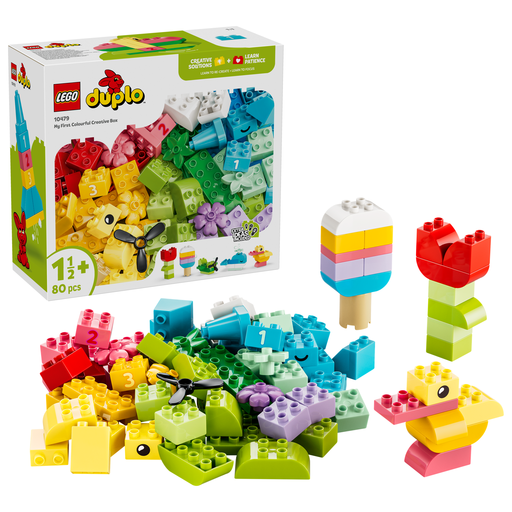
Why this product suits this buyer: According to the product information, the larger DUPLO pieces are intended for children aged 18 months and over. The 80 colourful bricks and number bricks make it easy to try simple building ideas and free-form stacking.
The larger pieces are designed with younger children in mind. The age recommendation is below the age range typically associated with small LEGO pieces, but it should still be followed.
80 larger building pieces, simple building ideas and number bricks for early sorting and stacking games.
We’ve put together a complete, regularly updated list of products that meet these strict selection criteria and fully comply with the safety regulations in force in the EU.
For children who prefer characters from TV series, LEGO Marvel, LEGO NINJAGO and LEGO Bluey are worth considering alongside Disney. According to the product information, the LEGO Spidey 11208 Team Spidey Pirate Ship is designed for children aged 4 and over and contains 201 bricks. For fans aged 6 and over, the LEGO NINJAGO 71849 Nya vs. Mutation Monster Spinner Set offers a small build with 49 pieces and a spinning play feature.
Older children and adult collectors may be interested in more detailed models, such as LEGO Creator 31147 Retro Camera, LEGO Creator 31392 Music Decor Piano with Cat or LEGO ONE PIECE 75643 Tony Tony Chopper. Because of their piece count and build complexity, these sets are not comparable to a building set for children aged 3 and over.
It depends on the specific age recommendation and the size of the pieces. Larger bricks, such as LEGO DUPLO, are usually a more obvious choice for younger children. For sets with small parts, follow the warnings and the manufacturer’s recommendation. Magnetic building blocks should also only be used in line with the safety information.
How long a set holds a child’s interest depends on the variety of pieces, their interests and how easy it is to add to. LEGO Classic and creative building sets with plenty of basic elements can be rebuilt again and again. A themed model, on the other hand, is more likely to offer lasting play value if it includes characters, moving features and a world for children to imagine stories in.
Building toys can encourage children to sort, plan, think spatially and develop fine motor skills. However, you should not make blanket claims about specific educational benefits. What matters is the child’s age, support from an adult and the opportunity to try out their own solutions.