
Lieferung heute & morgen

Qualitätsgarantie

Willkommens-Angebote freischalten: KOSTENLOSE Lieferung | Bis zu 80 % RABATT | Kostenlose 30-Tage-JoyPlus-Testphase
App herunterladen
By a Joybuy Product Recommendation Officer Published August 30, 2026
Building toys are among the most versatile and durable items in any playroom. They promote creativity, spatial reasoning, and fine motor skills. However, the selection is vast, and not every set lives up to its promises. Before making a purchase, it's helpful to understand common pitfalls to avoid disappointment and choose a product that will provide long-lasting enjoyment.
Investing in a new construction toy can quickly lead to frustration if the product lacks basic quality features. Pay special attention to these three weaknesses:
To avoid these problems, you should focus on objective and verifiable criteria. These three parameters will help you find a high-quality and suitable building toy.
A high-quality building toy is made from robust and safe materials. Look for products made from ABS (Acrylonitrile Butadiene Styrene) plastic, as this material is known for its high impact resistance, durability, and dimensional stability. The finish is just as important: all edges should be rounded and surfaces smooth to prevent injuries. A crucial seal for the European market is the CE marking, which confirms that the product meets EU requirements for safety, health, and environmental protection, particularly the toy safety standard EN 71.
A good construction toy grows with the child. Systems that are compatible with each other and can be expanded with additional sets offer long-term play value. Brands like LEGO or PLAYMOBIL offer entire themed worlds that can be combined. This allows you to start with a simple entry-level set and gradually expand the collection as the child's interest and skills grow. This turns a one-time gift idea for kids into a long-lasting hobby.
Different building sets foster different skills. While simple interlocking systems train the fine motor skills of toddlers, complex sets with hundreds of pieces challenge the spatial imagination and problem-solving abilities of older children and adults. So-called STEM toys (Science, Technology, Engineering, and Mathematics) often integrate mechanical or even electronic elements, playfully teaching basic engineering principles. Consider which skills you want to encourage and choose a set with an appropriate level of complexity.
Here are a few recommendations tailored to different age groups and interests that meet the quality criteria mentioned above.
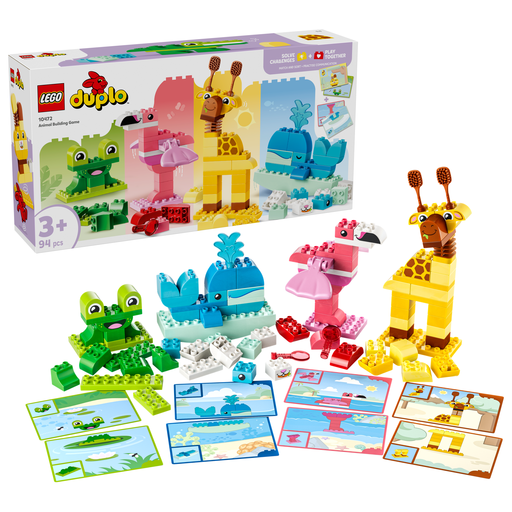
Why it's a great fit: Ideal for toddlers aged 3 and up who are just starting their building journey. The large, easy-to-grip bricks are specially designed for small hands and playfully promote fine motor skills and creativity.
DUPLO bricks are renowned for their excellent fit and stability, which prevents the frustration of unstable constructions. The age recommendation is precisely tailored to the abilities of preschoolers.
Promotes the recognition of colors and shapes. The included building cards provide inspiration and allow for the construction of 8 different animals, increasing the replay value.
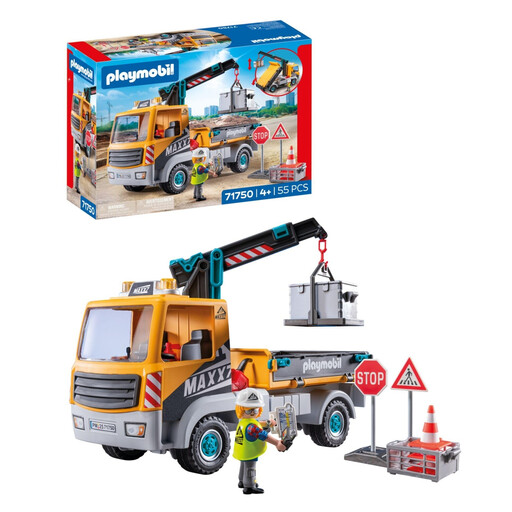
Why it's a great fit: For children aged 4 and up who love realistic play scenarios. This construction site toy combines building with active role-playing and is part of the expandable PLAYMOBIL City Action world.
PLAYMOBIL is known for its robust, high-quality plastic and durable construction. The parts are designed for intensive play, and the age recommendation is clearly defined to prevent children from being overwhelmed.
Features functional elements like an extendable and swiveling telescopic arm and a tilting loading bed. This promotes an understanding of mechanical principles.

Why it's a great fit: A sophisticated set for teens and adults (ages 12+) who appreciate detailed architectural models. With 1876 pieces, it offers a captivating building challenge and a decorative final piece.
The clear "12+" age rating prevents frustration from excessive complexity for younger users. According to the manufacturer, the bricks are made of high-quality ABS material, ensuring a good fit and stability.
The three-story, modular design allows for a look into the detailed interior. Integrated LED light modules on each floor highlight the architectural details and make the model an eye-catching display piece.
We've compiled a complete, up-to-date list of products that fully meet these strict selection criteria and German safety regulations.
Most plastic bricks without stickers or electronics can be easily cleaned under running water with a mild soap solution. For electronic components or parts with stickers, you should only wipe the surface with a slightly damp cloth. Avoid harsh cleaning agents or washing them in the dishwasher, as high temperatures can warp the plastic.
The transition to more complex systems with smaller parts (like LEGO System or advanced model kits) is generally appropriate from the age of 5 or 6. However, the child's individual development of fine motor skills and frustration tolerance is the deciding factor. Start with smaller sets from the new system to test their interest before investing in large, expensive kits.
Magnetic building toys can be excellent educational tools, but safety is especially important here. Ensure that the magnets are securely enclosed within the plastic housing and cannot come loose, even during intensive play. Only purchase products from established manufacturers that comply with the EN 71 safety standard. If a part becomes damaged, it should be disposed of immediately to eliminate the risk of swallowing magnets. Adult supervision is recommended, as with most toys for younger children.