
Lieferung heute & morgen

Qualitätsgarantie

Willkommens-Angebote freischalten: KOSTENLOSE Lieferung | Bis zu 80 % RABATT | Kostenlose 30-Tage-JoyPlus-Testphase
App herunterladen
LEGO building sets differ not only in colour and theme. What really matters is the age rating, piece count, how poseable the models are, and whether a set is designed for free building, role play or display. Parents, grandparents and LEGO fans can avoid disappointing purchases by looking beyond the product claims and matching them to how the set will actually be used.
820 pieces might sound like endless possibilities. But with a themed model, most of those elements may be intended for a single build. A LEGO Creative Building Set like LEGO Classic, on the other hand, offers plenty of loose bricks for your own ideas. That’s why you should always consider the piece count together with the build type: free building, a fixed model, or the 3-in-1 principle.
The age rating doesn’t just tell you whether a child will find the set interesting. It also gives clues about the complexity of the instructions, the size of the pieces and the handling required for small parts. A LEGO toy for ages 4+ is designed very differently from a detailed model for 9-, 10- or 18-year-old fans. So the recommended age group should match the concentration span and building experience of the person you’re buying for.
A model might look great on a shelf once built, but offer very limited rebuilding options. Conversely, LEGO Classic or LEGO Creator 3-in-1 sets allow you to build again and again, but they need proper storage. Before you buy, be clear about whether the set is mainly for playing, rebuilding or displaying.
Pay attention to the stated age level and the warning about small parts. Many LEGO sets for children contain pieces that are not suitable for children under three. Even with older children, supervision can be helpful if the model has lots of tiny elements or the build requires sustained concentration.
The sets mentioned here range from 4+ to 18+. The LEGO Disney Princess Frozen Kingdom Set 43281 is rated for ages 4+, LEGO Classic 11045 for ages 5+, LEGO Creator 31163 for ages 8+ and LEGO Disney Pixar WALL-E and EVE for ages 18+. These differences shouldn’t be overlooked when choosing a building set as a gift.
The piece count is an objective way to compare sets, but on its own it tells you little about build time or difficulty. Also check:
According to the product details, the LEGO products listed here are mainly made from ABS plastic. For cleaning, several models recommend a dry, soft cloth. Water, harsh cleaning products and prolonged direct sunlight should be avoided for display models. The Robotime Rolife Baking Kitchen DIY Dollhouse Kit is different: it’s made from laser-cut wooden pieces and is intended for ages 14+. It’s a detailed DIY model, not a classic LEGO set.
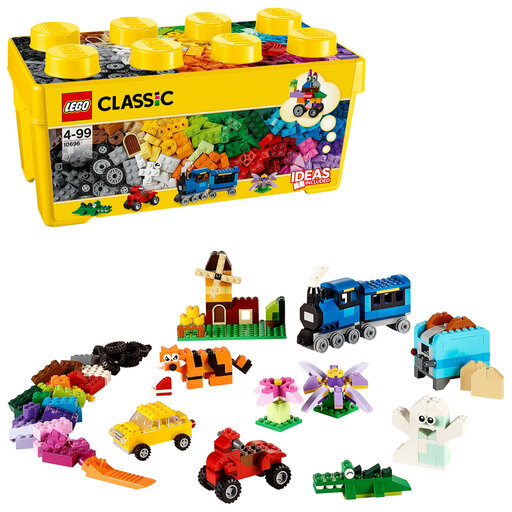
Why this product fits the profile: The box is aimed at children aged 4+ and contains 484 elements in 35 colours, including wheels, eyes and base plates. It’s ideal for free building ideas and as an addition to an existing collection.
The pieces aren’t limited to a single themed model. This means the set stays useful for new creations even after the first build.
484 pieces, a storage box and first building ideas in an age-appropriate set.
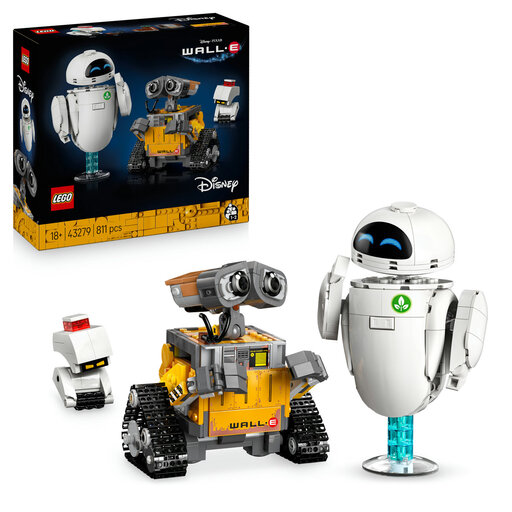
Why this product fits the profile: This set is designed for fans aged 18+ and combines 811 pieces with poseable elements and a clear display value for a shelf or desk.
The product description mentions both the build scope and specific features like movable arms, wheels and a rotating brush.
811 pieces, four Disney-Pixar characters and a WALL-E model with moving functions.
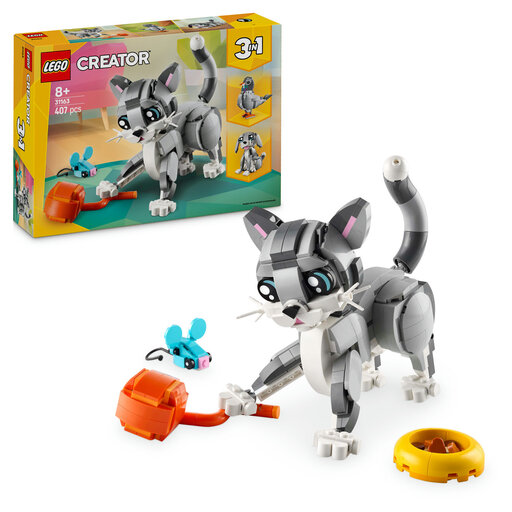
Why this product fits the profile: Animal lovers aged 8+ can build a cat, a dog or a pigeon from 407 pieces. The set is designed for repeated rebuilding and role play.
The 3-in-1 principle creates multiple building options. The important thing to remember is that the three animal models are built one after another, not all at once.
Poseable body parts, three animal designs and accessories including a food bowl, toy mouse and ball of wool.
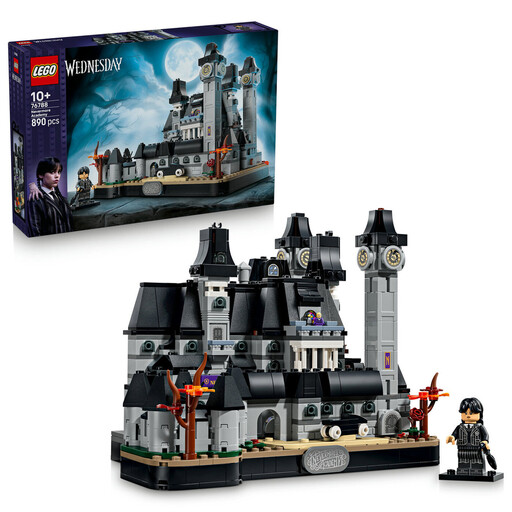
Why this product fits the profile: This 890-piece model is aimed at fans aged 10+ and is designed as both a playset and a display model, with several interior rooms and figures.
The use is clearly described: the rooms can be played with for storytelling, and afterwards the academy serves as decoration.
890 pieces, three included figures and a model standing over 17 centimetres tall.
We’ve put together a full, regularly updated list of products that fully meet these strict selection criteria and the safety regulations in force in the EU.
For younger Disney fans aged 4+, the LEGO Disney Princess 43281 offers a two-storey ice castle, a sledge run, seven figures and 216 pieces. For animal lovers aged 7+, the LEGO Creator 31136 Exotic Parrot or LEGO Creator 31377 Turtle with a Water Lily Flower are good options. Both sets allow you to build three different animal models.
If you’re looking for a larger building project for children aged 9+, you can compare the LEGO Creator 31168 Medieval Horse Knight Castle with 1,371 pieces or the LEGO Creator 31167 Haunted Mansion with 736 pieces. For crafters aged 14+, the Robotime Rolife Baking Kitchen DIY Dollhouse Kit is an alternative outside the LEGO category. The 62 laser-cut wooden pieces create a miniature kitchen; small parts and delicate components require extra care.
Sets with a matching age rating and a manageable instruction booklet are suitable. LEGO Classic 10696 is designed for ages 4+ and contains 484 elements for free building ideas. The LEGO Disney Princess Ice Castle 43281 is also rated for ages 4+. Always pay attention to the warnings about small parts.
How long a set lasts depends mainly on storage, handling and how often it’s rebuilt. ABS plastic is designed for repeated building, but small elements can get lost or damaged if not handled properly. Sorting boxes, dry storage and regularly checking for loose or damaged pieces can help keep a set usable for longer.
No. Some LEGO sets for adults combine a more challenging build with moving functions and a decorative model. LEGO Disney Pixar WALL-E and EVE, for example, is intended for fans aged 18+ and can stand on a shelf or desk after building. Whether a set is mainly for playing or displaying depends on the model’s structure, its poseability and how you personally want to use it.