
Lieferung heute & morgen

Qualitätsgarantie

Willkommens-Angebote freischalten: KOSTENLOSE Lieferung | Bis zu 80 % RABATT | Kostenlose 30-Tage-JoyPlus-Testphase
App herunterladen
At first glance, LEGO building sets seem easy to compare: pick a theme, check the piece count and order. In practice, however, a few typical buying decisions can lead to disappointment. One set might contain lots of pieces, but mostly small elements. Another model may look large in product images, yet offer little room for imaginative play once built.
This buying guide helps parents, relatives and adult LEGO fans choose the right LEGO sets for children and LEGO sets for adults based on age, play concept, piece count and display function.
A high number of pieces doesn't automatically mean a long or varied play experience. What matters is whether the set includes moving functions, minifigures, accessories or alternative builds. A model with 238 pieces can offer more engaging play through a mechanism or a popular theme than a purely decorative set with more pieces.
The age rating isn't just a minor marketing feature. It takes into account the size of the elements, the complexity of the instructions and the patience required during assembly. For children aged 4 and up, simple LEGO Classic boxes are ideal. Sets with lots of small pieces, light functions or extensive building structures are often aimed at older children or adults.
Important: LEGO building sets contain small parts and are not suitable for children under 3 years old. For younger children, building should be done under adult supervision.
A LEGO collector set is often designed for static display. Other sets are more focused on role play, rebuilding and moving functions. So before you buy, it's important to know whether the model will sit on a shelf or be played with regularly.
First, check the age rating and the likely complexity. For beginners, sets from age 4 or 6 with a manageable size are a good choice. Children aged 7 or 9 can often handle larger themed worlds and technical functions. Adult LEGO fans frequently go for models aged 18+ with several hundred or over 2,000 pieces.
The digital LEGO Builder app can supplement the instructions for many sets. Features like 3D rotation, zoom and build progress tracking are helpful, but they don't replace checking the age recommendation.
The piece count helps with comparison, but should be considered alongside the finished dimensions. A model can take up much more shelf space after building than the packaging suggests. So measure the shelf, desk or intended play area beforehand.
Pay particular attention to:
The theme influences how likely a set is to be used long-term. LEGO Harry Potter, LEGO Minecraft, LEGO Marvel, LEGO Disney and LEGO Star Wars are great for fans of specific stories. LEGO Creator 3-in-1, on the other hand, offers multiple build options, while LEGO Ideas often turns well-known characters or nostalgic subjects into display models.
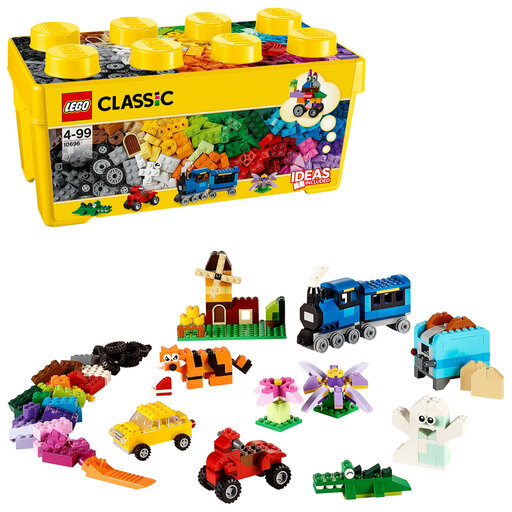
Why this product fits the profile: The box is aimed at children aged 4 and up and contains 484 pieces in 35 colours. It's ideal for free building ideas, simple vehicles and basic fantasy structures.
The piece count is sensibly supplemented with colours, windows, eyes, wheels and base plates. This means the set remains open to new creations even after the first build.
484 pieces, storage box and combinable standard bricks for creative building play.
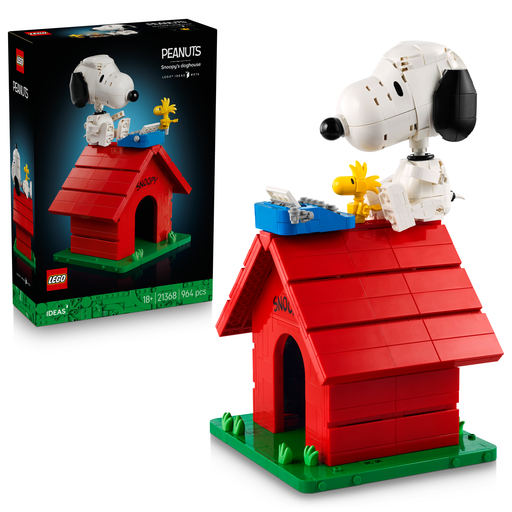
Why this product fits the profile: The set is designed for adults and combines a 964-piece building project with a display function. Snoopy and Woodstock can be posed in different positions.
The product details list both the piece count and the intended rebuild options. This means the model can be assessed based on more than just a decorative product image.
Poseable Snoopy figure, fold-out doghouse and two minifigures for display.
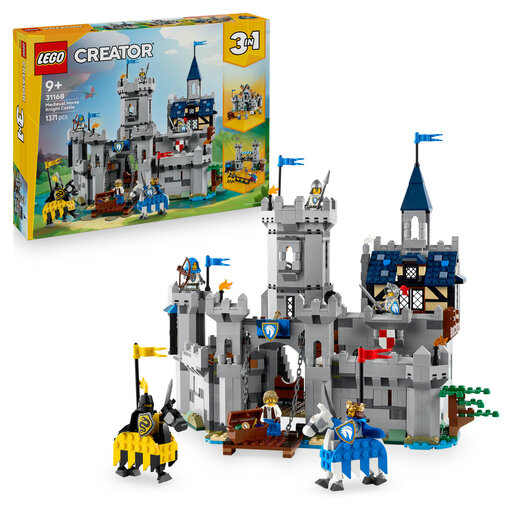
Why this product fits the profile: This LEGO Creator 3-in-1 set is aimed at children aged 9 and up who want to build repeatedly and create their own medieval stories.
The three intended models – castle, tournament ground and medieval town – make the scope of multiple uses clear. The models cannot be built at the same time.
1,371 pieces, six minifigures, two horses and three build variants with a finished castle approximately 31 cm high.
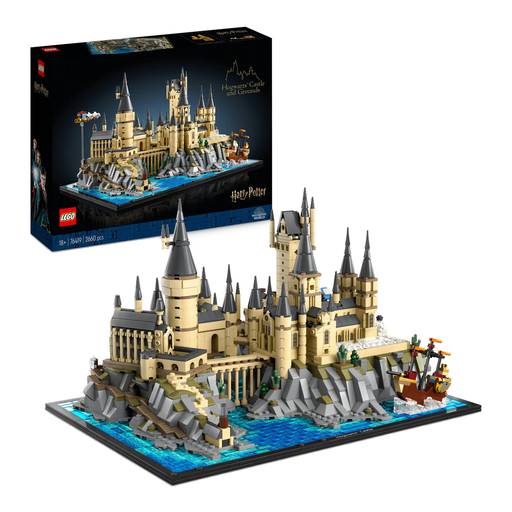
Why this product fits the profile: This 2,660-piece model is aimed at adult Harry Potter fans aged 18 and up and is designed for permanent display on a shelf or sideboard.
The product description lists specific locations, dimensions of 21 × 35 × 25 cm and the recommended age group. This makes it easy to plan the space needed before buying.
Many well-known locations from the wizarding world, transport models and a golden architect minifigure as part of the display.
We've put together a complete, regularly updated list of products that fully meet these strict selection criteria and the safety regulations in force in the EU.
For LEGO sets for children, you should also check that there's enough free play space and that the pieces can be sorted after playing. A sealable box or a dedicated storage spot prevents important elements from getting lost.
For LEGO sets for adults, the finished dimensions, display stability and cleaning are important. Models should be dusted with a dry, soft cloth and not immersed in water. Direct, prolonged sunlight can cause changes to coloured bricks.
For a LEGO gift, the recipient's interests are more important than a high piece count. Minecraft fans may prefer figures and play mechanics from the game world. For Marvel or Star Wars enthusiasts, minifigures and battle scenes can be key. Disney models and LEGO Ideas sets often work well as decorative projects for adults.
LEGO Classic 10696 and LEGO Classic 10698 are designed for children aged 4 and up and contain lots of colourful standard bricks. They offer open-ended building ideas rather than a single fixed construction. However, you should still follow the safety instructions regarding small parts.
With proper use, LEGO building sets can be used and rebuilt for a long time. Their lifespan depends mainly on how often they are taken apart, storage conditions, sunlight exposure and missing pieces. Dry storage and regular checks for damaged elements help keep the collection organised.
No. Many LEGO sets for adults combine detailed display with poseable figures or changeable scenes. However, when choosing, you should still check whether the specific model is described more as a display set or a regularly playable set.