
Lieferung heute & morgen

Qualitätsgarantie

Willkommens-Angebote freischalten: KOSTENLOSE Lieferung | Bis zu 80 % RABATT | Kostenlose 30-Tage-JoyPlus-Testphase
App herunterladen
LEGO building sets vary significantly in age recommendation, piece count, play value and eventual use. A set with many pieces isn’t automatically right for a child, while a detailed model for adults only makes sense if you have enough space and time to build it. This buyer’s guide helps parents, families and adult fans compare offers objectively and avoid common buying mistakes.
The number of bricks only tells you something about the size of the set. For children aged 4 and up, a few larger, quick-to-assemble elements can be more suitable than an extensive model with many small pieces. Adult fans, on the other hand, often deliberately look for LEGO sets for adults with several hundred or thousand pieces, because the building process and later display are the main focus.
Small parts pose a choking hazard. Most of the sets featured here are not suitable for children under 3 years old. A product like the LEGO Classic 11023 Green Baseplate is recommended from age 4, while the LEGO Friends 42676 Fun Water Park Day is for children aged 6 and over, and the LEGO Architecture 21060 Himeji Castle is for adults aged 18 and over. The age recommendation should therefore be seen not just as a marketing detail, but as a guide to complexity and safety.
A built model can be significantly larger than the box suggests. The LEGO Harry Potter 76444 Diagon Alley measures 88 cm wide in one display configuration. The LEGO City 60423 Downtown Streetcar and Station reaches a length of 53 cm. Before buying, you should plan for shelf space, storage and a dust-free display option.
For LEGO sets for children, clear building sections, minifigures and directly playable scenes are important. The LEGO NINJAGO 71827 Zane's Battle Suit Mech contains 92 pieces and is aimed at fans aged 6 and over. This format is better suited to shorter building and play sessions than a large display model.
For LEGO sets for adults, the focus is on detail, build time, stability and decorative impact. Themes like LEGO Harry Potter, LEGO Architecture and LEGO Icons often appeal to collectors and hobby builders who want to display a model after construction.
The piece count offers an initial guide, but should be combined with the dimensions and intended purpose:
A higher piece count can mean more building steps and detail, but also leads to longer build phases and more sorting effort. For a building set as a gift, you should therefore know whether the recipient prefers to play spontaneously or work on a model with concentration.
The sets listed are mostly made from ABS plastic. For LEGO products, additional information on material, origin and conformity is published depending on the item. For the LEGO Architecture 21066 New York City, for example, the EU Toy Safety Directive 2009/48/EC and EN71 are mentioned. You should always check such details on the relevant product page.
The term building bricks is often used generally for bricks with interlocking connections. However, compatibility with other systems should not be assumed unless it is explicitly stated. For additions like the LEGO Classic 11023 Green Baseplate or alternative building sets, it is advisable to compare the product description.
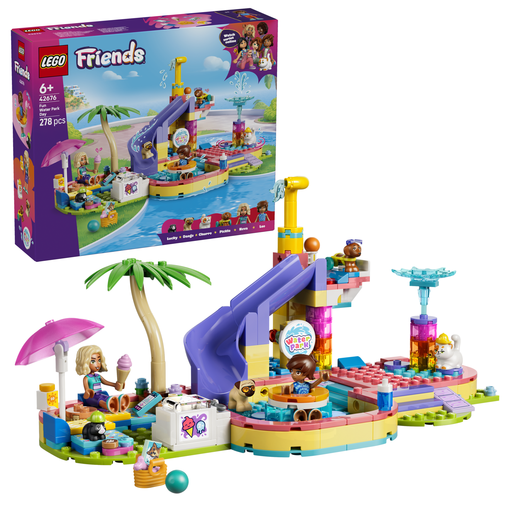
Why this product fits the profile: The set contains 278 pieces, two mini-dolls, four animal figures and accessories. It is aimed at children aged 6 and over and combines building with role-play.
The piece count remains manageable, while the finished water park scene offers several play possibilities. Age and safety warnings are clearly stated.
Four animal figures, two mini-dolls and digital 3D building instructions via the LEGO Builder app.
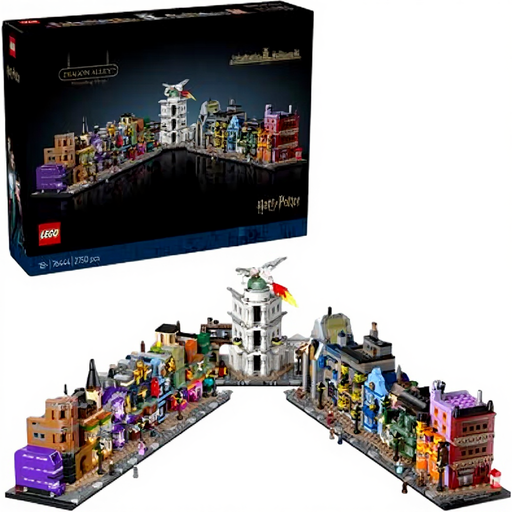
Why this product fits the profile: With 2,750 pieces and twelve minifigures, it is aimed at adult Harry Potter fans and collectors with enough display space.
The description mentions specific display configurations: five modules, a long row of shops or both sides of the street. This allows you to plan the space needed in advance.
Many famous locations, twelve minifigures and flexible display with a width of up to 88 cm.
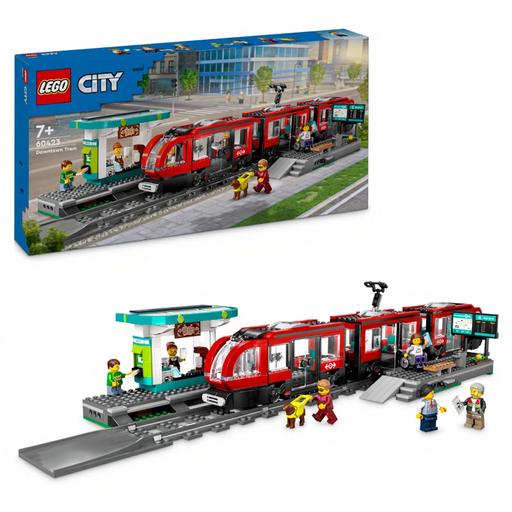
Why this product fits the profile: For children aged 7 and over, this 811-piece set includes a vehicle, a station, six minifigures and accessories for repeat role-play.
It is not just a static model: doors, platform and accessories support various play scenarios. The length of 53 cm should be considered beforehand.
Vehicle with two driver cabs, six minifigures and accessibility-related accessories such as a wheelchair and guide dog.
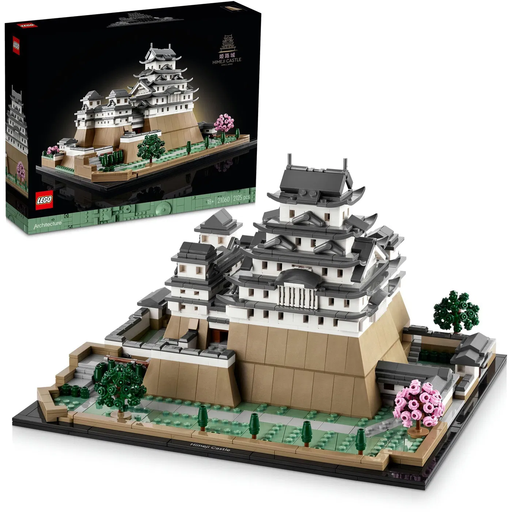
Why this product fits the profile: The model for ages 18 and over includes a castle complex with paths, towers and four cherry trees. It is designed for building and display.
The product description states the finished dimensions: 19 cm high, 32 cm wide and 27 cm deep. This allows you to choose the display cabinet or shelf with confidence.
Removable roof with a simplified interior view and interchangeable tree design with green or pink blossoms.
We have put together a complete, regularly updated list of products that fully meet these strict selection criteria and the safety regulations in force in the EU.
That depends on the specific set. The products featured here start with a recommendation from age 4. Many LEGO sets for children are aimed at children aged 6 or 7 and over, while LEGO sets for adults like the LEGO Architecture 21060 or LEGO Harry Potter 76444 are intended for ages 18 and over. You should also pay attention to the safety warnings on the product page.
Small pieces can be stored in labelled sorting boxes or resealable bags by colour, shape or building section. For collector and display models, a dry, stable surface protected from direct sunlight is recommended. For very large models, the base should be able to support the weight permanently.
A large building set can be suitable as a gift if the theme, age, available build time and display space are right. For film and game fans, LEGO Star Wars, LEGO Minecraft or LEGO Harry Potter could be options. Adult collectors often prefer LEGO Icons or LEGO Architecture, while children tend to respond more to minifigures, vehicles and directly playable scenes. The deciding factor is therefore not just the piece count, but the intended use.