
Lieferung heute & morgen

Qualitätsgarantie

Willkommens-Angebote freischalten: KOSTENLOSE Lieferung | Bis zu 80 % RABATT | Kostenlose 30-Tage-JoyPlus-Testphase
App herunterladen
LEGO car models appeal to different people for different reasons: children want to build a vehicle and play with it, teenagers are interested in motorsport and technology, while adults often look for a detailed collector’s model to display on a shelf. However, the product name alone doesn’t tell you whether a set is right for the way you intend to use it.
There are three common reasons for choosing the wrong set:
Before you buy, think about how the vehicle will be used. LEGO Speed Champions focuses on compact recreations of well-known vehicles. Depending on the set, you may also get driver minifigures, distinctive bodywork details and motorsport features. These models are ideal for building, short play sessions and displaying on a desk or shelf.
LEGO Technic cars take a more functional approach. The LEGO Technic 42213 Ford Bronco SUV, for example, features a V6 engine model, front suspension, a solid rear axle and steering operated via the spare wheel. If you want to explore how mechanical systems work, it offers a different experience from a small LEGO racing car.
The piece count can help you judge how much building is involved, but it’s no substitute for checking the dimensions. Here are a few examples:
Compact LEGO model cars are often more practical for a display cabinet or narrow wall shelf. With Technic models, also check that you have enough room for the moving functions.
ABS plastic is listed as the main material for the LEGO sets mentioned here. Several product descriptions refer to EN-71 safety standards and compliance with EU toy safety requirements. Still, always check the specific warning on the product page: these sets contain small parts and must be kept out of the hands of children under three.
When choosing a car gift for a child aged 9 or over, make sure the age recommendation, piece count and build challenge are a good match. A more demanding Technic model may suit a child with an interest in technology, while a compact Speed Champions set takes up less space. Metal collector’s cars come with different expectations: a diecast model arrives assembled, but doesn’t offer the same building experience as a LEGO car set.
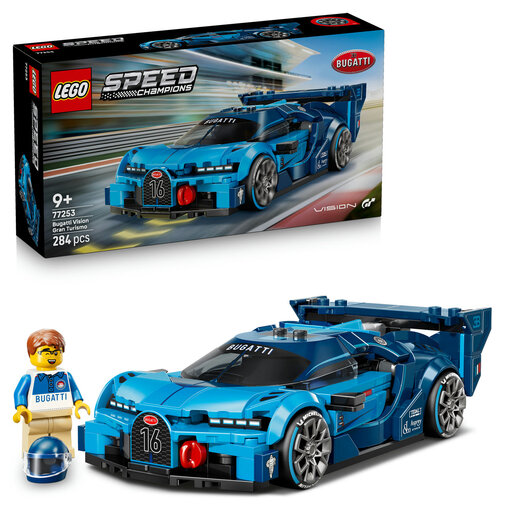
Why this product suits this profile: This compact set contains 284 pieces and is recommended for fans aged 9 and over, according to the product details. It combines a manageable building project with the design of a well-known sports car.
The piece count and approximate 14 cm length make it easier to judge what to expect than a general marketing claim about attention to detail.
Bugatti features include the grille, rear wing and distinctive headlights; a driver minifigure is included.
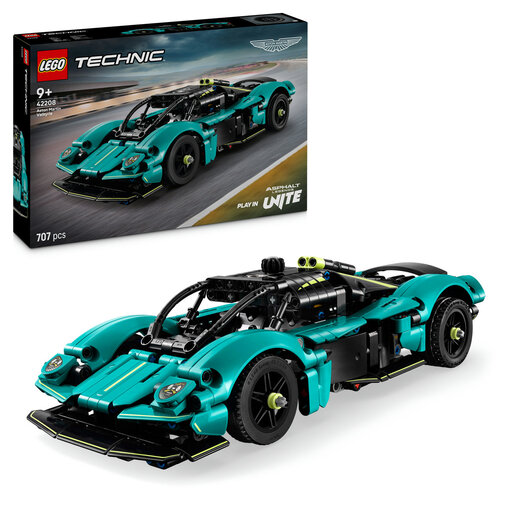
Why this product suits this profile: The model is 29 cm long, contains 707 pieces and includes several moving components. It’s aimed at fans who want mechanical features as well as a striking appearance.
The product description lists specific features such as V12 pistons, a differential, steering and doors that open upwards, rather than just a general racing-inspired look.
A larger Technic model with moving parts and a stated age recommendation of 9 and over.
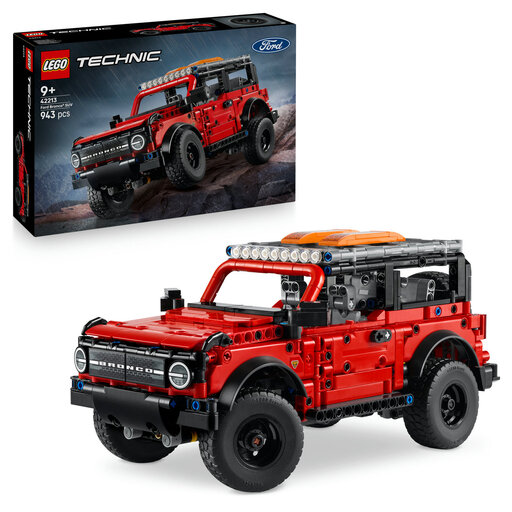
Why this product suits this profile: This off-road model is 28 cm long, contains 943 pieces and has steering operated via the spare wheel. It’s suitable for children aged 9 and over, as well as tech fans looking for a more involved building project.
Details of the suspension, V6 engine, solid axle and roof rack show you exactly which features the model includes.
943 pieces, rugged off-road styling and several visible or moving construction features.
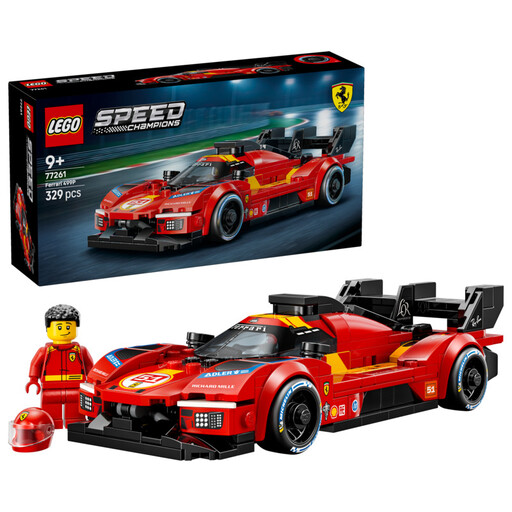
Why this product suits this profile: This Ferrari racing car is designed for building, playing with and displaying. A driver minifigure and motorsport-inspired details make it a great choice for Ferrari LEGO and racing car fans.
The product details give the piece count, vehicle dimensions and specific features such as the cockpit, rear wing and air intake.
Compact display size, a driver minifigure and several racing-inspired design details.
We’ve put together a complete, regularly updated list of products that meet these strict selection criteria and fully comply with the safety requirements in force in the EU.
For film fans, sets such as the LEGO Speed Champions time machine from Back to the Future are a great choice, with two minifigures and two possible build options. If you’re interested in Porsche LEGO, Lamborghini LEGO, Bugatti LEGO, BMW LEGO or Ford LEGO, compare the licensed design, scale and available functions before you buy.
Metal models such as the Lamborghini Revuelto in 1:36 scale or the Dodge Challenger in 1:44 scale arrive ready-assembled and, according to their descriptions, have opening doors and pull-back action. A remote-controlled off-road truck, on the other hand, is for anyone looking to drive over different types of terrain. Pay particular attention to the battery type, charging accessories, batteries for the remote control and recommended supervision.
Many LEGO Speed Champions sets and some LEGO Technic models are recommended for fans aged 9 and over, according to the product details. As well as the age recommendation, consider the piece count, building instructions and the child’s interest in technical features. Small parts should always be kept away from children under three.
LEGO Speed Champions focuses on compact recreations of sports cars, racing cars and well-known vehicles. LEGO Technic cars are more likely to include moving or mechanical features such as steering, suspension, pistons and differentials. Both types can be displayed in a cabinet, but they need different amounts of space.
It depends on the set. Speed Champions models can be built, played with and displayed. Technic models invite you to try out their functions. Ready-assembled diecast collector’s cars are another option if you’re mainly looking for a display piece. Before buying, check the scale, material, moving parts and the space you have available.