
Lieferung heute & morgen

Qualitätsgarantie

Willkommens-Angebote freischalten: KOSTENLOSE Lieferung | Bis zu 80 % RABATT | Kostenlose 30-Tage-JoyPlus-Testphase
App herunterladen
A LEGO children's jumper should do more than simply display a striking logo. For school, leisure and active days of play, the right size, comfortable materials and easy-care properties suited to family life are what matter most. At the same time, LEGO children's jumpers, LEGO children's sweatshirts and LEGO hoodies can differ considerably in fabric, fit and features.
If you choose based solely on colour or design, you can easily overlook important details. Three common buying misconceptions can mean that a jumper is barely worn after a short time:
For a sweatshirt for boys and girls, the material composition is an important point of comparison. According to the product details, a model made from 50% polyester, 43% viscose and 7% elastane offers a flexible, stretchy structure. Ribbed cuffs on the sleeves and hem can also help the fit stay in place during movement.
Other LEGO children's jumpers are made from 78% cotton, 18% polyester and 4% elastane. Cotton is often preferred for its soft textile feel, while polyester and elastane can help support shape retention and freedom of movement. However, it would be unhelpful to make a blanket statement about suitability: the key factors are how the fabric feels against the skin, the warmth required, the fit and the child’s individual preferences.
A stated fabric weight of 320 g/m² describes a comparatively substantial sweatshirt fabric. For a LEGO children's hooded jumper, this can be practical on cooler days, but it does not replace an additional jacket in low temperatures.
An unbrushed reverse side is smoother than brushed sweatshirt fabrics. This can be comfortable for children who prefer a less fleecy inside. At the same time, check that the jumper is loose enough to fit over a T-shirt or vest.
A classic fit with ribbed cuffs is often suitable for school and everyday wear. A hoodie provides an additional layer of fabric around the neck and head thanks to its hood. However, the hood can be awkward when worn under a jacket or during sport. For active days, it should therefore be neither too heavy nor too loose.
Several of the models listed here are suitable for machine washing at 40 °C with similar colours. Depending on the product, drying at a low temperature may be recommended or prohibited. Some models must not be ironed, bleached or dry-cleaned.
For a grey children's jumper, red children's jumper or pink children's jumper, you should also follow the washing instructions for the individual item. Dark and vibrant colours may benefit from being turned inside out before frequent washing. Embossed or raised LEGO logos should not be ironed directly with a hot iron if this is excluded by the care label.
For children's clothing, the EU size is often based on height. The size charts provided include the following reference measurements:
These measurements do not guarantee an individual fit. Where possible, measure the child without thick clothing and compare their height, chest measurement and, where applicable, hip and waist measurements with the product page. With a hoodie, the amount of room required for an additional layer may also be relevant.
A jumper that is too large can get in the way around the sleeves and shoulders. One that is too small can restrict movement when climbing, playing or getting dressed. For growing children, it is therefore more useful to use their actual measurements rather than relying solely on age.
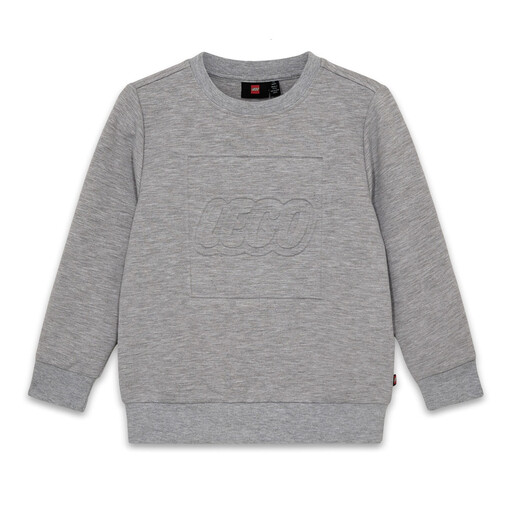
Why this product suits this profile: The classic grey sweatshirt is designed to pair easily with jeans, joggers or a jacket. The stated size 104 makes it easier to choose the right option, provided it matches the child’s measurements.
The material and care details are clearly stated: 50% polyester, 43% viscose and 7% elastane, plus machine washing at 40 °C.
Stretchy fabric, a classic fit and ribbed cuffs on the sleeves and hem.

Why this product suits this profile: This grey hoodie combines a hooded design with 320-g/m² sweatshirt fabric, making it suitable for school, the playground and leisure time when an extra layer is wanted.
The product description specifies the unbrushed reverse side, the single-jersey sweatshirt fabric and clear care instructions.
Size 116, raised front print, hood and machine washing at 40 °C with similar colours.

Why this product suits this profile: The dark colour is less likely to show visible signs of wear during everyday use. This hoodie is designed for children who are regularly active both outdoors and indoors.
The care instructions specify washing at 40 °C, drying in the shade and avoiding tumble drying, ironing and bleach.
78% cotton, 18% polyester and 4% elastane, plus a lined single-jersey hood.
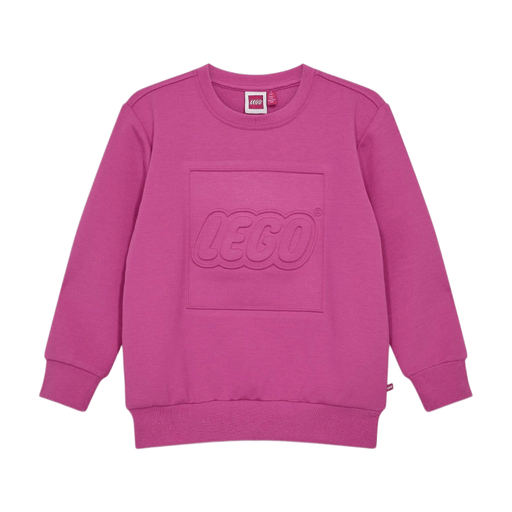
Why this product suits this profile: The pink sweatshirt is aimed at children who want to combine a bold colour with a simple, classic fit.
The product details state the fibre composition, fabric weight and washing temperature rather than focusing solely on the design.
Stretchy fabric blend, unbrushed reverse side and ribbed trims for active everyday wear.
We have put together a complete, regularly updated list of products that fully meet these strict selection criteria and the safety regulations applicable in the EU.
Start by checking the child’s height, then compare their chest, waist and hip measurements with the size chart for the specific item. A children's jumper in size 104 will not automatically fit every child of the same age. The same applies to size 116 and size 128. With a hoodie, you should also consider whether the child will wear a T-shirt or thin jumper underneath.
Many of the models mentioned can be machine-washed at 40 °C with similar colours. However, the drying instructions vary: some items allow low tumble-drying temperatures, while others require line drying in the shade. The care label on the individual garment is therefore the deciding factor. For the models listed, ironing, bleaching and dry cleaning should be avoided.
It depends on how it will be used. A hoodie has a hood and can provide extra coverage on cooler days. A classic sweatshirt usually sits more neatly under jackets and is suitable for school, indoors and layered outfits. When choosing, it is therefore important to consider not only the colour and LEGO logo, but also the child’s wardrobe, activity level and desired freedom of movement.