
Lieferung heute & morgen

Qualitätsgarantie

Willkommens-Angebote freischalten: KOSTENLOSE Lieferung | Bis zu 80 % RABATT | Kostenlose 30-Tage-JoyPlus-Testphase
App herunterladen
LEGO NINJAGO sets combine LEGO building toys with imaginative role play and action models with moving parts. But choosing the right set isn’t always easy for parents, relatives and collectors. A large picture on the box tells you little about the piece count, what’s included for play or how much space the finished model will need.
Three common buying mistakes are worth looking out for:
The manufacturer’s age recommendation is a useful guide. Sets with larger starter elements and a manageable number of pieces are suitable for children aged 4 and up. For example, the LEGO NINJAGO set 71853 contains 107 pieces and a Starter Brick. Older children and teenagers may prefer more extensive NINJAGO building sets with several stages to complete.
Small parts can be a choking hazard. Always follow the safety advice, and supervise children below the recommended age when they’re using the pieces. Sets with 49 or 52 pieces are better suited as compact additions to a collection, while models with more than 800 pieces need plenty of time and a suitable space to build.
When choosing a LEGO NINJAGO mech, look out for these features:
A model with several points of articulation can be posed in different ways. This is useful for role play and displaying it in a collection. If you’re choosing a LEGO NINJAGO dragon, also check whether its head, wings, tail and claws can move.
Before you buy, check the dimensions of the finished model. According to the product details, the dragon in set 71836 is 27 cm tall, while the dragon in set 71859 is approximately 28 cm tall and 38 cm long. These measurements can help you plan where to put it in a child’s bedroom or display cabinet.
If you already own several LEGO NINJAGO sets, check whether the figures, weapons and vehicles work well together thematically. Some models have parts that can be combined with other mechs, sold separately. For collectors, the number of minifigures, special characters, anniversary features and display appeal may matter more.
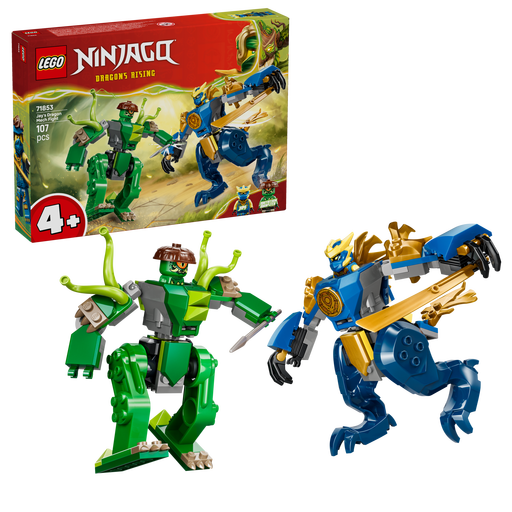
Why it suits this shopper: This set is designed for children aged 4 and up and combines two mechs with two minifigures. With 107 pieces, it’s a manageable introduction to building.
The piece count and Starter Brick give you a clear idea of what’s included. The age recommendation helps you avoid choosing a model that’s too complex.
107 pieces, two moving mechs, two minifigures and no batteries required.
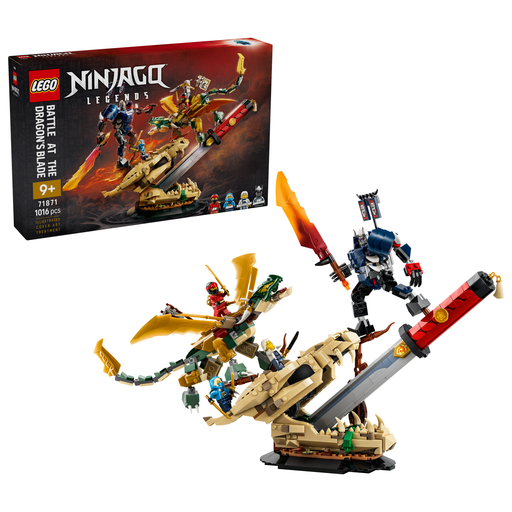
Why it suits this shopper: This display model for ages 9 and up has 1,016 pieces, a moving mech, a dragon and four minifigures for play and display.
The specific piece count, recommended age and model dimensions give you a realistic idea of the time and space needed.
1,016 pieces, four minifigures and a model that can be displayed in different poses.

Why it suits this shopper: A great choice for children aged 9 and up and fans who want to switch between displaying a dragon and a mech. The set contains 821 pieces and six minifigures.
The 2-in-1 feature is clearly explained: the dragon can be transformed into a mech without having to rebuild it from scratch.
821 pieces, six minifigures and a transformable model with moving parts.
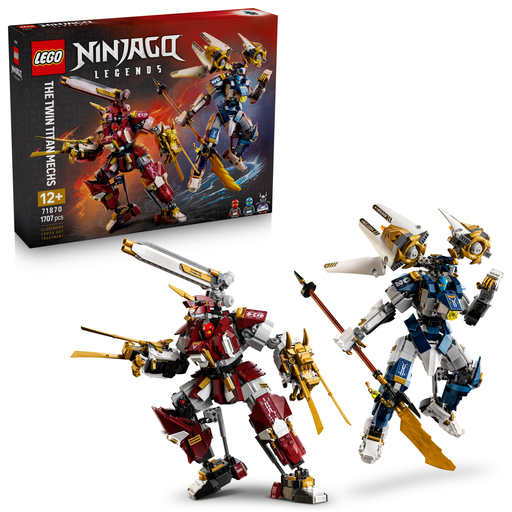
Why it suits this shopper: This set for ages 12 and up has 1,707 pieces, two Titan Mechs and several ways to swap weapons and arms.
The high piece count and age recommendation make it clear that this is a substantial building and display project.
Two mechs measuring approximately 26 cm tall, 1,707 pieces and different configurations for collecting and display.
We’ve put together a complete, regularly updated list of products that meet these strict selection criteria and the safety regulations in force in the EU.
It depends on the model. Some sets are suitable for ages 4 and up and include Starter Bricks and just a few pieces. Larger sets with 800 or more pieces are often designed for children aged 9 and up or for teenagers. Always use the specific age recommendation on the product page as your guide.
How long a set lasts depends on how it’s used and stored, and how carefully its moving parts are handled. Replace any loose or damaged pieces, and protect finished models from moisture, direct sunlight and heavy pressure. For frequent play, simple, sturdy models are often more practical than delicate display builds.
The LEGO NINJAGO sets mentioned in this guide are built and played with by hand. Features such as spinners, moving joints, cockpits and interchangeable weapons don’t need batteries. Even so, check the product description before buying if you’re expecting additional electronic features.