
Lieferung heute & morgen

Qualitätsgarantie

Willkommens-Angebote freischalten: KOSTENLOSE Lieferung | Bis zu 80 % RABATT | Kostenlose 30-Tage-JoyPlus-Testphase
App herunterladen
LEGO sets are popular as gifts and creative building toys, but they differ significantly in age recommendation, piece count and play concept. A colourful box or a high number of pieces alone doesn’t tell you much about whether a LEGO building set will actually fit into family life. Parents, grandparents and other gift buyers should therefore check a few typical pitfalls before purchasing.
1. Equating a high piece count with long-lasting play value
A set with lots of bricks can be challenging, but it doesn’t automatically offer versatile play scenarios. Some models are designed primarily for building and displaying, while others include figures, functions and accessories for role play. What really matters is the combination of piece count, model size and play possibilities.
2. Ignoring the age recommendation
LEGO sets for children aged 4 and up sometimes use larger or easier-to-handle building elements. A set for ages 9 or 10, on the other hand, may contain many small pieces, complex building steps and require a longer attention span. A set that’s too challenging might remain unfinished; one that’s too simple may not offer older children enough of a challenge.
3. Confusing theme and usage
LEGO Classic is ideal for free building ideas, whereas LEGO Minecraft, LEGO Disney or LEGO Friends usually provide a recognisable play world with figures and scenes. If you’re buying for a child with no interest in a particular film or game universe, you might miss the mark despite the right age recommendation.
The manufacturer’s age recommendation is an important starting point. You should also pay attention to the warning notice: several of the LEGO sets featured contain small parts and are not suitable for children under three years old. For younger children, adult supervision is recommended. For LEGO sets for ages 4 and up, clear building instructions, a well-organisable selection of pieces and a simple first model are particularly practical.
The piece count helps with comparison, but it’s only one parameter. Examples from the selection:
A smaller set can work well as a little gift or a starter. Large LEGO building sets, on the other hand, need enough building space and a storage solution.
With LEGO Classic, the focus is on colours, basic bricks, windows, wheels and free construction. The LEGO Creator range offers 3-in-1 LEGO sets with several model variations from a shared pool of pieces. With LEGO Minecraft, LEGO Friends and LEGO Disney, the figures, settings and thematic details are more strongly predefined. Buyers should consider whether the child prefers to design their own vehicles and animals, act out scenes, or display a model permanently.
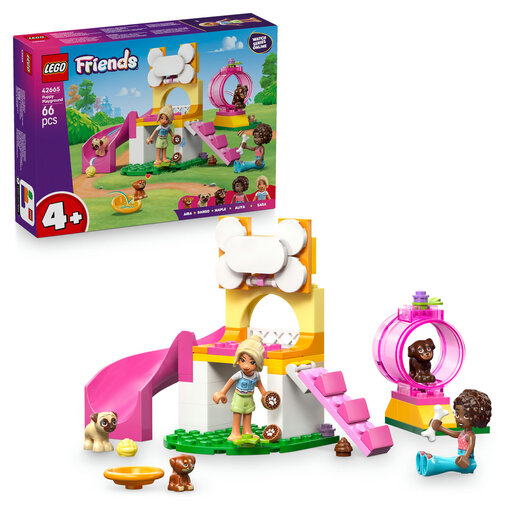
Why this product fits the profile: This compact LEGO set for ages 4 and up offers a manageable introduction with a playground, two mini-dolls and three dogs.
With 66 bricks, the piece count stays manageable. This means there’s no unnecessary need for sorting or storage space.
Simple build, three dog figures, slide, ladder and tunnel for immediate role play.
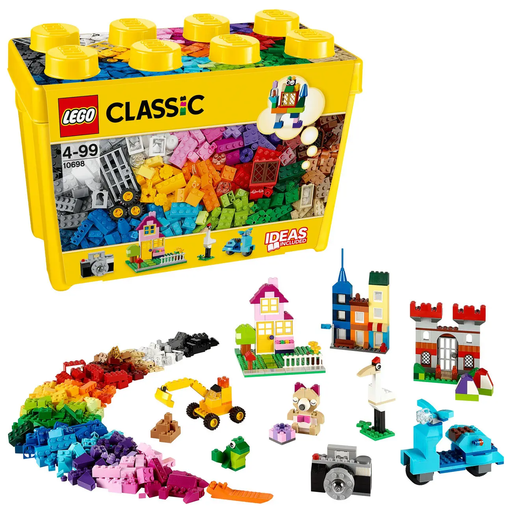
Why this product fits the profile: The large storage box is aimed at families looking for a versatile basic assortment for regular free building.
The selection includes 790 pieces, 33 colours, windows, doors, wheels and two green baseplates – instead of just a single one-off model.
Practical plastic box, first building instructions and numerous classic building elements for free ideas.
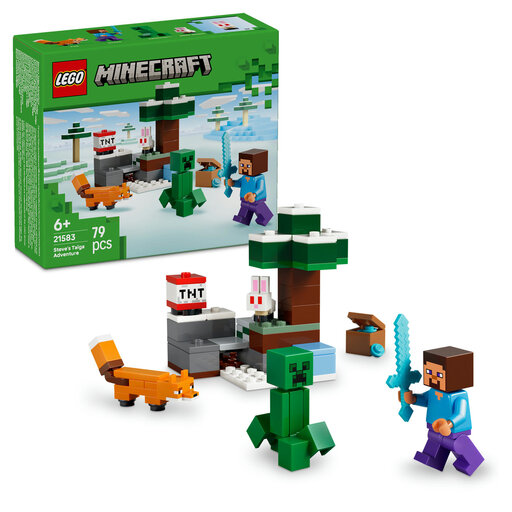
Why this product fits the profile: Minecraft fans aged 6 and up get a compact scene with Steve, Creeper, fox, baby rabbit and a TNT function.
The set combines building with a clear play sequence and, at 79 pieces, is less extensive than large Minecraft scenes.
Compact size, familiar Minecraft characters, treasure hunt and an integrated explosion function.
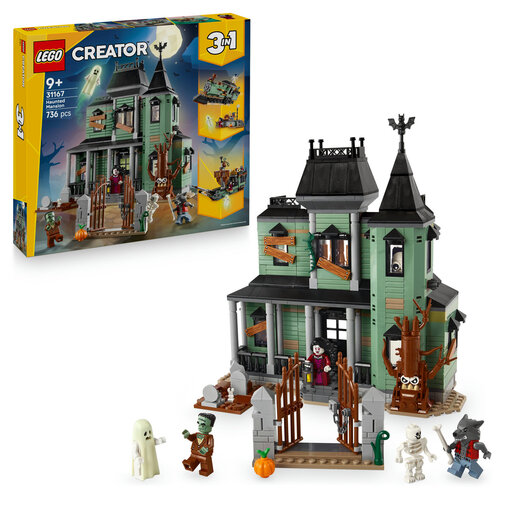
Why this product fits the profile: For children aged 9 and up, this 3-in-1 LEGO set offers three different building and play variations.
The models can be built one after the other as a haunted house, ghost ship or ghost train. This increases the variety, even though not all models can exist at the same time.
736 bricks, five figures and movable or hidden play elements.
We’ve put together a complete, regularly updated list of products that fully meet these strict selection criteria and the safety regulations in force in the EU.
For getting started, manageable sets with clear building instructions and simple models are a good idea. The LEGO Friends 42665 Puppy Playground contains 66 pieces and is recommended from age 4. LEGO Classic 10696 and 10698, on the other hand, offer a larger basic assortment for children who enjoy building their own models.
That depends on the child’s age, attention span and the type of play they prefer. For a small gift, fewer than 100 pieces can be enough. If you want to regularly put free building ideas into practice, you could choose a LEGO Classic set with 484 or 790 elements. However, a high piece count requires more sorting space and building area.
Yes, some LEGO sets are expressly intended for fans aged 18 and over. They are often aimed at collectors or people who want to build a model and then display it. Before buying, you should therefore compare the model size, piece count, movability and the available space on a shelf or desk.