
Lieferung heute & morgen

Qualitätsgarantie

Willkommens-Angebote freischalten: KOSTENLOSE Lieferung | Bis zu 80 % RABATT | Kostenlose 30-Tage-JoyPlus-Testphase
App herunterladen
Whether you’re looking for a birthday present, something to keep little ones occupied on a rainy day or a family project to enjoy together, construction toys for children offer plenty of possibilities. But the sheer amount of choice can make it hard to decide. Terms such as ‘STEM’, ‘Montessori’ or ‘particularly sturdy’ don’t automatically tell you whether a set is right for a child’s age, home or play style.
The points below will help parents, grandparents and other family members assess marketing claims and choose the right building and construction toy.
A set with 150 pieces sounds substantial. What matters, though, is which shapes are included and how many different ways they can be combined. If the set lacks baseplates, connectors, wheels or distinctive components, a high piece count can still offer only a limited number of models.
For younger children, larger pieces that are easy to grasp are usually more suitable than lots of small specialist parts. When choosing building blocks for children, consider the variety of shapes and how they can be stored, as well as the number of pieces.
A construction set labelled for children aged 3 and over isn’t automatically suitable for every three-year-old. Small parts, marbles and magnets require particular care. The manufacturer’s age recommendation is therefore only a starting point. You should also take account of warnings, the size of the components and the child’s abilities.
For magnetic products, remember: magnets must not be opened or swallowed. If you suspect a magnet has been swallowed, seek medical help immediately. Damaged pieces with visible magnets should also be removed from play.
Terms such as STEM toys, Montessori construction toys or creative learning toys may suggest particular ways to play. However, they don’t prove that a product will automatically deliver a specific learning outcome. Details you can check objectively include the material, age recommendation, piece count, dimensions, cleaning instructions and any available conformity information.
For plastic building blocks, smooth surfaces and rounded edges are practical things to look for. Magnetic building blocks should state that the magnets are permanently enclosed. Details such as ultrasonic welding may indicate how the product is made, but they don’t replace regular checks for cracks and loose parts.
Wooden building blocks should be free from splinters and stack securely. For soft foam pieces, removable, washable covers and non-slip bases are useful features for indoor play.
Simple interlocking, stacking or magnetic connections are suitable for children aged 3 to 4. Primary-school-aged children can often enjoy more complex LEGO building sets, marble runs or themed construction models. Clear instructions can make it easier to get started, while open-ended sets encourage children to combine pieces freely.
Also consider the dimensions. Large sets need a permanent home and should be easy to put away neatly after play.
A box, bag or case helps prevent individual pieces from getting lost. Depending on the manufacturer’s instructions, plastic pieces can usually be cleaned with a soft, damp cloth. The sets featured here don’t include electronic components, so there are no battery costs. Check connections, edges, magnets and fastenings regularly. Don’t continue using any damaged pieces.
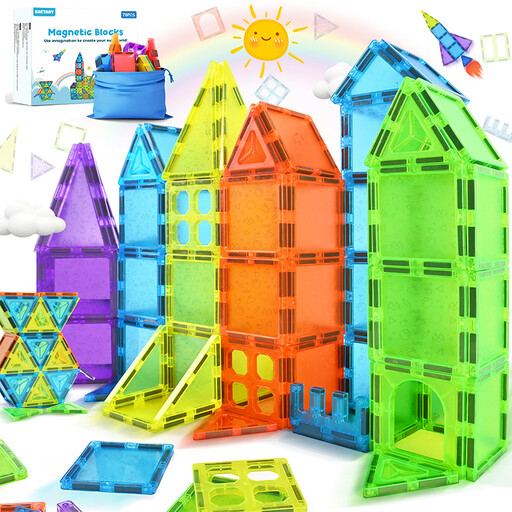
Why it suits this profile: This set offers a manageable introduction to magnetic building and, according to the product information, is intended for children aged 3 and over.
The product description mentions smooth surfaces, rounded edges and permanently enclosed magnets. Small parts and the magnet warning still need to be taken into account.
78 pieces, 2D and 3D building possibilities, and no batteries required.
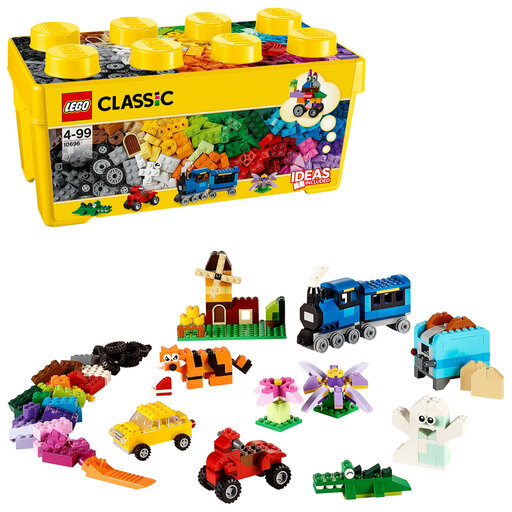
Why it suits this profile: A versatile selection of colours, a storage box and 484 pieces make this a good choice for families looking for a system they can expand.
The selection includes windows, eyes, wheels and baseplates, among other pieces. This means the piece count comes with a variety of specific component types.
484 pieces, a plastic storage box and, according to the product information, suitability for children aged 4 and over.
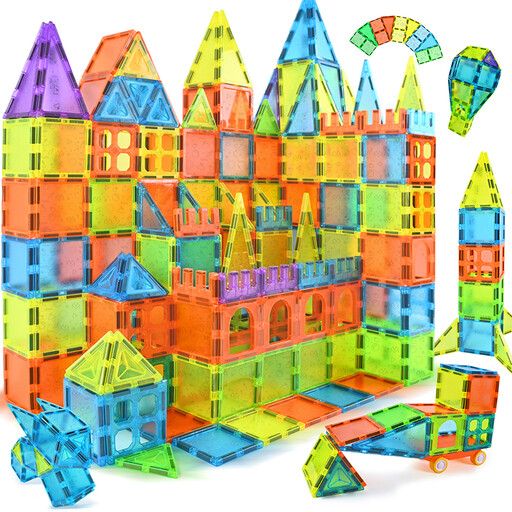
Why it suits this profile: With 122 pieces, this set is suited to households where larger models or group building projects are a regular feature.
The description specifies ABS plastic, rounded edges and ultrasonic welding. The explicit warning about small, powerful magnets remains important.
122 pieces, the freedom to create 2D and 3D models, and cleaning with a soft, damp cloth.
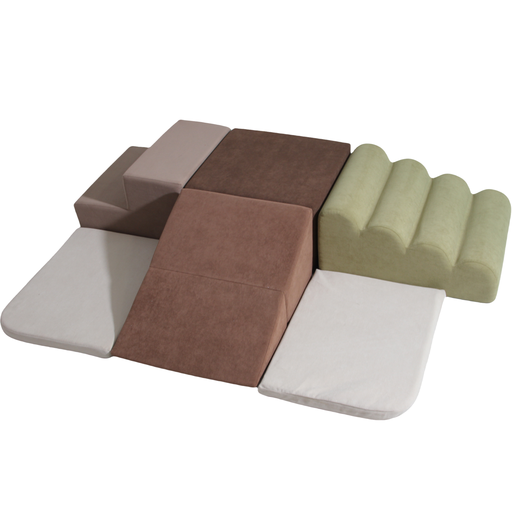
Why it suits this profile: This six-piece foam set is designed for larger play and building arrangements at home, in a child’s bedroom or in a childcare setting.
The product information lists washable covers, concealed zips, hook-and-loop fastenings and non-slip bases. After unpacking, the foam needs 24 to 48 hours to expand.
Six differently shaped pieces and, according to the product information, compliance with the EN71-1, EN71-2 and EN71-3 standards.
We’ve put together a complete, regularly updated list of products that meet these strict selection criteria and the safety regulations in force in the EU.
Look for sets with a clear age recommendation of 3 and over, larger components and simple connections. Parents should pay particular attention to the warnings for magnetic building blocks and remove damaged pieces straight away. Products with small parts or powerful magnets are not intended for children under 36 months.
Durability depends on the materials, connection points, storage and how often the toys are played with. Plastic building blocks should be stored somewhere dry and protected. Wooden blocks need to be checked for splinters, while foam sets benefit from washable covers. Regular visual checks are more useful than a general claim about how long a product will last.
The mechanical sets featured here don’t require batteries. However, you may need to replace individual pieces that are lost or damaged. A suitable storage box, a consistent sorting system and checking the pieces after play can help prevent them from going missing.