
Lieferung heute & morgen

Qualitätsgarantie

Willkommens-Angebote freischalten: KOSTENLOSE Lieferung | Bis zu 80 % RABATT | Kostenlose 30-Tage-JoyPlus-Testphase
App herunterladen
LEGO sets are versatile gifts, family toys and decorative pieces. The choice ranges from open-ended LEGO Classic bricks and themed LEGO playsets to more elaborate models for teenagers and adults. However, the number of pieces alone says little about whether a set is right for its intended user.
If you are looking for LEGO building sets for children or creative LEGO gifts in Germany, it is therefore worth checking some typical marketing claims before buying. The key considerations are the recommended age, the type of play you want, storage and whether the model is mainly intended to be built, played with or displayed.
At first glance, a set with 800 pieces appears more extensive than a model with 400 pieces. However, the total may be made up of lots of tiny elements. For younger children, a smaller set with vehicles, figures and simple functions may be more accessible than a large model with lengthy building stages.
So compare the number of pieces, figures, functions and model size together. With a LEGO building set containing minifigures, the number of characters also affects how many play scenes are possible.
‘From 4 years’, ‘from 6 years’ or ‘from 10 years’ does not just describe the target age group. The classification also takes into account the complexity of the building instructions, small parts and the likely level of independence during construction. A LEGO set for ages 7 and over may appeal to a younger child, but could require some help from an adult.
Important: sets containing small parts are generally not suitable for children under three years of age. Also check the safety information on the relevant product page.
Models from the LEGO Wednesday, LEGO NINJAGO or LEGO collector sets ranges may be designed for both play and display. For example, a microscale model offers a decorative representation, while vehicles and minifigures are more suited to role play. Before buying, consider whether the set will be rebuilt regularly or kept permanently on a shelf.
For beginners, LEGO sets for ages 4 and over with larger, easy-to-grip elements and manageable building stages are a good choice. The LEGO Classic 10713 Creative Suitcase, for example, is designed as a portable case and contains bricks in different colours for free building.
With LEGO sets for ages 6 and over, themed rooms, figures and accessories are often added. This encourages different play scenarios, but may also mean more sorting. For older children and teenagers, LEGO sets for ages 10 and over are often more detailed and focused on model building or display.
The number of pieces should suit the time available for building and the builder’s attention span:
Also look for moving wheels, fold-out sections, hidden compartments or rebuilding options. These features are objectively easier to assess than general claims about ‘endless’ fun.
According to the product information, the sets listed are made from ABS plastic. For everyday practicality, storage is more important than the material designation. A box, case or separate sorting compartments make it easier to find small elements again.
Before buying, compare the model dimensions with the intended shelf or play table. For seasonal models such as LEGO Christmas sets, it is also sensible to plan a dry storage space for the months outside the Christmas period.
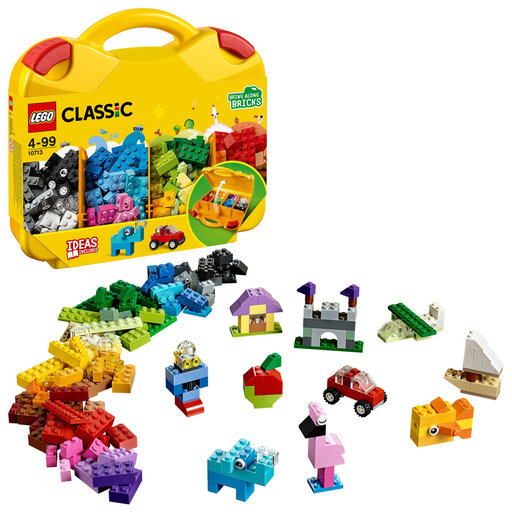
Why this product suits this profile: The portable case offers an easy introduction to open-ended building ideas and is easier to put away after play.
The storage box reduces the risk of bricks being scattered around. The open-ended concept does not tie the play value to one particular character or storyline.
Suitable from age 4 according to the product information; colourful bricks and special pieces support open-ended construction.
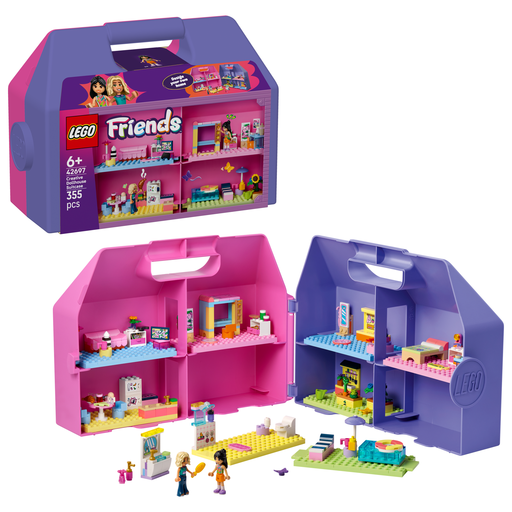
Why this product suits this profile: The foldable doll’s house combines structured rooms with changeable scenes and is suitable for children aged 6 and over.
The eight rooms can each be furnished individually. At the same time, the model closes like a case, reducing the amount of space needed for storage.
355 pieces, two minifigures and a closed size of approximately 23 × 30 × 13 cm according to the product description.
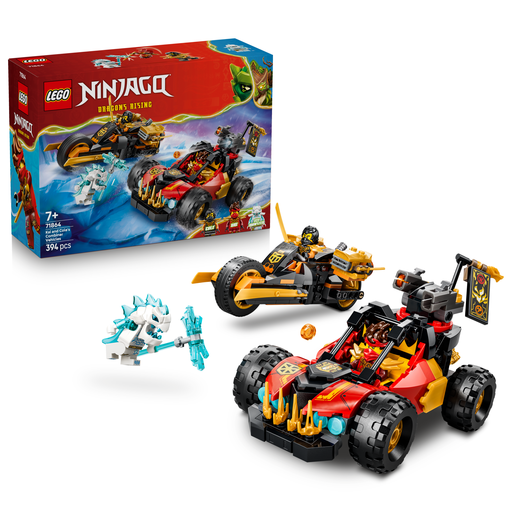
Why this product suits this profile: Two vehicles, a rebuilding option and three minifigures appeal to children aged 7 and over who prefer action-focused role play.
The play value does not depend solely on the finished model: the buggy and motorbike can be rebuilt into a three-wheeled vehicle.
394 pieces, two vehicles and three minifigures; digital 3D building instructions are available via the LEGO Builder app.
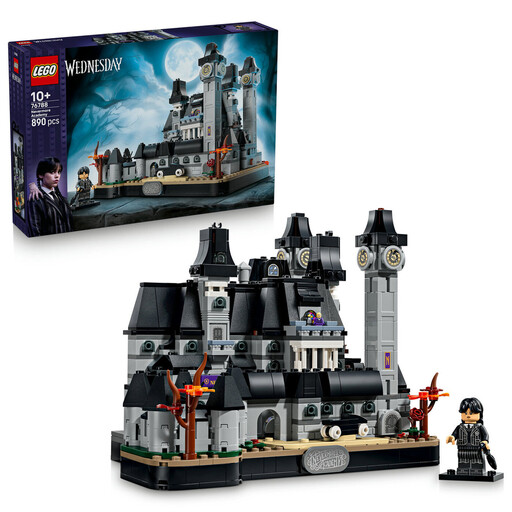
Why this product suits this profile: Designed for fans aged 10 and over, the model can be used as a detailed display piece once built.
The product description explicitly mentions display and play options. A secret compartment provides storage for the figures or small items.
890 pieces, one Wednesday minifigure, plus Wednesday and Enid microfigures; the model measures approximately 17 × 21 × 19 cm.
We have put together a complete, regularly updated list of products that fully meet these strict selection criteria and the safety regulations applicable in the EU.
For beginners, LEGO Classic sets with colourful basic bricks and simple building ideas are an obvious choice. Models with a storage box or case make sorting easier. Always check the specific age recommendation and warning information for the set in question.
That depends on the child’s age, building experience and intended use. Fewer than 500 pieces may be enough for shorter projects. Keen builders or families who want to build together are more likely to benefit from larger boxes containing several model ideas. The number of pieces should always be considered alongside the figures and functions.
Sorting boxes, resealable bags and sturdy plastic containers help you organise small elements by colour or component type. A foldable set such as a case takes up less space when closed. Display models are best kept in a dry, dust-protected location away from direct sunlight.