
Lieferung heute & morgen

Qualitätsgarantie

Willkommens-Angebote freischalten: KOSTENLOSE Lieferung | Bis zu 80 % RABATT | Kostenlose 30-Tage-JoyPlus-Testphase
App herunterladen
LEGO Speed Champions cars combine building fun, play and a compact representation of well-known vehicles. For parents, relatives and adult car enthusiasts, however, the choice isn't always straightforward: at first glance, many LEGO racing cars, LEGO sports cars and LEGO model cars look similar. The differences only become apparent when you look at piece count, age recommendation, model size and features.
As Joybuy Product Recommendation Officer, I filter the relevant product data and organise it according to specific usage scenarios. This makes it easier to avoid buying a set because of a striking design, when it doesn't actually suit the age, available space or desired style of play.
A set recommended for children aged 9 and over isn't necessarily quick to build. The models consist of several hundred pieces and often contain small, intricate construction sections. For younger children, adult supervision can therefore be helpful. For F1 models, the recommended age range is sometimes higher.
Descriptions like "detailed" often refer to specific design elements, such as a rear spoiler, air intakes or special wheel rims. They say little about the size of the finished model or the scope of play. A LEGO racing car building kit is primarily a construction and display model, not a remote-controlled vehicle.
LEGO Speed Champions cars are pushed along or incorporated into play on a suitable surface. If you're looking for remote control, lighting or stunt functions, you should choose an RC vehicle instead. Depending on the model, such vehicles require batteries or a rechargeable battery and have different requirements for surface, maintenance and storage.
The piece count is a practical indicator of the scope of the building project:
A higher piece count can mean more building steps, but it isn't the sole measure of suitability. The interests and patience of the person receiving the gift are also crucial.
Before buying, you should check whether the finished model will fit on a shelf or in a display cabinet. According to product specifications, the Bugatti is approximately 4 cm high, 15 cm long and 7 cm wide. The Porsche measures roughly 5 × 16 × 7 cm, while the Mercedes-AMG F1 racing car is about 2 × 20 × 8 cm. F1 models are often longer and require a correspondingly wide display area.
The LEGO sets mentioned are made from ABS plastic. Due to small parts that could be swallowed, they are not suitable for children under 3 years old. The respective age recommendations should be followed: several models are aimed at children aged 9 and over, while the Mercedes-AMG F1 W15 is for fans aged 10 and over. The Red Bull Racing RB20 model is designated for adults aged 18 and over.
For children aged 9 and over, a clean, well-lit workspace is also advisable. Unused pieces should be stored in bowls or sorting boxes. The printed instructions or the LEGO Builder app can help with the step-by-step build.
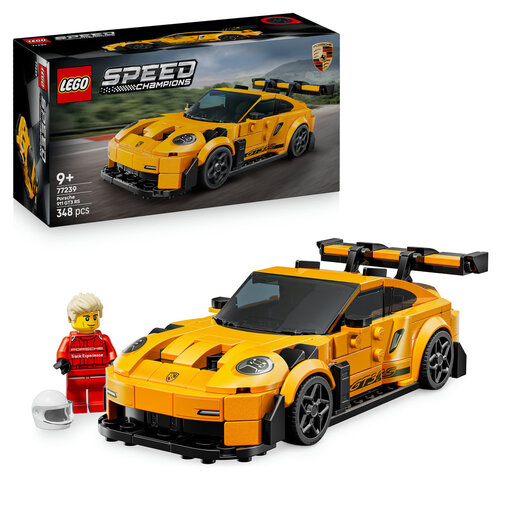
Why this product suits the profile: The Porsche model is ideal for beginners looking for a familiar LEGO sports car design with manageable dimensions. The age recommendation is 9 years and over.
The product data clearly states the piece count, dimensions and age recommendation. This makes it easier to assess the building effort and required display space before purchase.
348 building bricks, racing driver minifigure, rear spoiler and air intakes on the bonnet.
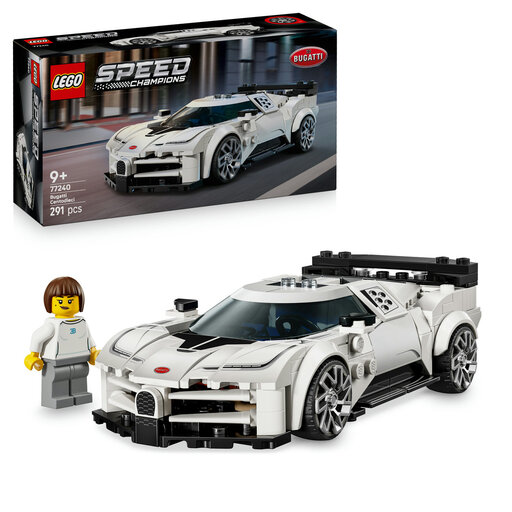
Why this product suits the profile: The Bugatti is aimed at people who value striking bodywork details and a presentable display piece when it comes to LEGO model cars.
The description names specific features such as five round air intakes, distinctive headlights, radiator grille, rear spoiler and four exhaust pipes.
291 building bricks, Bugatti driver minifigure and compact dimensions of approximately 15 cm in length.
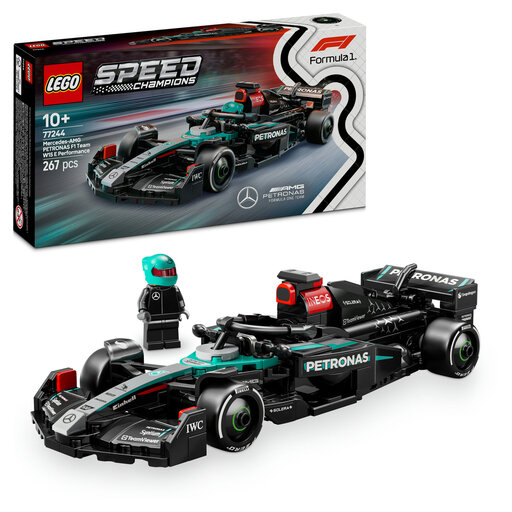
Why this product suits the profile: The F1 model is suitable for motorsport fans who prefer a longer, narrower racing car shape with typical Formula 1 elements.
The details state the age recommendation, piece count and the greater length of approximately 20 cm. This reduces the risk of wrong purchases when shelf space is limited.
267 elements, movable Halo element, front and rear wings, plus a driver minifigure with helmet.
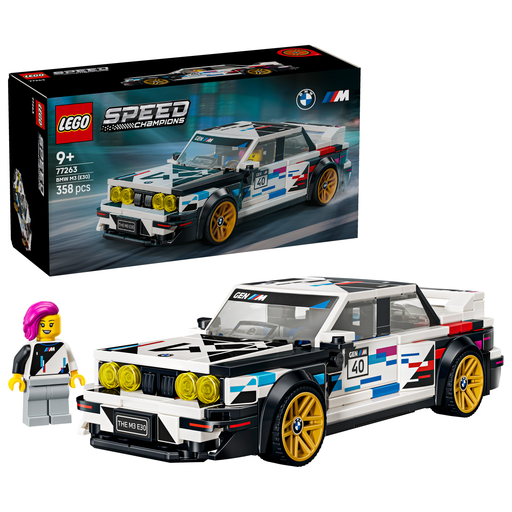
Why this product suits the profile: The BMW M3 (E30) is ideal for adult car enthusiasts and fans of classic motorsport styling who want a model to build and display.
The 358 building bricks, dimensions of approximately 17 cm in length and the explicitly stated focus on children aged 9 and over as well as collectors make the intended use transparent.
Special BMW motorsport livery, driver minifigure, plus angular bonnet, air intake and rear spoiler.
For fans of the Ferrari brand, the LEGO Speed Champions Ferrari 499P with 329 pieces, low cockpit, rear spoiler and driver minifigure is a possible alternative. If you prefer a film vehicle, you can choose the Toyota Supra MK4 from the Fast & Furious series; this set is recommended for children aged 10 and over.
If you'd rather drive straight away, remote-controlled vehicles offer functions such as 2.4 GHz control, LED lighting, rechargeable battery or stunt tyres. However, these products are not LEGO model cars and should not be judged by the same criteria. For classic die-cast models or compact metal vehicles, scale, material and moving parts are the key parameters.
We've put together a complete, regularly updated list of products that fully meet these strict selection criteria and the safety regulations in force in the EU.
Many sets are designated for ages 9 and over. The specific age recommendation depends on the individual model. Due to small components, children under 3 should not have access to the sets. For more complex models, adult assistance can be helpful.
Durability depends on use, build quality and storage. For a longer lifespan, models should not be thrown, cleaned with water or subjected to strong pressure. Loose or damaged pieces should be checked before further play.
In normal use, there are no battery costs, as the models are not motorised. Possible additional costs only arise from extra sets, replacement parts or suitable storage. For remote-controlled alternatives, however, batteries or charging a rechargeable battery may be required.