
Lieferung heute & morgen

Qualitätsgarantie

Willkommens-Angebote freischalten: KOSTENLOSE Lieferung | Bis zu 80 % RABATT | Kostenlose 30-Tage-JoyPlus-Testphase
App herunterladen
LEGO vehicle models vary significantly in age recommendation, piece count, features and intended use. A model that looks detailed in product images isn’t automatically right for every child or every collection. So before you buy, it’s worth taking a close look at the technical specifications rather than relying on general marketing claims.
Many LEGO cars aimed at children aged 7 and over come with a pull-back motor or moving wheels, but they still contain small components. The age recommendation describes the intended level of difficulty, but it doesn’t replace adult supervision. For younger children, loose small parts also pose a safety risk.
A set like the LEGO Technic 42220 Monster Jam Sparkle Smash Pull-Back is recommended for ages 7 and up. By contrast, many LEGO Speed Champions models are aimed at children aged 9 or 10 and over. For adults, there are more complex LEGO car model kits, some with several thousand pieces.
LEGO sports cars and LEGO supercars are often designed as display models. They have rolling wheels, but they don’t always include extensive mechanics. LEGO Technic vehicles, on the other hand, tend to focus more on functions such as steering, gearboxes, suspension or moving engine components.
If you’re looking for a vehicle for daily play sessions, you should look for pull-back functions, sturdy builds and movable elements. For a display cabinet, however, scale, bodywork details and piece count are more important.
A set with lots of pieces isn’t automatically more difficult or more suitable. The building technique, age recommendation and mechanical features are also key. A model with 300 pieces can be more challenging due to small bodywork elements than a simple vehicle with a similar piece count.
First, check the official age recommendation. For children aged 7 and over, many LEGO monster trucks with simple mechanics are a good choice. LEGO racing cars from the Speed Champions range are often intended for children aged 9 or 10 and over. Adult LEGO fans will find LEGO Technic vehicles for ages 18 and up, with a significantly higher building effort.
The piece count helps with comparison:
Think about whether the model is mainly for playing or for display. With LEGO Technic vehicles like the tipper truck, for example, you can move the loading area, doors or steering. LEGO Speed Champions, on the other hand, focuses on scale-accurate bodywork of famous vehicles.
Common vehicle types include:
The models mentioned are mostly made from ABS plastic. When buying, look out for warnings about small parts and the manufacturer’s product safety information. For sets sold on the UK market, information about relevant UK and EU requirements, such as EN-71 toy safety, is particularly important. You should always check the specific labelling directly on the product page or packaging.
The finished dimensions are also important. Depending on the model, a LEGO vehicle can be between around 14 and 43 centimetres long. Before you buy, make sure you know whether it will fit in a toy box, on a shelf or in a display cabinet.
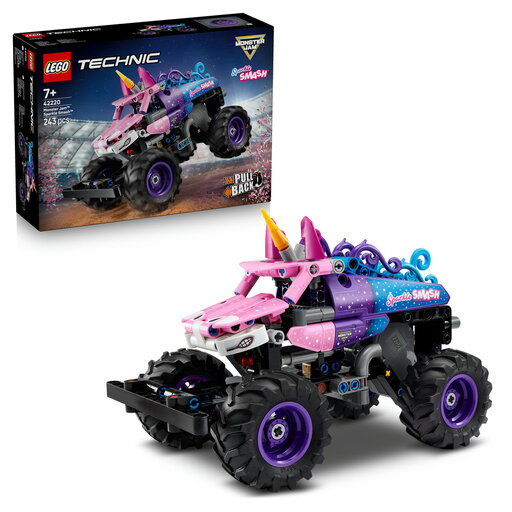
Why this product fits the profile: The set is aimed at children aged 7 and over and combines a manageable size with a pull-back function that can be used straight away.
The play function is clearly described and isn’t just about looks. With 243 pieces, the build is easy to follow.
Pull-back mechanism, 12 cm height, 19 cm length and an age recommendation of 7 and up.
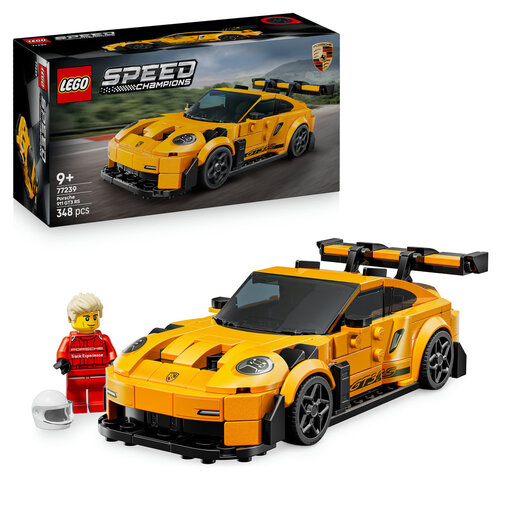
Why this product fits the profile: The bodywork is based on a specific sports car and is suitable for building, playing and then displaying.
The product specification lists 348 pieces and specific dimensions. This helps buyers compare the level of detail with the space they have available.
Racing driver minifigure, rear spoiler, air intakes and a finished model approximately 16 cm long.
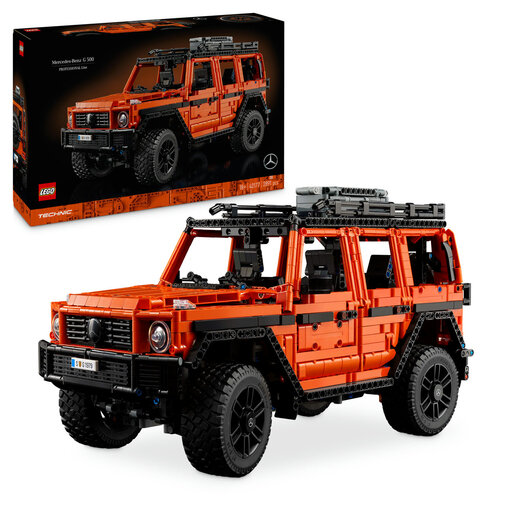
Why this product fits the profile: The model, for ages 18 and up, is designed for a longer building process and subsequent display.
The high piece count of 2,891 and the clearly stated target audience make the challenge transparent. The model isn’t positioned as a quick, spontaneous project.
Functional steering, high suspension, gearbox with D, N and R positions, and 43 cm length.
We’ve put together a complete, regularly updated list of products that fully meet these strict selection criteria and the safety regulations in force in the EU.
Models with a clear age rating of 7 and up, such as certain LEGO Technic monster trucks, are a good starting point. Also pay attention to small parts, the build time and the desired play function. For children with little building experience, a compact pull-back truck can be easier to manage than a detailed sports car.
That depends on what you want to use them for. LEGO Technic vehicles more often offer mechanical functions such as steering, suspension or moving engines. LEGO Speed Champions focuses more on scale-accurate bodywork, brand features and display looks. For regular functional play, Technic is usually the more obvious choice; for a collection of LEGO collector vehicles, Speed Champions may be a better fit.
With proper use, LEGO models can remain usable for a long time. The key factors are dry, dust-free storage, careful handling of stickers and regular checks of moving parts. Models with delicate attachments shouldn’t be used permanently as throw-around or crash toys. Loose pieces are best stored sorted, so the vehicle can be repaired or rebuilt later.