
Lieferung heute & morgen

Qualitätsgarantie

Willkommens-Angebote freischalten: KOSTENLOSE Lieferung | Bis zu 80 % RABATT | Kostenlose 30-Tage-JoyPlus-Testphase
App herunterladen
A LEGO dollhouse combines building with imaginative role-play. Children can design rooms, move figures around and create their own stories. At the same time, sets vary considerably in recommended age, piece count, size and accessories. An eye-catching product image alone therefore says little about whether a set is right for the child, the available space and the intended scope of play.
As a Joybuy Product Recommendation Officer, I have filtered the most important buying criteria and matched suitable models to different user profiles. This helps avoid common purchasing mistakes, whether you are looking for a LEGO Friends dollhouse, a Gabby's Dollhouse LEGO set or a LEGO Bluey house.
A set for ages 4 and up may make getting started easier with starter bricks and illustrated instructions. However, this does not mean that every child will be able to complete every building step without assistance. Larger models for ages 8 or 9 and up often include more parts, smaller elements and more complex construction stages.
For younger children, check the following:
A multi-storey house may appear extensive at first glance. For imaginative role-play, however, figures, furniture and themed accessories are what really matter. Despite having many rooms, a set with only a few figures may enable fewer varied stories than a more compact playhouse with well-matched accessories.
Therefore, pay attention to the combination of rooms, figures, animals and play features. Moving flames, an elevator, a slide or a rotating dance floor can create additional storylines—but they do not replace age-appropriate design.
A high piece count can mean longer building and play sessions, but it also requires more time and a larger assembly area. Before buying, compare the dimensions of the completed model with the intended shelf, play table or nursery. For sets with lots of loose accessories, a storage box is also a practical addition.
The manufacturer’s age recommendation is an important point of reference. LEGO sets for ages 4 and up are typically designed to offer an easier introduction. Models for ages 6, 8 or 9 and up may require greater perseverance and more developed fine motor skills. For all sets containing small parts, follow the safety warnings and keep the toy away from children under 3.
DIY miniature houses for adults require particular care. Wooden, paper and decorative components are considerably smaller than classic LEGO bricks. Tools, adhesives and lighting components may also require a suitable workspace.
A LEGO house with figures generally offers more opportunities for role-play than a building model on its own. Compare the following:
For fans of particular series, the selection of figures is especially important. In Bluey sets, for example, Bluey, Bingo, Chilli and Bandit are part of the family house’s play experience. In Gabby’s Dollhouse, Gabby and familiar companion characters take centre stage.
Product specifications should always be considered together. Examples from the selection include:
These specifications illustrate the difference between a children’s dollhouse construction set and a decorative miniature model: they are designed with different goals in mind.
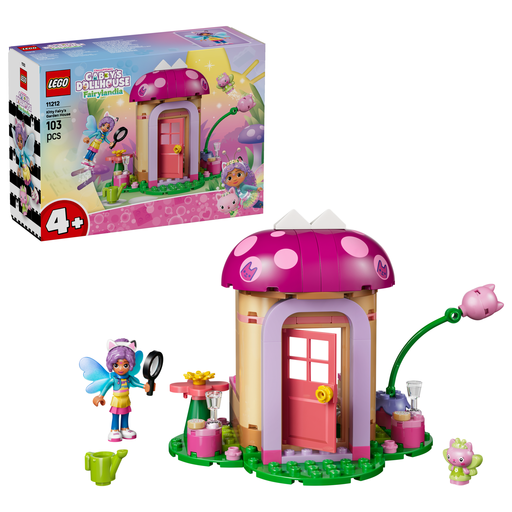
Why is this set a good fit? This compact set is designed for children aged 4 and up who are looking for an easy introduction to building and role-play. Its 103 pieces, starter bricks and illustrated instructions make assembly easier.
The piece count and age range are clearly stated. Rather than promising a large multi-room house, the set offers a manageable garden play world.
103 pieces, two figures, accessories including a watering can and magic wand, plus a model measuring approximately 12 × 12 × 17 cm.
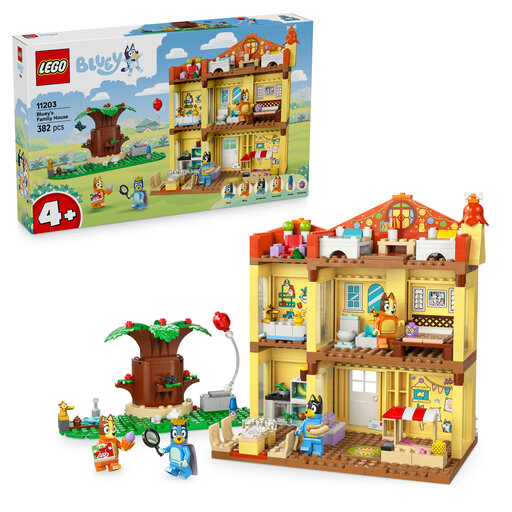
Why is this set a good fit? This modular playhouse appeals to children who want to recreate scenes from the series and invent their own family stories. It is designed for fans aged 4 and up.
The play value extends beyond the house façade: removable rooms, a garden area and four figures create clearly defined play scenarios.
382 pieces, four figures, several rooms and accessories including a kitchen, piano, furniture and garden elements.
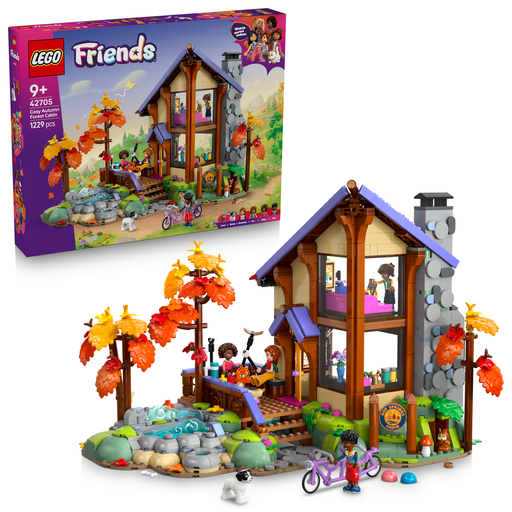
Why is this set a good fit? Designed for children aged 9 and up who want to combine nature, animals and ambitious building projects. The cabin includes a kitchen, living area and bedroom for extended role-play stories.
The age range and space requirements make it clear that this model is not intended for spontaneous, short building sessions or small shelves.
1,229 pieces, four mini-dolls, a dog, a squirrel and accessories including binoculars, a tandem bicycle and campfire elements.
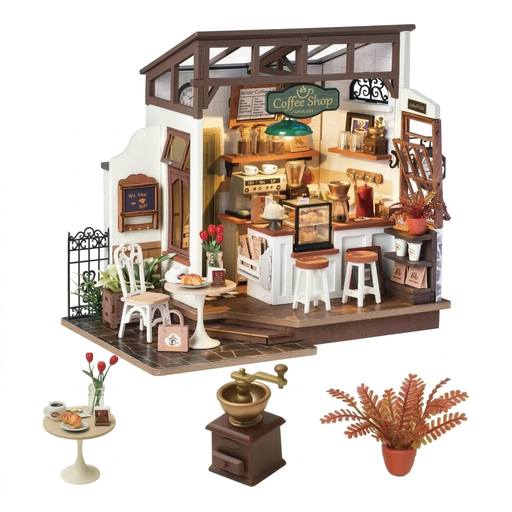
Why is this set a good fit? This 1:24-scale miniature model is designed for teenagers aged 14 and up and adults looking for a decorative project for a desk, shelf or bookcase.
This is positioned as a DIY model rather than a conventional children’s toy. Small parts, adhesive and lighting require a suitable workspace.
1:24 scale, approximately 25 × 15 × 19.5 cm when assembled, featuring a café scene, outdoor terrace and battery-powered night lighting.
We have put together a comprehensive, up-to-date selection of dollhouses and building kits that can be compared by age range, accessories, theme and safety information.
For a gift for girls and boys aged 4 and up, a child’s favourite world is often the best place to start. Fans of Bluey or Gabby’s Dollhouse benefit from familiar figures and accessories. Children interested in nature may prefer the LEGO Friends Nature Glamping Cabin or a treehouse.
For older children, piece count should not be considered in isolation. A set containing 701 to 1,229 pieces can become a long-term building project, but it also requires patience and sufficient storage space. Models with several clearly separated construction stages are particularly well suited to building together.
Before placing your order, use this quick checklist:
That depends on the individual set. The selection includes models for ages 4 and up, such as Gabby’s Dollhouse and Bluey, as well as more extensive LEGO Friends sets for ages 6, 8 or 9 and up. Small parts are unsuitable for children under 3. The specific manufacturer’s information on the product page is authoritative.
Compact models may be approximately 12 to 20 cm wide. Larger houses and cabins can measure 28 to 32 cm or more in width. You should also leave enough room to place the figures and accessories beside the building during play.
A DIY miniature model is not equivalent to a LEGO dollhouse designed for children. The components are smaller, assembly may require adhesive and tools, and the recommended age is often 14 or above. For younger children, age-appropriate construction toys with larger components are the better choice.