
Lieferung heute & morgen

Qualitätsgarantie

Willkommens-Angebote freischalten: KOSTENLOSE Lieferung | Bis zu 80 % RABATT | Kostenlose 30-Tage-JoyPlus-Testphase
App herunterladen
LEGO Harry Potter sets combine building, role play and display. The range spans small scenes with just a few figures to substantial models such as the LEGO Harry Potter Hogwarts Castle. However, choosing the right set involves more than the theme and packaging. The recommended age, number of pieces, play features, space required and safety information all affect whether a set is genuinely suitable for its intended user.
A high piece count may indicate a detailed model, but it says little about whether the set is suitable for role play. A large LEGO Hogwarts Castle, for example, is primarily designed as a building project and display piece. A smaller set with fewer pieces, on the other hand, may include moving elements and several figures for immediate play.
So check whether the set is described as a play model, display model or a combination of both.
The recommended age is not just packaging information. It provides guidance on the difficulty level, the size of the pieces and the intended use. Sets for ages 7 or 8 and up are generally better suited to shorter building sessions and role play. Models for ages 12 or 18 and up may require considerably more patience, sorting and display space.
Small parts also pose a choking hazard. Check the relevant warnings before buying and before handing the set to children.
An individual Hogwarts set may be designed to connect with additional building sections. While this expands the creative possibilities, it can also lead to further purchases. Check whether bridges, towers or shops are sold separately, and whether the model you want can be used as a complete set on its own.
Compare the recommended age with the experience of the person receiving the gift. For children aged 7 and over, compact models such as the Sorting Hat Ceremony with 124 pieces are a good option. Teenagers and adults may prefer more extensive LEGO Harry Potter building sets, including models with several hundred pieces or more than 2,000 pieces.
The piece count helps you estimate the scope of the build, but it does not replace looking at the features. A 390-piece set with a greenhouse may be more engaging for role play than a purely decorative model of a similar size.
For children, moving components, opening rooms and multiple LEGO Harry Potter figures are particularly important. Examples include a rotating Sorting Hat mechanism, sliding rooms and hidden compartments. Collectors, on the other hand, often look for exclusive figures, rare characters and a cohesive display.
Check the following points:
LEGO sets are made from plastic components, often ABS plastic. For your purchase decision, information about workmanship, completeness, recommended age and warnings is more important than general claims about materials. Once built, the model should be protected from direct sunlight, moisture and heavy dust.
Measure the intended space in advance. According to the product information, the Hogwarts Castle with grounds measures approximately 21 cm high, 35 cm wide and 25 cm deep. According to the description, the main tower reaches approximately 67 cm in height, meaning it requires considerably more room than a small scene set.
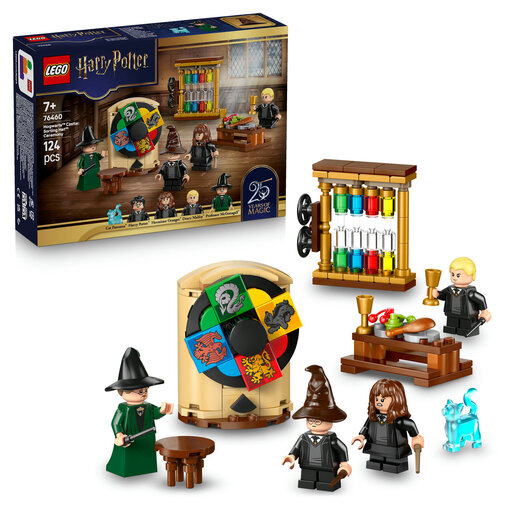
Why this product suits the profile: The set contains 124 pieces, is intended for fans aged 7 and over and offers an accessible introduction to play with its Sorting Hat mechanism.
The manageable piece count reduces the building time and space required. The features are not merely decorative but can be used for role play.
124 pieces, four minifigures and a rotating house-sorting mechanism; compatible with other modular Hogwarts sets.
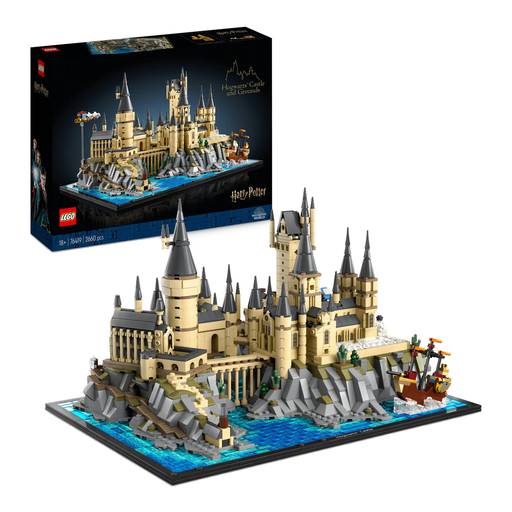
Why this product suits the profile: According to the product information, the model is aimed at fans aged 18 and over and combines 2,660 pieces with numerous familiar areas of the castle grounds.
The product description clearly highlights the focus on construction and display. This makes it easier to compare the space required with the intended use.
2,660 pieces, castle areas, grounds, lake and additional vehicle models; model dimensions according to the product information: 21 × 35 × 25 cm.
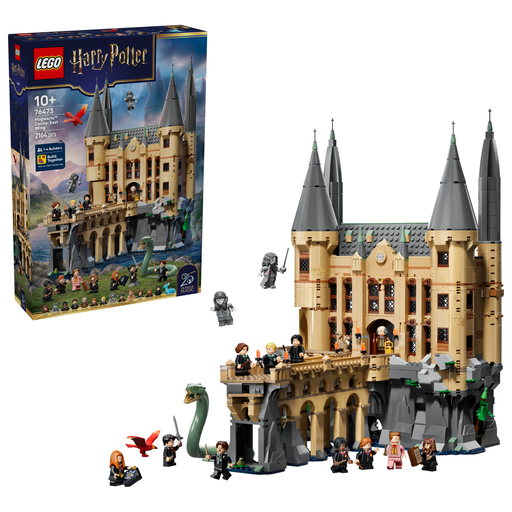
Why this product suits the profile: For users who want to combine longer building projects with immersive role play, the set offers 2,164 pieces and 13 figures or character models.
The pull-out chamber and separate Slytherin common room make the play features clear. This means the model is not limited to being a display piece.
13 characters and animal figures, a secret slide to the Chamber of Secrets and the option to connect with other modular Hogwarts sets.
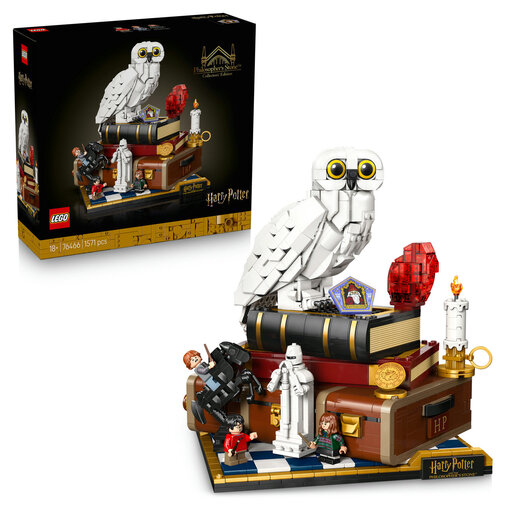
Why this product suits the profile: According to the product information, the set is designed for fans aged 18 and over, combining miniature scenes, figures and moving features in a display model.
The description explicitly states that it is intended for collectors and decoration. If you are looking for a model to display, you can take this focus into account before buying.
Harry, Ron and Hermione minifigures, Hedwig, triggerable miniature scenes and 1,517 or 1,571 stated pieces depending on the product details; check the information before buying.
We have put together a complete, regularly updated list of products that fully meet these strict selection criteria and the safety regulations applicable in the EU.
Check the recommended age for the individual model. The Sorting Hat Ceremony 76460 and the Flying Ford Anglia 76424 are intended for fans aged 7 and over according to the product information. However, the small parts are not suitable for younger children, so the safety instructions should be followed.
This depends heavily on the number of pieces, the building stages and the builder’s experience. A 124-piece set can be built in a short time. Models with more than 2,000 pieces are better planned as longer projects spread over several sessions. The LEGO Builder app can help with 3D views, zoom functionality and progress tracking.
Some models are explicitly designed as a combination of play and display. Others are aimed mainly at adults and collectors. So check the moving elements, accessible rooms and included figures. For pure display, highly detailed models with limited play features may be more suitable; for children and frequent users, robust, accessible play scenes are generally more practical.