Holiday bakers with a loaf tin
You want to bake a whole lemon cake and first need to check whether your tin will fit in the oven available.


Start by using the oven in your holiday cottage if your cake tin fits and the right heating function is available. If there’s no suitable oven, a freestanding mini oven could be an option. Measure your tin and the available space, including the clearances specified in the instructions for the particular appliance, and check the power connection before buying. The recipe settings from Dr. Oetker are a starting point for this recipe, not a guarantee that it will bake perfectly in every appliance.
You want to bake a whole lemon cake and first need to check whether your tin will fit in the oven available.
Your recipe needs the right heating function and clear settings, so you don’t have to rely entirely on the accommodation’s facilities.
You can only use your own oven if its dimensions, the space available and the setup instructions for the specific model are all compatible.
First, check that the oven at your accommodation has the right heating function and can fit your loaf tin. Bringing your own appliance is more likely to be an option if you’ve also checked the available space and power connection.
| What you need | What to check before buying | Who it matters most to |
|---|---|---|
| Cake tin and oven cavity | Dr. Oetker’s lemon cake recipe uses a 25 × 11 cm loaf tin. Measure your tin, including the rim and handles, and compare it with the usable internal dimensions. | If I bring my loaf tin, I want to know whether it will fit with enough clearance. Around 36% of consumers put a suitable tin first. |
| Heating function and baking time | Check that the appliance has the heating function and adjustable temperature range specified in the recipe, as well as a timer, and keep an eye on how the cake is baking. | It matters to me that I can select the heating function specified in my recipe and keep track of the baking time. Around 29% of consumers prioritise suitable baking settings. |
| Space and power connection | Check the clearances specified in the instructions, the available space and whether the accommodation has a suitable power connection. | I’ll only bring my own appliance if it can be set up safely and there’s a suitable power connection. Around 21% of consumers put available space and a power connection first. |
| Other uses | Think about whether you’ll actually use additional heating functions or features, and whether you have suitable tins or accessories. | If I want to use the appliance for more than just cake, I want to know whether those extra functions are worth the additional effort and transporting it. Around 14% of consumers put versatility first. |
Capacity alone doesn’t tell you whether a rectangular tin will fit in terms of width and height. Figures for round tins and internal dimensions for rectangular ones also refer to different measurements.
Measure your tin, including the rim and handles, and check the usable internal dimensions and clearance from the heating elements. Depending on the appliance, you may need a smaller tin.
Grill, rotisserie or air-fry functions don’t replace checking whether you can select the heating function specified in your recipe.
First compare the heating function, temperature range and timer with your recipe. Only then consider any additional programmes.
The clearances specified in the instructions may be important when using the appliance. For example, the Steba KB M19 instructions specify a 10 cm gap between the appliance and the kitchen wall; this doesn’t automatically apply to other models.
Check the instructions for the exact appliance against the space available at your accommodation, and confirm the power connection before use.
The BG 1055/E and BGE 1580/E models differ in capacity, the dimensions specified for tins and controls, among other things.
The freestanding KB M19 is a 19-l option with published internal dimensions, which you can compare with the measurements of your specific tin.
The range includes ovens and toaster ovens, as well as combination microwaves with convection. The exact appliance category and model variant matter.
The freestanding TO 26 SilverStyle is a 26-l oven for cakes and other oven-baked dishes.
The Design Oven Air Fry & Pizza 42815 is a 22-l multi-function appliance to consider if you want to use it for more than just cake.
The Joybuy products below include freestanding mini ovens and combination microwaves with a convection function. Compare your tin’s dimensions with the internal space of the specific appliance. Before buying a new one, check the relevant EU requirements for the appliance and whether it needs to carry a CE mark; Your Europe explains these marking requirements for the EU market.
 No image available
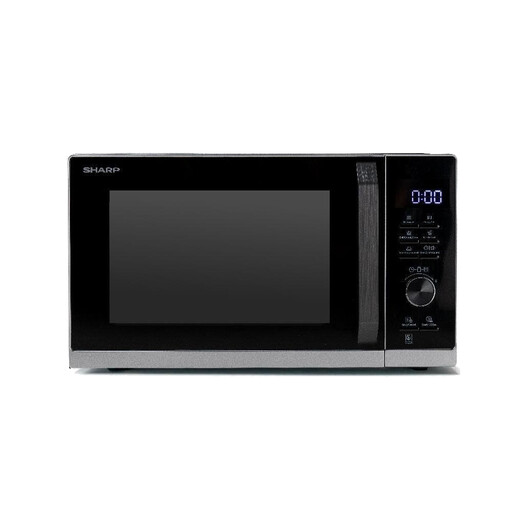
Could suit you if you want to use microwave and grill functions as well as convection; check the instructions to make sure your tin will fit.
Features listed in the product name: glass base, grill and convection functions, stainless steel/matt black.
 No image available
A combination microwave with convection heating could suit your needs if you want to use these functions too; compare your tin with the model’s specifications.
Features listed in the product name: 27 l, 900 W, 1,000 W grill and 2,100 W convection heating; silver.
 No image available
A freestanding mini oven could be an option if your accommodation doesn’t have a suitable oven. The litre capacity alone doesn’t confirm that your loaf tin will fit.
Features listed in the product name: 32 l, 1,600 W, temperature range of 100–250 °C, timer and crumb tray.
 No image available
A compact appliance could be worth considering if space is limited. Check especially carefully that your loaf tin will fit; capacity alone isn’t enough to tell you.
Features listed in the product name: 10 l, pizza function and a temperature range of 100–230 °C.
 No image available
Could suit you if you’re looking for a freestanding oven and want to use the listed pizza function too. Compare your tin’s dimensions with the internal space of the specific appliance.
Features listed in the product name: 28 l and a temperature control with timer.
For Dr. Oetker’s lemon cake recipe using a 25 × 11 cm loaf tin, the suggested settings are around 170 °C with top/bottom heat or around 150 °C with convection, with a baking time of about 60 minutes. Follow the instructions for any other recipe, and keep an eye on how the cake is baking in the appliance you’re using.
Follow the instructions for the exact model. For example, the Steba KB M19 instructions require a 10 cm gap from the rear wall, warn that surfaces can get hot and describe the required power connection; these model-specific instructions don’t automatically apply to other appliances. Let the appliance cool before cleaning it and follow the relevant cleaning instructions.
In Germany, the statutory warranty is generally a claim against the seller and is separate from a voluntary guarantee. Verbraucherzentrale specifies a two-year period and outlines additional rules for sales contracts from 31 July 2026 if you choose to have a fault repaired. If you make a complaint, check the purchase date and the circumstances of your particular case.
No. The GS mark is not the same as the CE marking. The Federal Institute for Occupational Safety and Health describes it as a safety mark that doesn’t certify baking performance or durability. For a specific electrical appliance, you should separately check the relevant EU requirements and whether it needs to carry a CE mark.