What should you look for when buying?
Built-in oven
A good fit if: You have a suitable housing unit and may want to bake with larger tins or more often in future.
Things to weigh up: The housing unit dimensions and electrical connection must suit your kitchen. A manufacturer’s claim about baking on multiple levels is not independent evidence of identical cake results.
Freestanding compact fan oven
A good fit if: You don’t have a suitable built-in housing unit and your tin and cake will fit in the usable interior.
Things to weigh up: The capacity in litres alone doesn’t prove that your tin will fit. You’ll also need to make sure you have enough worktop space and that the safety clearances are suitable.
| What matters |
What to check when buying |
Who should pay particular attention? |
| Heating mode and baking process |
Fan or hot-air setting, conventional top/bottom heat and temperature control; follow the recipe you’ve chosen. |
If I bake from different recipes, I want to be able to select the heating mode specified for each one and keep an eye on the cake. Around 31% of consumers put the right heating mode and baking process first. |
| Will your cake tin fit? |
Measure the tin, including its handles, and compare it with the internal width, depth and available height; capacity in litres alone isn’t enough. |
If you want to keep using an existing loaf tin or Bundt tin, check its dimensions and the clearance it needs. For around 31% of consumers, whether the tin fits is their main concern. |
| Built-in or freestanding space |
For a built-in oven, check the housing unit dimensions. For a freestanding model, consider its width, a suitable place to stand it and the clearances specified in the manual. |
If your kitchen doesn’t have a suitable built-in housing unit, you’ll need to find a safe place for a freestanding appliance. Around 23% of consumers focus primarily on the space for a built-in model or a safe place to stand a freestanding one. |
| Energy consumption |
For built-in ovens with the relevant labelling, consider consumption per standard baking cycle and heating mode alongside the oven capacity. |
If you bake regularly, you’ll want to compare energy consumption figures meaningfully rather than looking at the energy-efficiency class alone. Around 15% of consumers prioritise clear information about electricity consumption. |
The Verbraucherzentrale explains that consumption figures for household ovens covered by the rules are given for standardised baking cycles and specific heating modes. According to the European Commission, portable and small ovens do not fall within the scope of the EU energy labelling rules for household ovens discussed here in the same way.
Joybuy products for cakes and baking
Joybuy products for lemon cake and other baking projects, including built-in ovens and a compact appliance with a baking function.
 No image available
Bosch HBA571BB4 Series 2 built-in oven, 71 l
For recipes using the fan setting or conventional top/bottom heat; the housing unit dimensions must suit your kitchen.
Product details list: 71 l, 30–275 °C, five shelf positions, 3D hot air for up to three levels and conventional top/bottom heat.
View at Joybuy
 No image available
Comfee built-in oven, 60 cm, 70 l
A built-in option for baking with a hot-air function; check that it will fit your kitchen before buying.
Product details list: 70 l, 3 kW, hot-air circulation, baking function, LED display and timer.
View at Joybuy
 No image available
Bosch Series 6 multifunction oven HBG578ES3
For baking with hot air or conventional top/bottom heat, provided the built-in dimensions and electrical connection suit your kitchen.
Product details list: 71 l, 30–275 °C, five shelf positions, 3D hot air for up to three levels and conventional top/bottom heat.
View at Joybuy
 No image available
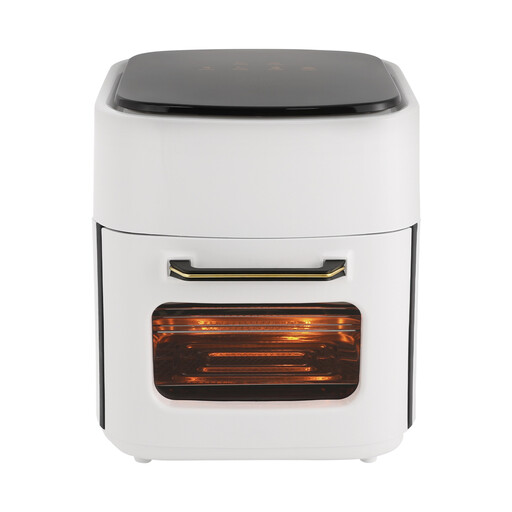
15 l air fryer with 360° fan circulation and baking function
A compact option if you’re looking for an appliance with hot air and a baking function; check that your cake tin will fit in the cooking compartment.
Product details list: 15 l, 1.400 W, temperature control from 80–200 °C, timer and viewing window.
View at Joybuy
 No image available
Haier H6 ID23T3HTB built-in oven, 78 l
A built-in option for baking if the oven capacity and housing unit dimensions suit your plans and kitchen.
Product details list: 78 l, nine cooking functions and digital timer.
View at Joybuy
Frequently asked questions
Do I have to bake lemon cake using the fan setting?
No, use the setting specified in your recipe. A lemon cake recipe from REWE specifies a fan setting at 175 °C and a skewer test. These instructions apply to that recipe and the Bundt tin used in it.
How should I prepare the cake for a picnic?
Once baked, leave the cake to cool completely according to the recipe before adding the icing and wrapping it. If you’ve adapted the recipe to include perishable fillings or toppings, consider whether they need to be kept cool during transport. This doesn’t necessarily apply to a simple lemon sponge cake.
Why might a freestanding compact oven not have an EU energy label for ovens?
The European Commission lists portable and small ovens as outside the scope of the EU energy labelling rules for household ovens discussed here. For an appliance that is covered by those rules, the absence of a label alone doesn’t prove that regulations have been breached or that its energy consumption is low or high.
Can I connect a built-in oven to the electricity supply myself?
First check the connection type and the manual for the particular appliance; Bosch specifies an earthed plug for the HBA571BB4. If work on the electrical installation is required, under § 13 NAV it must generally be carried out by an installation company listed in the network operator’s register of installers, unless the network operator does the work. This doesn’t mean that simply plugging in an appliance designed for that purpose counts as electrical installation work.
Are a manufacturer’s guarantee and statutory rights the same thing?
No. Your statutory rights for faulty goods are against the seller; a guarantee is an additional voluntary service subject to its own terms. Check any additional services offered separately from your statutory rights.


