Family bakers with a built-in space
If you’re looking for an oven for your existing kitchen, check that the loaf tin, heating method and installation dimensions are all suitable.


For a single lemon cake, the key considerations are whether your loaf tin fits and which heating method the recipe calls for; you don’t need extra programmes. REWE’s tried-and-tested yoghurt and lemon cake recipe specifies 180 °C conventional top and bottom heat. A built-in oven is a good fit if you have the right space and connection, and use the oven regularly. If you don’t have a built-in space, a compact oven may be an option, provided the tin and the space available suit the specific model.
If you’re looking for an oven for your existing kitchen, check that the loaf tin, heating method and installation dimensions are all suitable.
A freestanding oven could be a good option for occasional cake baking, as long as its interior and installation requirements suit your kitchen.
If you bake more often or prepare other dishes too, oven capacity, energy use and cleaning become more important when choosing an oven.
A good fit if: you have a suitable built-in space or regularly bake with larger tins and prepare other baked goods.
Things to consider: the appliance dimensions, built-in space and connection must suit your kitchen. A larger oven cavity alone won’t guarantee a better result for a single cake.
A good fit if: you don’t have a built-in space and your loaf tin fits inside the usable oven cavity.
Things to consider: the appliance needs space on your worktop or elsewhere. Check the interior, shelf position and distance from the heating elements as well as the external dimensions.
The figures show the main consideration for each person buying this type of oven.
| Purchase priority | What to check when buying | Who it matters most to |
|---|---|---|
| Installation and space | Check the appliance and built-in space dimensions. For a freestanding oven, also check the space available and the installation instructions for the specific model. | If I need to fit an oven into an existing kitchen, I check the built-in space and available floor or worktop space first. Around 36% of consumers put installation and space first. |
| Heating method for the recipe | Check whether the specific model has conventional top and bottom heat, and follow the instructions for the recipe you’re using. | If I’m following a specific recipe, I want to be able to select the heating method it calls for. Around 29% of consumers prioritise the recipe and heating method. |
| Tin size and quantity of cake | Compare the tin’s length, width and height with the usable oven cavity, shelf position and instructions. | For a family gathering, I check that my loaf tin will actually fit and whether I have any other baking plans. Around 21% of consumers prioritise tin size and quantity. |
| Energy use and cleaning | Compare the stated energy use per standard baking cycle for each heating method, as well as the cleaning system on the specific model. | If I use the oven regularly, I want to take running costs and maintenance into account. Around 14% of consumers put energy use and cleaning first. |
A capacity figure in litres doesn’t tell you the usable interior dimensions or the distance from the heating elements.
Measure your tin and compare its dimensions with the oven cavity, shelf position and instructions for the specific model.
With a cooker, the hob controls may depend on the cooker. Bauknecht points out that not every hob can be combined with every cooker.
Before ordering, check which type you need and whether the specific hob is compatible.
Verbraucherzentrale recommends looking at energy use per standard baking cycle for conventional top and bottom heat and fan-assisted cooking. The figures for oven capacity and energy use are helpful for comparison, but they don’t replace considering how you’ll use the appliance.
Compare energy use on a like-for-like basis and consider how often you’ll use the oven.
Built-in ovens from the brand vary depending on their features. Bosch Hausgeräte DE lists conventional top and bottom heat and a 66 l oven cavity for the HBF010BA1 model.
The built-in HR776G1B1 model combines conventional heating methods with steam bursts and cleaning programmes.
The B1CCC0AN0 is a built-in oven with conventional top and bottom heat and a multi-level hot-air system described by the manufacturer.
Severin’s TO 2067 is a freestanding mini oven and toaster oven with independently adjustable top and bottom heat.
The brand’s information can help you tell the difference between an independent oven and a cooker with a compatible hob.
This selection includes built-in ovens and a freestanding compact oven for cakes and other baking.
 No image available
For a suitable built-in space if you want to use conventional top and bottom heat for your recipe.
71 l oven cavity; conventional top and bottom heat, 3D hot air and pyrolytic cleaning. Five shelf positions and AutoPilot 10 are also listed.
 No image available
For a built-in space if you’re looking for an oven cavity suitable for cakes and other kinds of baking.
70 l oven cavity; fan-assisted cooking, ten functions and a timer. AquaClean is described as steam cleaning.
 No image available
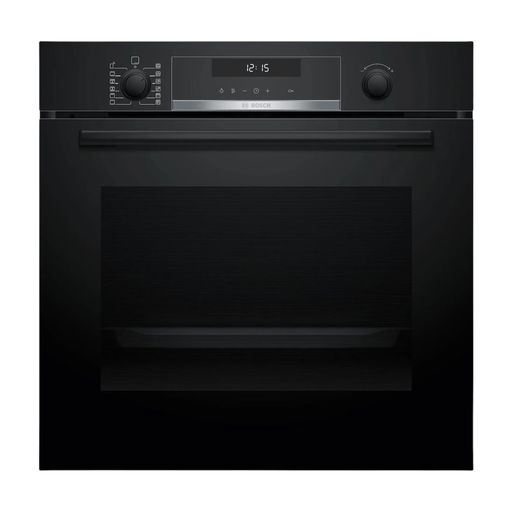
For a suitable built-in space if you’re looking for heating methods beyond conventional top and bottom heat, as well as pyrolytic cleaning.
71 l oven cavity; conventional top and bottom heat, 3D hot air and AirFry. Home Connect and AutoPilot 10 are listed in the product name.
 No image available
For a suitable built-in space if you have plans to bake more than just a cake.
71 l oven cavity; conventional top and bottom heat, 3D hot air, pyrolytic cleaning and ten heating methods. Baking on up to three levels is listed.
 No image available
For a home without a suitable built-in space, provided your loaf tin and the space available suit the appliance.
32 l oven cavity, 1.600 W, timer and a stated temperature range of 100 to 250 °C.
If you’re using REWE’s tried-and-tested yoghurt and lemon cake recipe, it specifies 180 °C conventional top and bottom heat, the middle shelf and a baking time of around 40 minutes. The recipe then recommends checking the cake with a skewer. If you’re using another recipe, follow its instructions.
It depends on whether you’re buying an independent oven or a cooker that controls the hob. If you’re buying a cooker, the specific hob must be compatible; Bauknecht points out that not every combination will work.
For ovens with the relevant information, compare the kWh figures per standard baking cycle for the heating methods listed, rather than looking only at the efficiency letter. Follow the instructions for the specific model when using and caring for a cleaning function; the standard baking cycle figure doesn’t guarantee how much energy your cake will use.