Baking one cake
If you mainly bake a lemon loaf cake for your family, make sure there’s enough room for your tin and that you can select the heating function specified in the recipe.


For a single lemon loaf cake, choosing the right tin size and heating function matters more than having a long list of programmes. If you’re planning to bake additional trays for a family gathering, a built-in oven with clearly specified fan cooking on multiple levels could be a good fit. Without a suitable built-in space, consider a freestanding appliance, provided your tin and the space available for it are the right size.
If you mainly bake a lemon loaf cake for your family, make sure there’s enough room for your tin and that you can select the heating function specified in the recipe.
If you’ll be baking additional trays as well as a loaf cake, check how many baking levels are specified for the particular model. That figure alone doesn’t tell you whether several tall loaf tins will fit at the same time.
If you need a freestanding appliance, check that the usable oven space and the area available for the appliance are suitable for your tin.
The percentages below relate to consumers choosing an oven for lemon cake at a family gathering.
| What matters | What to check when buying | Who is this particularly important to? |
|---|---|---|
| Loaf tin and recipe | Check the usable interior dimensions, shelf position and available heating functions. Dr. Oetker’s lemon loaf cake recipe specifies a 25 × 11 cm tin. | If your main priority is fitting your loaf tin and selecting the heating function specified in the recipe, this is what matters most to you. Around 40% of consumers share this priority. |
| Additional bakes | Compare the specified baking levels, spacing, tray dimensions and the accessories included with the particular model. | If you’re preparing other bakes alongside your cake, you’ll want usable oven levels and trays that fit. Around 30% of consumers make this their priority. |
| Positioning without a built-in space | Check the interior dimensions for your tin, the appliance’s external dimensions, the positioning instructions and the required connection. | If you don’t have a built-in space, you’ll want to find an appliance that can be positioned in your kitchen and accommodate your tin. Around 20% of consumers have this in mind. |
| Energy use and service | For ovens with the relevant energy label, compare kWh per standard cycle on a like-for-like basis. Check the cleaning and service information for the model. | If running costs and support after purchase matter more to you than extra baking functions, this is your main consideration. Around 10% of consumers give it this level of importance. |
An oven’s capacity in litres doesn’t tell you all of its usable interior dimensions. Dr. Oetker’s recipe uses a 25 × 11 cm loaf tin; shelf position and clearance can also affect whether it fits.
Measure your tin, including any handles, and check the interior, shelf height and required clearance in the instructions for the specific model.
A manufacturer’s claim about fan cooking on multiple levels describes a feature of that particular model. It doesn’t automatically mean that several tall loaf tins will fit.
Take the height of your tins and the space between shelves into account, and check the appliance instructions for guidance on the load you’re planning.
For ovens covered by the EU energy label, it also shows electricity consumption per standard baking cycle and the oven’s capacity. Different labelling rules may apply to small ovens.
Compare specific energy-use figures on a like-for-like basis, and consider how often you bake and how full the oven is each time.
For the built-in oven HB314G0S3, Siemens specifies a 71 l capacity and 3D fan cooking on up to three levels.
For the HBA272BB3, Bosch specifies 3D fan cooking on up to three levels, as well as pyrolytic and hydrolytic cleaning.
For the BE1100B, AEG specifies a 72 l capacity, several heating functions, an Aqua cleaning function, and a wire shelf and baking tray as accessories.
The freestanding mini ovens TO 2068 and TO 2073 are listed with different capacities: 20 l and 60 l respectively.
For the B6ACJ7AG3, NEFF specifies CircoTherm fan cooking on up to three levels and a retractable door.
This selection includes built-in ovens with fan cooking for lemon cake and other bakes, as well as a freestanding cooker with fan cooking.
 No image available
A good option if you’re planning to bake other treats on multiple levels as well as your cake. As a built-in appliance, it requires a suitable space and connection.
71 l capacity; fan cooking on up to three levels; top/bottom heat; temperature range 30–275 °C; five shelf positions; wire shelf and universal tray.
 No image available
An option if you’re looking for a built-in oven with fan cooking and several heating functions for cakes and other bakes. Check the dimensions of the built-in space and the connection required.
70 l capacity; 3 kW; fan circulation and multi-level baking; grill and pizza functions; AquaClean cleaning; timer and LED display.
 No image available
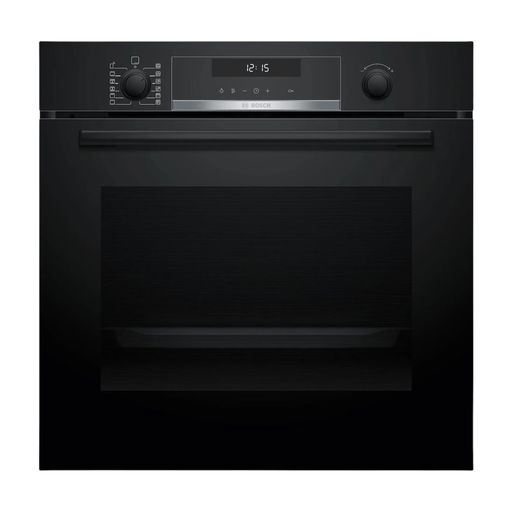
Worth considering if you’d like to prepare other dishes as well as your cake and choose from several heating functions. This built-in appliance requires a suitable space and connection.
71 l capacity; nine heating functions, including 3D fan cooking and top/bottom heat; temperature range 30–275 °C; pyrolytic cleaning.
 No image available
Could suit a gathering with extra bakes if you can make use of the specified levels. Check the dimensions of the built-in space and the connection required before you buy.
71 l capacity; ten heating functions; 3D fan cooking on up to three levels; temperature range 30–275 °C; baking tray and telescopic rails.
 No image available
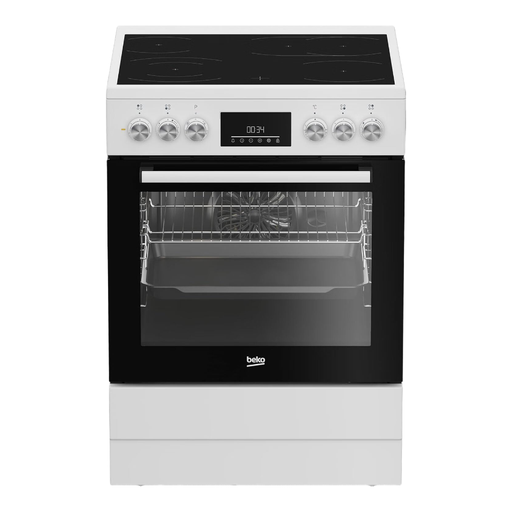
A possible choice if you don’t have a built-in space and also need a hob. Take the available floor space and power supply into account.
72 l capacity; eight cooking functions, including fan cooking; ceramic hob; SteamShine steam cleaning.
No. Dr. Oetker’s recipe for a 25 × 11 cm tin specifies around 170 °C with top/bottom heat or around 150 °C with fan cooking. It also calls for preheating and a baking time of approximately 60 minutes. These settings apply to this recipe; follow the instructions for a different cake mixture.
Not on the basis of that specification alone. It describes the fan cooking function of the particular model. You’ll also need to check the height of your tins, the space between the shelves and the appliance instructions.
For a built-in appliance, compare the dimensions of the built-in space and the connection type specified for that exact model with your kitchen. For a freestanding appliance, check its external dimensions, power connection and positioning instructions. Details for a different model may not apply.
For ovens with the relevant energy label, consumption in kWh per standard baking cycle is more useful than the efficiency rating alone. Your actual costs will also depend on how you use the oven and your electricity tariff. Ask about any installation and old-appliance collection charges for the specific offer. The statutory consumer guarantee provided by the seller is separate from any voluntary warranty.
Household ovens covered by EU energy-labelling rules are required to have an energy label; the European Commission lists small ovens as an example of products outside the scope. Electrical products covered by Germany’s Electrical Equipment Ordinance must carry a CE mark before being made available. Check how the specific appliance is classified rather than assuming that any mini oven without an energy label is automatically non-compliant.
Under the conditions set out in Section 17 of the German Electrical and Electronic Equipment Act (ElektroG), retailers covered by the rules must take back an old appliance of the same type and with essentially the same function, free of charge, when supplying a new one. When delivering to a private household, the rules also provide for free collection, subject to certain conditions. Check the return arrangements with the specific seller when you place your order.