Loaf tin bakers
You want to bake a lemon cake from a recipe and first check that your tin and the specified heating mode are suitable for the oven. Dr. Oetker’s recipe uses a 25 × 11 cm loaf tin.


If the shared oven is available and your loaf tin fits, with the recipe’s specified heating mode, using it for a single cake is an obvious choice that doesn’t require another appliance. A mini oven gives you your own baking option, but takes up worktop space and needs to be positioned safely. An air fryer is more suitable for smaller cakes, using a tin that fits and a recipe adapted for it.
You want to bake a lemon cake from a recipe and first check that your tin and the specified heating mode are suitable for the oven. Dr. Oetker’s recipe uses a 25 × 11 cm loaf tin.
You’d like to rely less on the shared oven, but need to find a limited amount of space where the appliance can be positioned safely, in line with its instructions.
You want to make a smaller cake and are happy to use a suitable tin and a recipe designed for it. Dr. Oetker has a separate recipe for this, using an 18 cm springform tin.
A good fit if: you’re allowed to use the oven at baking time, and your tin and the recipe’s heating mode are compatible.
The trade-off: You won’t need another appliance, but you’ll have to coordinate with others.
A good fit if: the shared oven isn’t reliably available and your tin fits with enough space around the heating elements.
The trade-off: You’ll have your own way to bake, but you’ll need worktop space and the safety clearances specified for your model.
A good fit if: you want to bake a smaller cake and your tin and recipe are suitable for the specific appliance.
The trade-off: A smaller tin means a smaller cake; you can’t use the quantities from a loaf cake recipe unchanged.
| What matters | What to check before buying | Who is this important for? |
|---|---|---|
| Tin and heating mode | Measure your tin and check the usable internal dimensions and shelf height. Compare the heating mode and temperature with your chosen recipe. | If I want to bake a lemon cake in the loaf tin I already own, I’ll first check that the tin and recipe are suitable for the appliance. Around 36% of consumers put finding a suitable tin and heating mode first. |
| Safe place to position it | Allow for the external dimensions, door opening and clearances stated in the instructions for the exact model. | If I have very little free space in a shared kitchen, the oven needs to be positioned safely without getting in the way of other things. Around 29% of consumers prioritise having a safe place to use the appliance. |
| Availability and cake size | Consider how often the shared oven is unavailable and whether you need a large cake or a smaller portion. | If I don’t want to depend on other people’s schedules, I’ll weigh up having my own way to bake against the amount of cake I need. Around 21% of consumers focus mainly on availability and portion size. |
| Running costs and cleaning | Only compare energy figures on the same basis, and check the care instructions and included accessories. | If I’m sharing an appliance with others, I want to compare its energy use in a meaningful way and make cleaning part of my kitchen routine. Around 14% of consumers prioritise running costs and care. |
Dr. Oetker’s lemon loaf cake recipe specifies around 170 °C for conventional heat or around 150 °C for fan-assisted cooking. These temperatures apply to that particular recipe; they don’t replace checking your appliance’s instructions or making sure the tin fits. The Verbraucherzentrale notes that oven energy figures are given per standard cycle and heating mode. They therefore don’t automatically represent the energy used to bake a single cake.
A capacity in litres doesn’t tell you whether a tin will fit in length and height, or whether it can be placed with enough space around the heating elements.
Measure your tin, including its rim, and compare it with the usable internal dimensions and shelf position of the specific model.
You may need a smaller tin for the smaller cake version.
The energy label is based on standard cycles, so it doesn’t give the energy use for a specific recipe directly.
Only compare kWh figures that use the same basis. To work out the cost, you’ll also need your electricity price in €/kWh. The Verbraucherzentrale explains standard cycles for each heating mode.
The mini oven range includes the BGE 1580/E, a 30-l model with conventional heat and switchable fan assistance.
According to the manufacturer’s data sheet, the TO 2056 mini oven has a 30-l capacity and is suitable for baking cakes, among other things.
According to the manufacturer, the compact KB 27 U.2 has a 20-l interior and a fan that runs continuously.
The HBA514BS3 built-in oven is an option for a kitchen with a suitable space for installation.
Philips offers baking tins and accessory sets in different sizes for air fryers.
This selection includes electric mini ovens for your own baking space and air fryers as a possible alternative for smaller cakes. For every tin and recipe, check that it’s suitable for the exact appliance.
 No image available
An option if you’d like your own mini oven. Before buying, check that your loaf tin fits with enough space around the heating elements.
32 l, 1.600 W, timer, removable crumb tray and a temperature range of 100 to 250 °C according to the product name. Dr. Oetker’s recipe specifies around 170 °C for conventional heat; check the appliance instructions to find the right heating mode.
The stated external dimensions of 52,3 × 36 × 32,2 cm can help you plan where to put it. Also follow the positioning instructions for the exact model.
 No image available
If you’re considering a compact mini oven, check which heating modes are available for your recipe and whether the loaf tin will fit in the usable interior.
28 l; the product name also mentions a temperature control and timer. Check the instructions for the exact model to see which settings are recommended for your recipe.
 No image available
The compact size could be useful for baking a smaller amount. Check the internal dimensions and shelf height before choosing a tin.
10 l and a temperature range of 100 to 230 °C according to the product name. Check the instructions for the exact model to see whether the heating mode and tin are suitable for your cake recipe.
 No image available
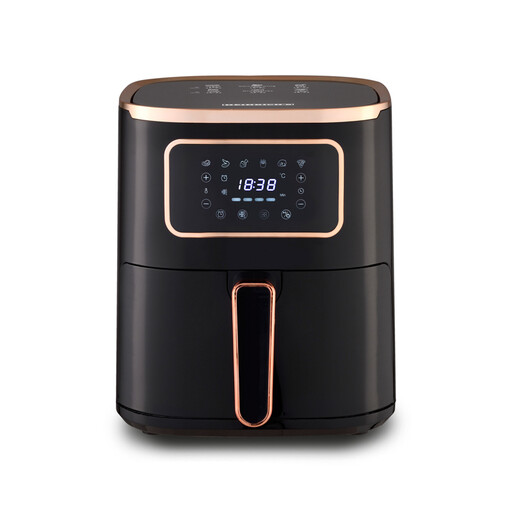
A possible option for smaller cakes, as long as you use a baking tin that fits the appliance and a recipe designed for it.
5 l, 1.450 W and six automatic programmes according to the product name. The product information specifies a clearance of 30 cm from easily flammable objects, advises against using it under wall cupboards and says not to use an extension lead with multiple sockets. Follow the instructions for the specific appliance.
 No image available
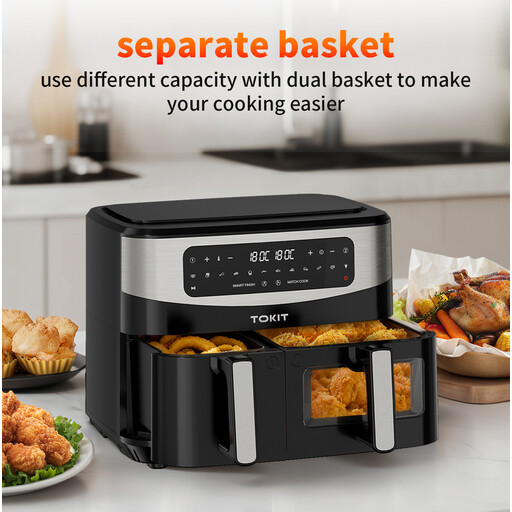
If you’re considering an air fryer for a smaller cake, make sure the tin you choose and the recipe are suitable for this model.
10 l; the product name specifies two compartments, a voltage of 220–240 V and a power rating of 2.850 W. These details alone don’t confirm that a particular cake tin will fit.
No. Follow the recipe and the appliance instructions. Dr. Oetker’s loaf cake recipe for a 25 × 11 cm tin specifies around 170 °C for conventional heat or 150 °C for fan-assisted cooking. Its separate air fryer recipe uses an 18 cm springform tin, fan-assisted cooking at around 160 °C and a cooking time of 55 minutes.
Measure your tin, including its rim, and compare its length and height with the usable internal dimensions and shelf height of the exact model. Allow for the required space around the heating elements too; a capacity in litres alone doesn’t confirm that it will fit.
It may be suitable if the baking tin fits the exact appliance and you use a recipe designed for it. Dr. Oetker’s separate recipe uses an 18 cm springform tin and different temperatures and timings from its loaf cake recipe.
Check the external dimensions, including the space needed to open the door, and compare the available space with the positioning and safety instructions for the exact model. The specified clearances are part of the space you’ll need; the dimensions of another appliance aren’t a substitute.
For a new electrical appliance that must carry the CE marking, it indicates that the manufacturer has declared it meets the relevant requirements; it isn’t an independent quality mark. Check that the required marking and any necessary German-language operating and safety instructions are included. The Bundesnetzagentur explains what the CE marking means.