Bakers with limited oven time
You share an oven and need to decide whether one uninterrupted time slot will do, or whether a second appliance would be useful.


If you can use the shared oven for the full baking time, including preheating, a reserved time slot is usually enough; you don’t automatically need a second appliance. If having your own baking slot is important, choose based on the tin size, available worktop space or built-in niche, and the heating functions you need. Having several shelf levels alone doesn’t guarantee that a cake and other dishes will cook successfully at the same time.
You share an oven and need to decide whether one uninterrupted time slot will do, or whether a second appliance would be useful.
You want to bake a lemon cake in a particular tin and are checking the heating function, shelf position and fit, rather than just the oven’s capacity.
You may be looking for a freestanding appliance and comparing its usable oven space and footprint with what a built-in oven can offer.
First, check whether you can bake the full recipe, including preheating, within a time slot you can reserve. Only if you need your own baking slot should you compare built-in niches or worktop space, tin fit and heating functions.
| Priority | What to check before buying | Who will find this most important? |
|---|---|---|
| Your own baking slot | Allow for the full baking time in your chosen recipe and the preheating time. If you’re considering a second appliance, also check that your tin fits and that you have somewhere to put it. | If I share an oven, I need a reliable time slot and don’t want to find space for a second appliance. Around 36% of consumers put having their own baking slot first. |
| Heating function and baking process | Check that the heating function, usable shelf height and tin size match the recipe; baking times for different recipes aren’t interchangeable. Dr. Oetker Deutschland lists different baking times and settings for its tested lemon cake recipes. | If I want to follow a particular cake recipe, the heating function and shelf position need to suit the tin and the recipe instructions. Around 29% of consumers put the right heating function and a baking process they can monitor first. |
| Space and appliance type | Compare the appliance and niche dimensions, or the worktop footprint, and the installation instructions with the space available; measure your loaf tin carefully. | If I don’t have a spare built-in niche or want to use a particular tin, the appliance needs to fit in my kitchen and the tin needs to fit inside the oven. Around 21% of consumers prioritise space and appliance type. |
| Energy use and running costs | For ovens with the relevant energy label, compare consumption per standard cycle for the different heating functions. Check whether the accessories you want are actually included. | If I bake regularly, I want to compare the stated energy consumption with the functions and accessories I need. Around 14% of consumers put energy use and running costs first. |
The appliance manual may limit multi-level baking to certain uses. Bosch lists a combination rack and a universal pan as standard accessories with the Bosch HBA571BB4.
Check the baking chart, recommended shelf positions and exactly what’s included for the model you’re considering.
Depending on the recipe, you may need another suitable tray, so check which accessories are included.
Dr. Oetker Deutschland’s lemon loaf cake recipe uses a 25 × 11 cm tin. The Severin TO 2068’s capacity of around 20 l doesn’t, by itself, tell you its usable internal dimensions.
Check the internal space, tin height and clearance required against the specific appliance details and instruction manual.
If your current tin doesn’t fit, you may need a smaller one that’s suitable for the appliance.
Dr. Oetker Deutschland’s tested recipes give different baking times, temperatures and shelf positions: around 60 minutes for the loaf cake and around 25 minutes for the traybake.
Choose your tin and full recipe before reserving a time slot in the shared oven.
Built-in ovens, including the HBA571BB4 with 3D hot air and specified installation dimensions.
Built-in ovens with additional functions; the HR776G1B1 is one example, with steam boost and 4D hot air.
Built-in ovens with a ring heating element; the BEK43511XB is one example, with hot air and a timer display.
Freestanding mini ovens that could provide a second place to bake without needing a built-in niche.
Steam ovens as a built-in option if you need cooking methods beyond baking.
This selection includes built-in ovens and freestanding mini ovens for baking independently of a shared oven.
 No image available
A built-in appliance for baking on your own schedule, if you have a suitable niche.
The product name lists a 71 l capacity, 3D hot air and pyrolytic self-cleaning. Bosch specifies 3D hot air on up to three levels for the HBA571BB4. Multiple levels don’t guarantee that cakes and other dishes with different requirements will cook successfully at the same time.
 No image available
An oven for baking on your own schedule, provided its stated installation dimensions suit your kitchen space.
The product name lists a width of 60 cm, 3D hot air and AirFry; the finish is described as steel. Multi-level hot air doesn’t guarantee that you can bake dishes with different recipe requirements at the same time.
 No image available
A freestanding mini oven for baking on your own schedule, as long as you have space for it and your tin fits.
The product name lists a 32 l capacity, 1,600 W, a timer, a crumb tray and a temperature range of 100 to 250 °C. Check the usable internal dimensions against your cake tin.
 No image available
A freestanding convection oven for baking independently, if you have enough worktop space and room for your tin.
The product name lists a 28 l capacity, as well as temperature controls and a timer. Check the usable internal dimensions and appliance settings for your recipe.
 No image available
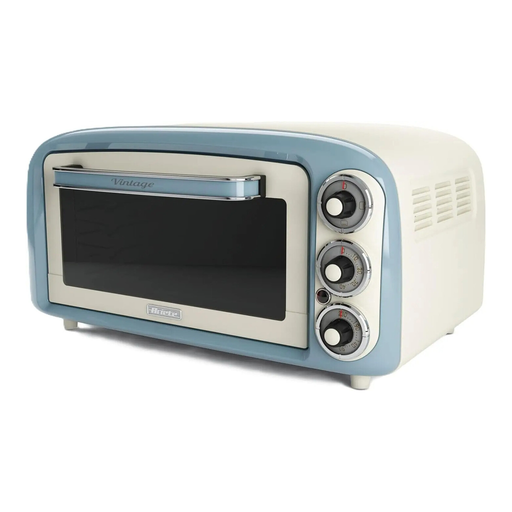
A freestanding countertop appliance for baking on your own schedule, provided your cake tin fits inside.
The product name lists an 18 l capacity, 1,380 W, an aluminium baking tray and a 60-minute timer. According to the product details, this freestanding appliance needs a stable, heat-resistant surface.
Not simply because the oven has several shelf positions. Compare the heating functions, temperatures and shelf positions required for both dishes. AEG recommends baking on multiple levels only when the appliance manual says it’s suitable for that use. If the requirements aren’t compatible, bake the dishes one after the other.
For its tested loaf cake recipe, Dr. Oetker Deutschland specifies preheating and around 60 minutes of baking; for its tested traybake recipe, it’s around 25 minutes. Follow the timings for your specific recipe and add your appliance’s preheating time.
For a built-in appliance, compare the stated niche and appliance dimensions, along with the connection requirements, against the space you have. For a mini oven, also check that your tin fits and follow the installation guidance in the manual. A capacity stated in litres alone won’t tell you whether a loaf tin will fit.
For household ovens covered by the labelling rules, the label shows, among other things, energy consumption per standardised cycle for conventional heating and hot air. It doesn’t measure the energy used for your recipe. The European Commission lists small ovens as exempt. So if a mini oven doesn’t have a label, don’t assume this means it has a poor energy rating.
For statutory claims relating to faults, the seller is generally responsible, not just the manufacturer, as explained by the Verbraucherzentrale. Section 438 of the German Civil Code (BGB) sets a standard limitation period of two years from delivery. A voluntary guarantee has its own terms and conditions.