
Lieferung heute & morgen

Qualitätsgarantie

Willkommens-Angebote freischalten: KOSTENLOSE Lieferung | Bis zu 80 % RABATT | Kostenlose 30-Tage-JoyPlus-Testphase
App herunterladen
When you want to buy lemon soda, you're faced with a huge selection. But not every sparkling drink that promises refreshment delivers on its initial appeal. Between overly sweetened recipes and misleading labels, it's easy to make a choice that doesn't meet your needs. This guide will help you identify the important criteria and make an informed decision, whether you're shopping for your family, the office, or yourself.
Before you order soda online, you should be aware of three common marketing traps that often lead to an unsuitable purchase:
To make the right choice, focus on three objective criteria that you can find directly on the label. A beverage delivery service makes it easy to compare different options without having to carry heavy crates.
The sugar content, listed in grams per 100 ml, is the most important indicator of sweetness and calorie content.
A look at the ingredients list reveals whether real fruit is involved.
The packaging affects freshness, taste, and handling.
Here are some recommendations tailored to different needs and preferences.
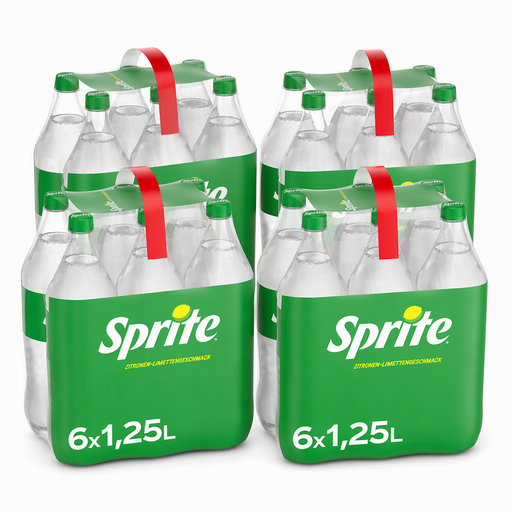
Why This Fits Their Persona: Ideal for bulk shopping. The 1.25-litre bottles are a practical size for family meals and parties, and the familiar lemon-lime taste is popular with all ages.
This product avoids the trap of unclear expectations. It is a classic, sugary soda and positions itself as such. The nutritional information is clearly declared, allowing the buyer to make a conscious choice.
Bulk pack for a long-lasting supply. Based on 100% natural flavours and is an established lemon-flavoured soft drink.

Why This Fits Their Persona: Perfect for anyone who wants to avoid sugar and calories without sacrificing a zesty lemon taste. The natural mineral water base makes it a light, everyday drink.
This product clearly resolves the "low-calorie" fallacy. According to the manufacturer, it has 0 kcal and 0 g of sugar. It's not a compromise, but a clear, sugar-free alternative.
Completely free of sugar and calories. Made with natural mineral water and natural flavouring for a light, refreshing taste.

Why This Fits Their Persona: For discerning palates that value style and authentic taste. The elegant glass bottles look great on any dinner table and are perfect for serving guests.
This product avoids the "flavour trap" by being made with real lemon juice from concentrate, according to the manufacturer. The glass packaging also prevents the aftertaste that some people notice with PET bottles.
Premium quality from Italy with sun-ripened lemons. The 0.33-litre glass bottles optimally preserve freshness and carbonation.
If you want to discover more lemon-flavoured soft drinks that meet our selection criteria, you can find our full and updated range here.
1. How long does an opened bottle of soda last? An opened bottle of soda should always be kept tightly sealed in the refrigerator. As a rule, the carbonation will last for about 2 to 3 days. Larger bottles tend to lose their fizz faster than smaller ones.
2. Does soda from glass bottles taste better than from PET bottles? This is often a matter of personal preference. Glass is an inert material, meaning it does not transfer any substances to the drink and is therefore considered particularly flavour-neutral. PET bottles, on the other hand, are lighter, more shatterproof, and thus more practical for transport. Modern PET bottles are of high quality, yet some connoisseurs prefer the taste from glass bottles.
3. What exactly does "natural flavour" mean on the label? The term "natural flavour" is regulated in the EU by Regulation (EC) No 1334/2008. It states that the flavouring substance must be obtained from plant, animal, or microbiological source materials. However, it does not necessarily have to come from the fruit that gives the product its name. A "natural lemon flavour" can therefore also be produced from other natural raw materials, such as certain types of wood. A note like "lemon juice from concentrate" is therefore a more reliable indicator of the use of real fruit.