If protein in the cake itself is what matters for a post-Easter egg hunt snack, compare lentil and other pulse-based cakes with classic rice cakes using the nutrition information per 100 g. The lentil and protein cakes listed by EDEKA and REWE contain more protein than the classic rice varieties mentioned by EDEKA and ALDI SÜD. If children are joining in, it’s also important to offer a varied choice of snacks: the German Federal Institute for Risk Assessment points out that rice cakes can contain relatively high levels of inorganic arsenic.
Who is this choice relevant to?
Active people planning a post-exercise snack
If the protein in the cake itself matters to you after an Easter egg hunt or a workout, it’s worth comparing lentil and other pulse-based cakes. The name ‘rice cake’ tells you little about its protein content.
Families with different snack preferences
For an Easter egg hunt, handy portions and ingredients that suit everyone taking part matter. If children are joining in, it’s also worth thinking about how often rice products feature in their diet.
People following a plant-based diet or with specific ingredient requirements
A cake labelled vegan may suit a plant-based diet. However, the specific pack is what matters when checking allergens, possible traces and any gluten-free labelling you need – not the product category.
What should you look for when buying?
First, decide whether protein in the cake itself is your priority. Then check the ingredients and pack information to make sure they suit everyone taking part in the Easter egg hunt.
| Criteria |
What to check |
Who it matters to |
| Protein content |
Compare the protein in g per 100 g and check whether the cakes are made mainly from rice or pulses. |
After exercise, I want to assess the protein content of the cake itself rather than rely on its name. For around 50% of consumers, this is likely to be the main consideration when choosing. |
| Snacks for children |
Read the ingredients and salt information. If children regularly eat these snacks too, aim for variety rather than relying on rice products as the sole snack option. The German Federal Institute for Risk Assessment highlights the possibility of inorganic arsenic in rice cakes. |
If children are joining the hunt, I need snacks that are easy to handle, but I don’t want to offer the same base every time. For around 30% of consumers, choosing snacks for the family is likely to be the main reason for buying. |
| Ingredients and allergens |
Check the specific product’s labelling for ingredients, allergens, trace warnings and any dietary information you need. |
I need the specific recipe to suit my diet or allergy; a vegan label alone isn’t enough. Around 20% of consumers may consider this check their top priority. |
Common misconceptions
-
Assuming rice cakes and high-protein cakes are the same
The lentil and protein cakes mentioned here aren’t made mainly from rice. EDEKA lists 25 g of protein per 100 g for its lentil cakes, compared with 8.7 g per 100 g for its classic organic plain rice cakes.
If protein in the cake itself is what matters, start by checking the nutrition information per 100 g, then read the ingredients list.
-
Taking ‘High Protein’ as a promise of recovery
A protein claim on the pack doesn’t prove that a product will have a specific effect on your recovery after exercise. It also doesn’t replace checking the other nutritional information and the portion size.
Compare protein, salt, fat and energy using the nutrition information rather than choosing on the basis of the wording on the pack alone.
-
Confusing vegan with allergen-free
Trace warnings may still matter for cakes made with plant-based recipes. Kallo lists possible traces of milk, sesame and soya for its Organic Unsalted Wholegrain Rice Cakes.
If you have an allergy, always check the current labelling on the specific pack.
-
Planning to use rice cakes as the only regular snack for children
According to the German Federal Institute for Risk Assessment, rice cakes can contain relatively high levels of inorganic arsenic. It has not been possible to establish a safe intake level on this basis.
Plan a variety of snacks for the Easter egg hunt, especially if children often eat rice products at other times too.
Brands and retailers to consider
EDEKA Bio
EDEKA offers both organic lentil cakes with a protein claim and classic organic plain rice cakes. Their nutrition information makes it easy to compare two different types of cake.
- EDEKA lists 25 g of protein per 100 g for its High Protein Lentil Cakes and 8.7 g per 100 g for its plain rice cakes.
- The lentil cakes aren’t pure rice cakes. Check the current pack and the specific offer in store before buying.
REWE / REWE Bio
REWE lists a range of cakes, including the Verival Organic Protein Cake, which is labelled vegan but isn’t the same as a classic rice cake.
- REWE lists 18.4 g of protein and 11 g of fibre per 100 g for the Verival cake.
- Check the specific pack to make sure the ingredients and trace warnings meet your requirements.
ALDI SÜD / GUT BIO
GUT BIO Organic Rice Cakes with Salt are an example of a classic rice variety, not a cake with a verified high-protein claim.
- ALDI SÜD lists 6.7 g of protein per 100 g for this product.
- If you mainly want to compare the protein in the cake itself, don’t assume this figure is the same as that of a lentil or other pulse-based cake.
Lentil cakes at Joybuy
This selection features a lentil cake for anyone considering a pulse-based cake instead of a classic rice cake for their Easter egg hunt.
 No image available
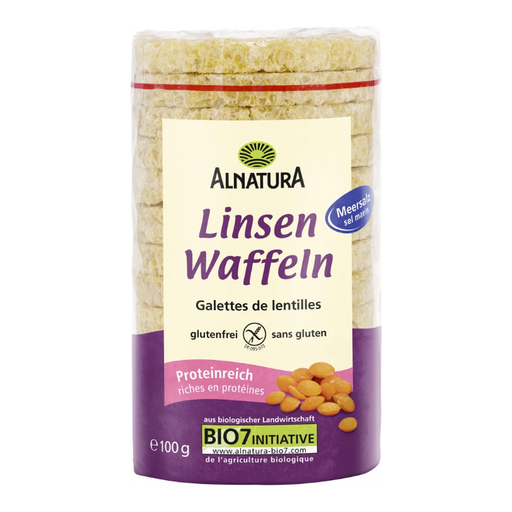
Alnatura Organic Lentil Cakes, 100 g
A lentil cake for anyone looking for an alternative to a classic rice cake for their Easter egg hunt. For comparing protein content, use the nutrition information on the pack. If you have a soya allergy, check the current allergen information before buying. When planning portions, also check whether the cakes are individually wrapped.
View at Joybuy
Frequently asked questions
Are classic rice cakes automatically high in protein?
No. The name ‘rice cake’ doesn’t tell you that. EDEKA lists 8.7 g of protein per 100 g for its organic plain rice cakes, compared with 25 g per 100 g for its High Protein Lentil Cakes. Always compare the information for the specific product.
Does ‘High Protein’ mean better recovery after exercise?
No. A protein claim doesn’t prove that a product will have a specific effect on your recovery. If protein in your snack matters to you, compare the amounts in grams per 100 g and per portion, as well as the other nutritional information.
What should you bear in mind when giving rice cakes to children?
Rice cakes shouldn’t be the only snack regularly given to children. The German Federal Institute for Risk Assessment points out that they can contain relatively high levels of inorganic arsenic; this doesn’t establish a universally safe amount for an individual child.
How do you keep cakes crisp until the Easter egg hunt?
Store them in a dry place and seal the pack well after opening. Also follow the storage instructions on the specific pack, and check whether you’ll need individual portions for the event.


