
Lieferung heute & morgen

Qualitätsgarantie

Willkommens-Angebote freischalten: KOSTENLOSE Lieferung | Bis zu 80 % RABATT | Kostenlose 30-Tage-JoyPlus-Testphase
App herunterladen
Baby activity toys should keep little hands busy while supporting your child’s development. But parents, grandparents and carers may wonder which features are right for their child’s age, their home and the way their child actually plays. Busy boards, activity cubes, motor skills toys for children aged 1 and over, and baby playpens all differ in their materials, how much space they take up and the supervision they require.
A long list of music, lights, gears and switches may sound versatile at first. But for a baby under one, simple things to grasp and explore by touch may be more suitable than a complex learning toy designed for toddlers. What matters is whether the features suit your child’s stage of development and whether they can reach them independently.
Descriptions such as ‘child-safe’, ‘non-toxic’ or ‘sturdy’ aren’t enough on their own to make an informed choice. Look for clear information about age suitability, materials, edges, small parts and safety certification marks. For electronic sensory toys, it’s also worth checking the battery compartment, volume and cleaning instructions.
A large wooden activity board or a playpen with a ball pit takes up considerably more floor space than a portable activity cube. Before buying, check the assembled dimensions and how much storage space it needs when folded. A foldable playpen may be more practical in a small flat or when visiting the grandparents than a permanent fixture.
For babies from birth to around 12 months, play mats, grasping toys and simple features are often suitable. A baby play mat set can provide a padded surface for tummy time and free play. For toddlers aged around one and over, shape sorters, gears, flaps and sorting activities can be added.
Don’t choose a Montessori toy for toddlers based on the word ‘Montessori’ alone. Check what your child will actually do with it: press buttons, thread laces, sort shapes or turn objects. For motor skills toys for children aged 1 and over, it’s also important to keep small parts out of reach unless an adult is supervising.
Wooden toys should have smooth, rounded edges and clearly specified materials. For plastic products, information such as BPA-free ABS material can be useful, but it doesn’t replace checking the specific item and its recommended age range.
Magnetic tiles, batteries, cords and small accessories may not be suitable for younger children. Before each use, check toys for cracks, loose parts and damaged coatings. Even a sturdy activity cube should be kept away from water if it contains electronic components.
A baby walker should be used on a level surface, with an adult supervising your child as they walk. Check that it has a sturdy construction, controllable rolling resistance and enough room for your child’s feet. A playpen must be assembled securely and checked regularly for loose connections.
For a baby play mat, look for non-slip connections, wipe-clean surfaces and a suitable size. EVA puzzle mats are usually easy to put together and can be extended if needed. Follow the care and drying instructions for textile products.
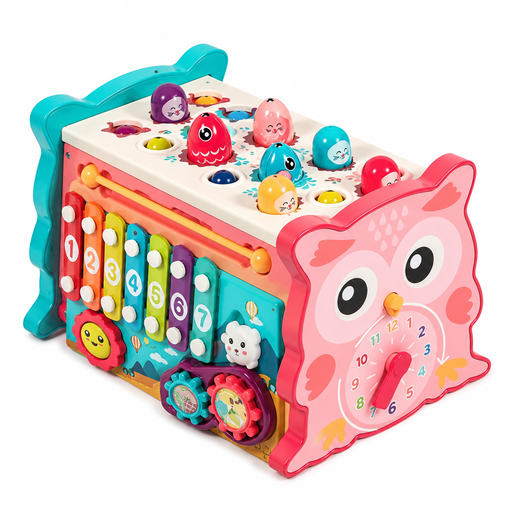
Why it suits this profile: Four types of play are brought together in one compact wooden toy. It’s a good option for families looking for a range of activities without taking up much space.
The product description lists four clearly defined activities rather than a vague set of features. Adult supervision is required because it contains small parts.
Xylophone, fishing game, gears and hammer game; listed as suitable from 1 year in the product description.
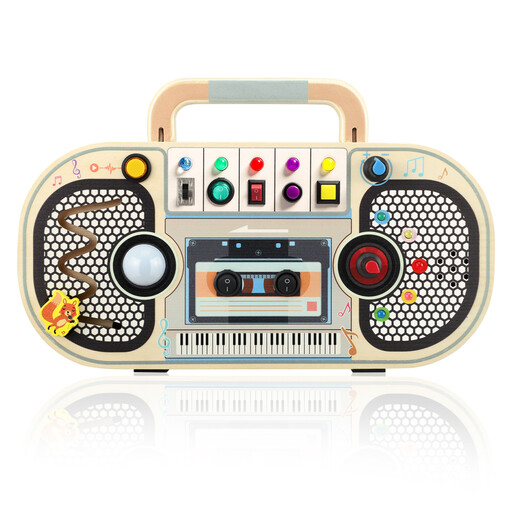
Why it suits this profile: This compact baby busy board is designed for families looking for a quiet activity for trips out or smaller spaces.
The product details specify its dimensions, battery type and ten large switches. Check whether batteries are included before buying.
Wooden construction, rounded edges, ten switches and coloured indicators; requires two AAA batteries.
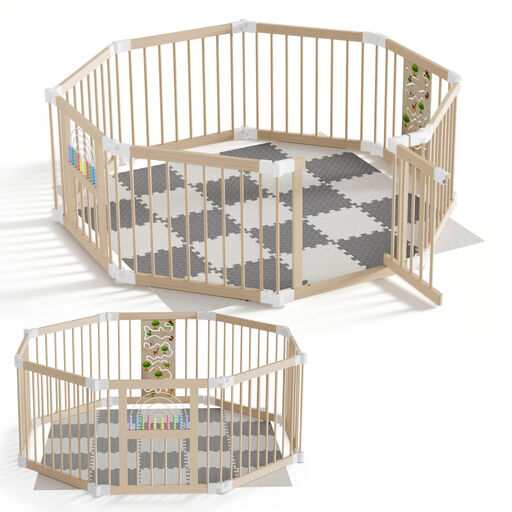
Why it suits this profile: For homes with more space, this modular system creates a defined play area and can be set up in different configurations.
The panels can be arranged in a square, rectangle or circle, then folded flat. Check the locks before every use.
Eight panels, a door, two activity boards, a goal and 25 non-slip floor mats, according to the product description.
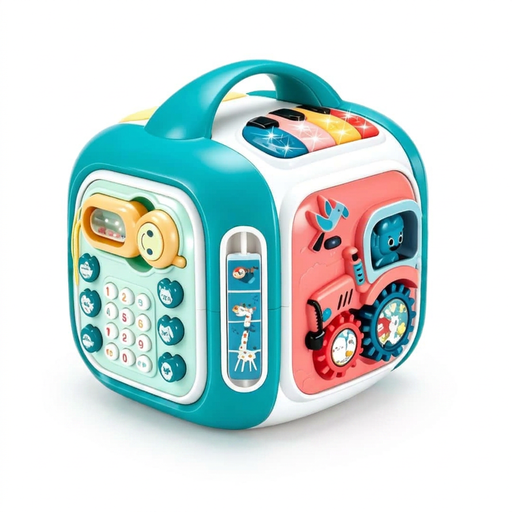
Why it suits this profile: According to the product description, the cube measures 23 × 23 × 24 cm and has a carry handle. This makes it handy for trips, visits and different play areas.
Its compact shape takes up less storage space. As it has music, lights and electronic components, check the volume and battery compartment, and make sure your child uses it under supervision.
Eight play modes, including a piano, guitar, telephone function, gears and music; listed as suitable for ages 1 to 3 in the product description.
We’ve put together a comprehensive, regularly updated list of products that meet these strict selection criteria and fully comply with the safety regulations in force in the EU.
From 1 year, simple motor skills activities such as gears, shape sorters, switches or hammer games may be suitable. Check the specific age recommendation, the size of the parts and whether adult supervision is needed. A motor skills toy for children aged 1 and over isn’t automatically suitable for younger siblings.
How long a toy lasts depends on its materials, construction, use and care. Wooden toys with smooth edges can last a long time if they’re looked after carefully. Electronic products also need a working battery compartment and should be stored in a dry place. Check all products regularly for cracks, loose parts and signs of wear.
A baby play mat provides a soft, open play area and can be moved around the room as needed. A baby playpen, on the other hand, creates a defined play area and can be useful for children who are crawling or pulling themselves up. The right choice depends on the size of your home, how closely you can supervise your child, how much they like to move around and whether you need something portable. No product is a substitute for direct supervision.