
Lieferung heute & morgen

Qualitätsgarantie

Willkommens-Angebote freischalten: KOSTENLOSE Lieferung | Bis zu 80 % RABATT | Kostenlose 30-Tage-JoyPlus-Testphase
App herunterladen
Selecting a 256GB memory card requires a detailed analysis of its technical specifications to ensure compatibility and performance for your specific use case. Whether for professional photography, high-resolution video recording, or demanding gaming, the requirements for read/write speeds, form factors, and durability vary significantly. This article analyses various models and provides a data-driven guide.
The decision to purchase a memory card should be based on an analysis of objective parameters. The following technical features are crucial for assessing performance.
The primary distinction lies in the card's physical format.
A memory card's speed is its most critical performance indicator.
Based on technical specifications and intended use cases, we present a selection of Lexar 256GB memory cards.
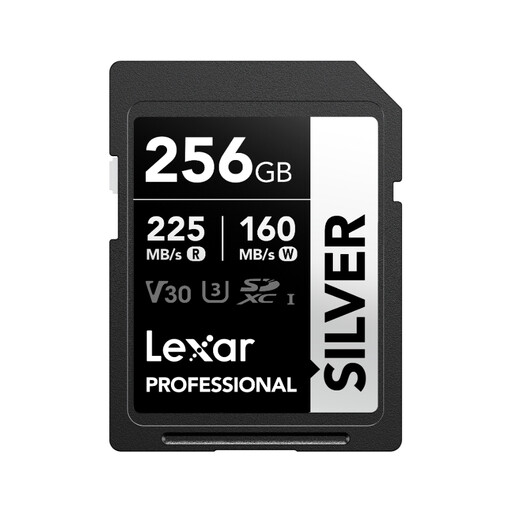
Analysis: The Lexar SILVER series uses proprietary technology to push the limits of the UHS-I interface. According to the manufacturer's specifications, it achieves read speeds of up to 205 MB/s and write speeds of up to 140 MB/s, provided a compatible card reader like the Lexar RW310X is used. Its V30 certification guarantees a minimum write speed of 30 MB/s, making it a reliable 4K video memory card.
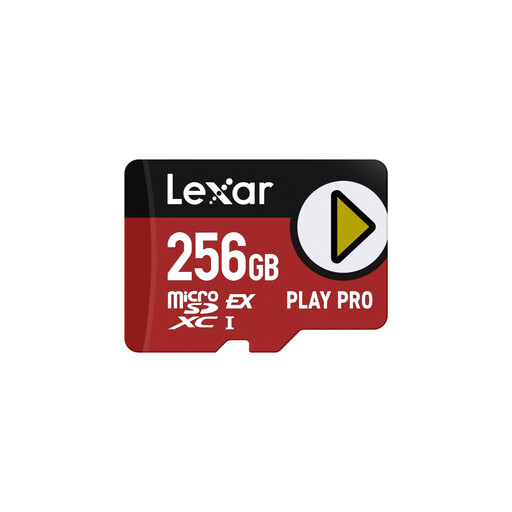
Analysis: This card represents the next generation of microSD storage. By leveraging the microSD Express interface with PCIe and NVMe technology, it achieves read and write speeds of up to 900 MB/s and 600 MB/s, respectively, according to the manufacturer. These speeds are only attainable with a microSD Express-compatible host device. The card is backward compatible with UHS-I devices, where it will operate at reduced UHS-I speeds. The A2 classification also optimises application loading times.

Analysis: This professional memory card from the 1066x series is designed as a robust workhorse for demanding photo and video applications. It utilises UHS-I technology to achieve read speeds of up to 160 MB/s and write speeds of up to 120 MB/s. The U3 and V30 certifications ensure the card maintains a constant minimum write speed of 30 MB/s, qualifying it for recording Full HD and 4K UHD video.
If the 256GB capacity or the form factors presented here do not precisely meet your requirements, the market offers a multitude of other configurations. You can find a wider selection of storage media for various devices and use cases in our main Secure Digital Card category.
1. Which Lexar 256GB card is suitable for 4K video recording? For smooth 4K video recording, a memory card with a Video Speed Class 30 (V30) rating or higher is required. This guarantees a minimum sustained write speed of 30 MB/s. Both the Lexar SD Card SILVER and the Lexar Professional 1066x SD Card meet this criterion, making them suitable for 4K recording.
2. Will a 256GB Micro SD card work in a standard SD slot? Yes, a microSD card can be used in a standard SD slot with a passive SD card adapter. Such adapters are often included with the purchase of a microSD card. However, it is important to note that the overall performance can be affected by the quality of the adapter. For critical, high-speed applications, a native SD card is often the more robust choice.
3. What does the A2 classification on a gaming memory card mean? The Application Performance Class 2 (A2) is a standard that measures a memory card's performance when running applications. An A2-certified card, like the Lexar PLAY PRO, offers higher random read and write speeds (measured in IOPS). In practice, this leads to noticeably shorter loading times for games and apps on compatible devices such as Android smartphones or the Nintendo Switch.