
Lieferung heute & morgen

Qualitätsgarantie

Willkommens-Angebote freischalten: KOSTENLOSE Lieferung | Bis zu 80 % RABATT | Kostenlose 30-Tage-JoyPlus-Testphase
App herunterladen
If you’re looking to buy Li-Ning men's running shoes, you’ll often come across models described as “Racing”, “Lightweight” or “Energy Return”. These labels alone don’t tell you whether a shoe will suit your running style, the surfaces you run on or your training mileage. What matters is having clear information about the upper, midsole, outsole, fit and sizing.
Lightweight men's running shoes can feel responsive and comfortable during speed sessions and road runs. However, an especially light model isn’t automatically suitable for long, slow runs or everyday training. Check whether the product description states what the shoe is designed for and whether it provides enough support through the midfoot.
Terms such as running shoes with energy return usually refer to the properties of the midsole. A responsive design can affect how the shoe rolls through your stride, but that alone doesn’t tell you whether its geometry suits your running style. With marathon running shoes and race shoes, you should also consider how the fit feels over longer distances.
Running shoes need to leave a little room for your toes to move. Your feet may swell during longer runs, but your heel shouldn’t slip. For example, if you’re looking for running shoes in EU size 43, compare the manufacturer’s specific sizing information with the shoe’s internal length. The product descriptions for the Li-Ning FEIDIAN 6 CHALLENGER and Li-Ning RED HARE 9 ULTRA state that they have a regular fit; if you wear thicker socks, going up half a size may be worth considering.
For road runs and warm training days, a breathable textile or mesh running shoe upper is a practical choice. The FEIDIAN 6 CHALLENGER is listed as having a textile upper, along with TPU or synthetic leather elements. This combination can balance ventilation and support. Reinforcements should sit where they help guide your foot as it rolls through your stride, without unnecessarily restricting the forefoot.
The RED HARE 9 ULTRA is listed as having a 3D mesh upper with BOOM-FIBER technology. According to the product description, the design aims to combine airflow with a close fit. Even so, you should judge the actual width against the size chart and your own foot shape.
The midsole affects cushioning, stability and responsiveness. Terms such as Super BOOM, BOOM or EVA describe the material system used or named by the manufacturer. The FEIDIAN 6 CHALLENGER is described as having a lightweight design with a Super BOOM midsole. According to the product description, the RED HARE 9 ULTRA features a three-layer system combining Super BOOM and BOOM, as well as a fibreglass plate.
A plate or a particularly responsive geometry may feel different when running fast compared with a traditional training shoe. If you’re new to running, it’s worth prioritising secure support and a comfortable fit rather than looking only for maximum responsiveness.
For road running shoes, the rubber compound used for the outsole is an important detail to check. According to the product description, the FEIDIAN 6 CHALLENGER has a GCR rubber outsole designed to provide traction on different surfaces. The RED HARE 9 ULTRA is listed as having a GCU outsole, with details on grip in both wet and dry conditions.
This information isn’t a guarantee of performance in every type of weather. Wet leaves, smooth paving stones and gravel present different challenges from dry tarmac. If you mainly run in urban areas, check that the outsole pattern suits the surfaces you plan to run on.
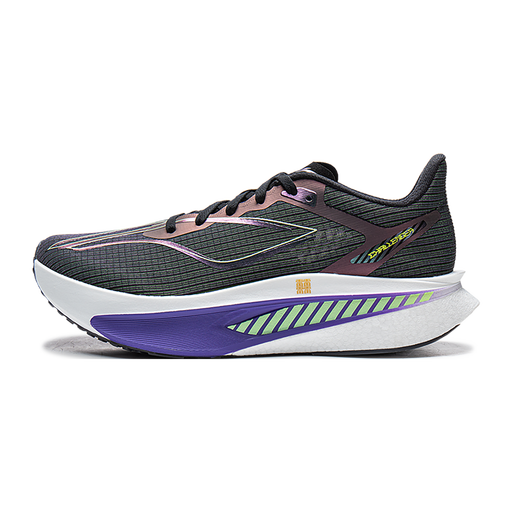
Why this product suits this type of runner: The shoe combines a textile upper, TPU or synthetic leather elements and a GCR rubber outsole. According to the product description, it’s suitable for everyday training and faster road sessions.
The details about the materials, fit and outsole are more specific than simply calling the shoe “Racing”.
Textile upper, regular fit, lightweight design and GCR rubber outsole.
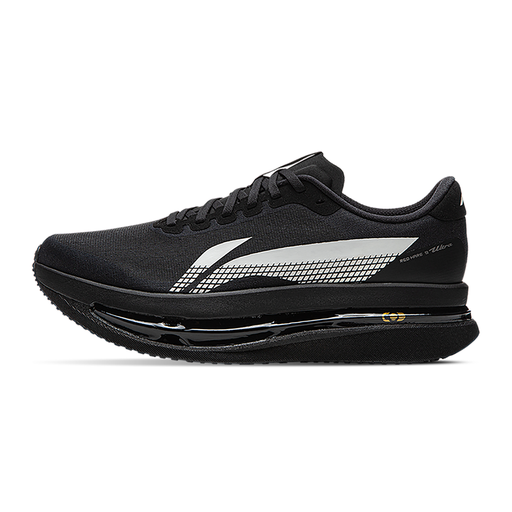
Why this product suits this type of runner: According to the product description, the design is aimed at intensive sessions and longer race distances. Features include a three-layer midsole, a fibreglass plate and a breathable BOOM-FIBER upper.
The product description names specific components rather than making only a general claim about speed.
Three-layer midsole, fibreglass plate, BOOM-FIBER mesh and GCU outsole, according to the manufacturer's details.
Why this product suits this type of runner: The larger size available may appeal to runners with longer feet or those who need more room. The model is designed for training and race pace on roads.
The size options aren’t limited to EU 43; the EU 44 1/3 version offers another choice for your individual fit needs.
Textile mesh, TPU or synthetic leather reinforcements, GCR rubber outsole and several colour options.
We’ve put together a complete, regularly updated list of products that meet these strict selection criteria and fully comply with the safety regulations in force in the EU.
Try on running shoes with the socks you wear for training whenever possible. There should be a little room between your longest toe and the end of the shoe, while your heel should feel secure. If the shoe has a narrow, race-focused last, going up half a size may help, as long as your foot doesn’t slide forwards.
The care instructions for both Li-Ning models recommend removing dirt with a damp cloth, leaving the shoes to air-dry and avoiding direct heat. Machine washing can put stress on the materials and bonded sections. The shoes’ actual lifespan depends on your mileage, body weight, running surface, weather and how often you rotate between pairs. It wouldn’t be reasonable to give every runner a single fixed mileage figure.
The product descriptions for models such as the FEIDIAN 6 CHALLENGER and RED HARE 9 ULTRA mention road races and longer race distances. Whether a shoe is right for your marathon should be decided after several longer training runs, taking its fit and how it feels to run in into account.
The models mentioned are listed as having a regular fit. According to the product descriptions, going up half a size may be an option if you wear thicker socks or want more room around your toes. Measure both feet and compare the results with the relevant size chart.
How long they last depends on how you use and care for them. A visibly worn outsole, cushioning that stays compressed, cracks in the upper or reduced support are practical signs that it’s time for a new pair. If you train regularly, a second pair can help spread the wear across your shoes.