Learners practising with quiet recordings
If you want to make out syllables and word endings at a lower volume, start by checking the fit and playback using your own practice material, rather than focusing on ANC alone.


For language practice in a quiet library, a secure fit and clear playback at a moderate volume matter more than ANC alone. Wired models avoid charging breaks, provided the connection is compatible; Bluetooth earbuds offer freedom of movement and let you switch between sound modes, but their battery life needs to suit the length of your planned session. Manufacturers’ claims about noise isolation and battery life are no substitute for checking the fit or listening to your own practice material.
If you want to make out syllables and word endings at a lower volume, start by checking the fit and playback using your own practice material, rather than focusing on ANC alone.
If you’re planning longer study sessions, look for a comfortable fit and either a compatible cable connection or enough battery life per charge.
If you sometimes need to hear library staff or fellow learners, check whether wireless models give you easy access to ambient mode.
| What matters when buying | What to check | Who it matters to most |
|---|---|---|
| Clear speech at a low volume | Use a sample from your own practice material to test the lowest volume at which it’s still clear, try different ear tips and check how much sound can be heard nearby. | If you want to hear word endings at a moderate volume while disturbing others as little as possible, check the fit and volume first. Around 31% of consumers rank this as their top priority. |
| Comfort during longer practice sessions | Try ear tips in several sizes and assess how comfortable they feel during a session. | If you want to stay focused while studying for longer periods, look for a comfortable, secure fit. Around 25% of consumers prioritise this. |
| A compatible connection and uninterrupted playback | For wired models, check the socket and whether you’ll need an adapter. For Bluetooth, compare battery life per charge in the listening mode you plan to use. | If you want to study without stopping to recharge, you’ll need either a compatible connection or enough battery life for your session. Around 19% of consumers put playback planning first. |
| Staying aware of your surroundings | Check whether ambient mode is easy to switch on and off. With wired models, you can pause playback or remove an earbud. | If you sometimes need to respond to someone while studying, you should be able to switch between blocking out noise and hearing what’s going on around you. Around 13% of consumers prioritise this. |
| Costs and replacement options | When comparing models, factor in any adapters you might need, as well as compatible ear tips or a replaceable cable. | If you want to keep track of essential accessories and possible replacement parts, check what’s needed for the specific model and playback device. Around 12% of consumers put cost control first. |
A quiet setting doesn’t automatically make ANC the most important feature. Manufacturers’ claims about sound modes don’t tell you how clearly you’ll hear quiet language exercises at a particular library desk.
Check the fit first and try a quiet recording. Only consider ANC if specific background noises are bothering you.
With wireless earbuds, battery life per charge is different from the longer total listening time you get with the charging case. For the soundcore Liberty 4 NC, the manufacturer’s figures also vary depending on which mode is enabled.
Compare the earbuds’ battery life per charge with the length of your session and the features you plan to use.
Your session could be interrupted if the earbuds need charging beforehand.
The Shure SE215 and Sennheiser IE 200 mentioned here have a 3.5 mm plug. That doesn’t mean your device has the right socket.
Before buying, check your playback device’s socket and, if necessary, whether an adapter is compatible.
If there’s no compatible connection, you may need a suitable adapter.
The wired SE215 is an option for learners with a compatible 3.5 mm connection.
The IE 200 is a wired in-ear model with a 3.5 mm plug.
The WF-1000XM5 offers wireless listening with ANC and ambient mode.
The Liberty 4 NC are wireless in-ear earbuds with switchable listening modes.
The AirPods Pro 3 are wireless in-ear earbuds with ANC and Transparency mode.
This selection includes wired and wireless in-ear earbuds for language practice, with different connection types and, in some cases, switchable noise modes.
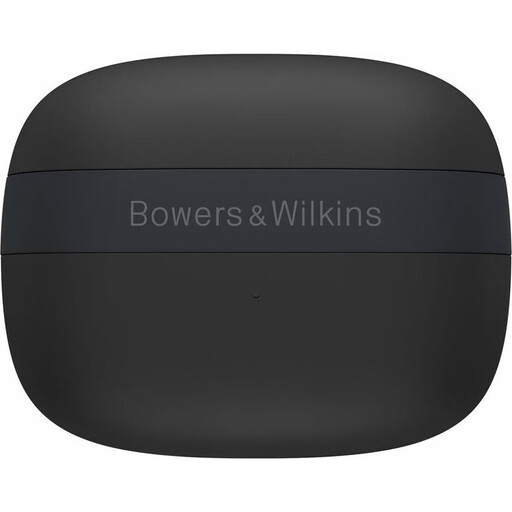 No image available
A wireless option if you’re looking for a closed-back design and ANC for your study sessions.
Bluetooth 5.4, ANC and up to 8 hours of playback per charge are listed. The product description mentions four ear tip sizes.
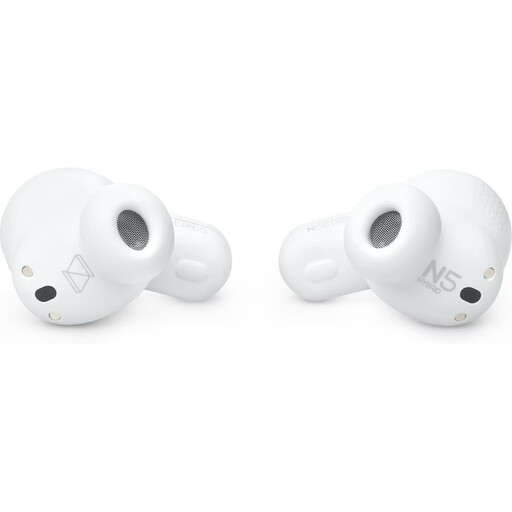 No image available
A wireless option if you want to switch between noise cancelling and hearing your surroundings while studying.
Bluetooth 5.3 and adaptive noise cancelling are listed. The product description states up to 6 hours of battery life; check the figure for the way you plan to use them.
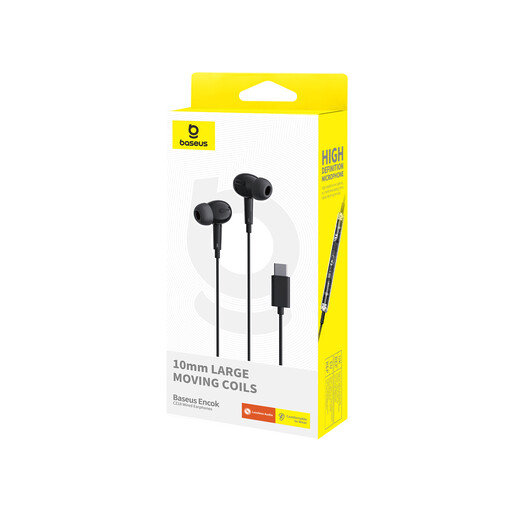 No image available
A wired option if you’d rather not rely on an earbud battery and your playback device has a compatible USB-C port.
The product description lists a Type-C interface and an integrated microphone. A compatible connection on your playback device is required.
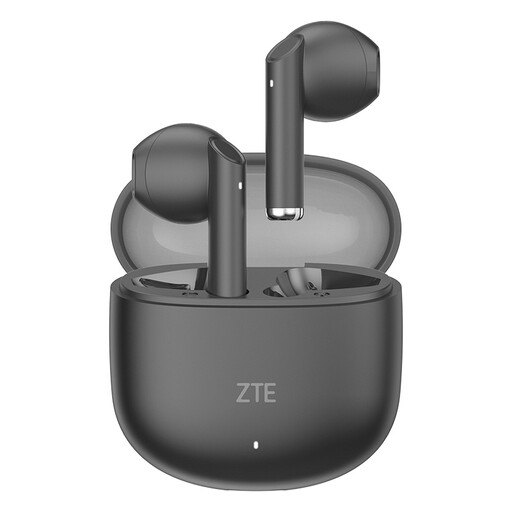 No image available
A wireless option if you want to use Bluetooth earbuds without a cable connection for a single study session.
Bluetooth 5.3 and up to 5 hours of music playback per charge without the charging case are listed. The longer total battery life includes the charging case.
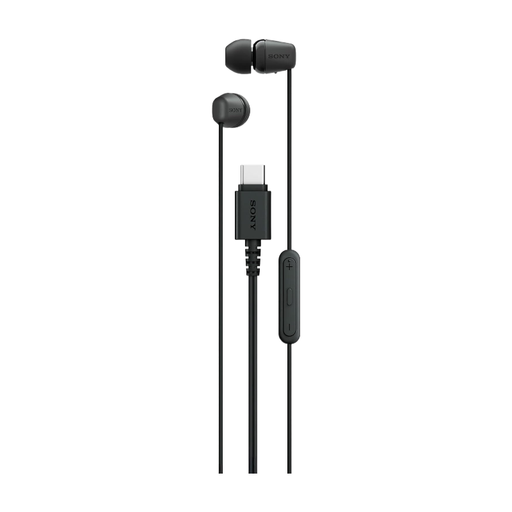 No image available
A wired option if your playback device supports USB-C and you want to listen without pairing over Bluetooth.
The product description lists several ear tip sizes, an integrated microphone and an inline remote. A compatible USB-C device is required.
No, not just because of where you’re using them. Check the fit and how clearly you can hear speech at a moderate volume first. ANC can be a useful extra if specific background noises are bothering you, but manufacturers’ claims don’t guarantee a particular effect on quiet voices at every library desk.
Compare the length of your planned session with the manufacturer’s battery life per charge and the features you want to use. soundcore lists 8 hours with ANC and 5 hours with LDAC and ANC for the Liberty 4 NC; according to the manufacturer, actual battery life may vary depending on use. Total battery life with the case isn’t the same as battery life on a single charge.
In a quiet setting, turn the volume down to the lowest level at which you can still hear your exercises clearly. The World Health Organization suggests using no more than 60% of your device’s maximum volume as a guide. Also pay attention to how your hearing feels and take breaks during longer listening sessions.
If a product is faulty, the seller is generally responsible under the statutory consumer rights; this is separate from any voluntary manufacturer’s warranty. The Verbraucherzentrale explains consumers’ rights when goods are faulty and recommends contacting the seller to make a complaint.