Who are these headphones for?

Quiet learners in shared spaces

If you’re listening to a recording in the library and want to keep sound from reaching nearby desks, closed-back headphones are a sensible place to start. How well they isolate sound in practice depends on the fit. RTINGS.com describes closed-back models as a suitable option when you want to minimise sound leakage.

Listeners picking out a vocal part

If you replay short sections to distinguish your harmony part from the other voices, try the headphones with the recording you’ll actually be using. Manufacturer specifications alone can’t tell you how easy it will be to follow the part you’re looking for in your mix.

Learners with longer practice sessions

If you’ll be listening through several practice sections, look for a comfortable fit and a cable that’s easy to manage. Replaceable ear pads can be useful if you use your headphones regularly, as with models from beyerdynamic and Sennheiser that offer them.

What should you look for when buying?

Closed-back and wired

A good fit if: You want to listen to a recording in a shared study space using the right headphone output on your device.

The trade-off: This design doesn’t guarantee complete silence or make a particular voice easier to pick out in every mix. Fit and cable management matter too.

Open-back studio headphones

A good fit if: You want to listen critically or enjoy a more spacious sound later, somewhere without other people within earshot.

The trade-off: According to RTINGS.com, open-back models let more sound escape and provide less isolation. That makes them less suitable for a quiet, shared library space.

Closed-back and wireless

A good fit if: Your playback device doesn’t have a suitable analogue output, or freedom of movement matters more to you.

The trade-off: Going wireless doesn’t mean better isolation or clearer separation between voices. If you also want to monitor your own voice electronically, check the signal path and any potential delay.

What matters What to check before buying Who is it important to?
Minimal sound leakage Check the closed-back design and how the ear pads fit; assess sound leakage at a moderate volume. If you’re listening in a quiet shared space, you’ll want as little sound as possible to reach nearby desks. Around 36% of consumers put this first.
Following your harmony part If possible, listen to the same short excerpt on several models at a similar, moderate volume. If you want to pick out a particular voice repeatedly in your practice material, what matters is how it sounds with your own recording. Around 29% of consumers prioritise being able to follow the voices.
Connection and cable Check your device’s output, the plug and adapter for the exact model variant, and how the cable will run at your study space. If you want to keep using your current playback device, the connection needs to be compatible and the cable mustn’t get in the way on your desk. Around 21% of consumers prioritise device compatibility.
Comfort during longer sessions Check the fit, including with glasses if relevant, and whether replacement ear pads are available for the exact model. If you regularly study for longer stretches, your headphones should feel comfortable and be easy to look after. Around 14% of consumers prioritise long-term comfort and care.

Buying and usage pitfalls

  • Choosing open-back headphones for a quiet shared space

    Open-back models let more sound escape and do less to block out surrounding noise. So, while they may be suitable for critical listening somewhere undisturbed, they aren’t automatically right for a shared library space.

    Make your choice for studying separately from any headphones you might later choose for listening at home.

  • Turning up the volume instead of choosing suitable isolation

    Listening at a high volume for long periods can damage your hearing. The German Environment Agency points out that both the level and duration of sound exposure matter.

    Check the fit and your listening environment first, and keep the volume moderate.

  • Leaving connection and model variant checks until after you buy

    Plugs, cables and impedance can vary between models and versions, so details for one version won’t necessarily apply to another.

    Check the full model name against your device’s output and the stated items included in the box.

Brands worth considering

beyerdynamic

According to the manufacturer, the DT 770 PRO range includes closed-back wired versions with different impedance ratings.

  • For the 80-ohm version, beyerdynamic lists replaceable ear pads and a 3.5 mm plug with a 6.35 mm adapter.
  • These connection details don’t necessarily apply to other versions. Nor do they prove that vocals will be easier to separate.

Audio-Technica

According to the manufacturer, the ATH-M50x is a closed-back wired monitor headphone for studio and everyday use.

  • Audio-Technica lists passive isolation and a detachable cable.
  • These manufacturer specifications don’t measure how much sound will escape at your library desk.

Shure

According to Shure, the SRH440A is a closed-back, over-ear studio headphone for monitoring and recording.

  • Shure lists a padded headband, a detachable cable and a 6.3 mm adapter in the box.
  • The manufacturer’s descriptions of sound and comfort can’t predict how the headphones will fit your head.

Sennheiser

According to Sennheiser, the HD 280 PRO is a closed-back, foldable monitoring option. The HD 480 PRO is another closed-back studio headphone model.

  • For the HD 280 PRO, Sennheiser lists replaceable ear pads and noise attenuation of up to 32 dB.
  • That figure isn’t a guarantee for every frequency or fit. Check the specific HD 480 PRO version separately.

Sony

Sony describes the MDR-7506 as a wired model for studio and broadcast use.

  • Sony lists a 3 m cable and a weight of 230 g, both of which can help you plan for space and portability.
  • These details don’t prove that little sound will escape or that the headphones will fit everyone.

Headphones at Joybuy

Joybuy headphones for listening to practice recordings, including wireless over-ear models and one model explicitly described as having a closed-back design.
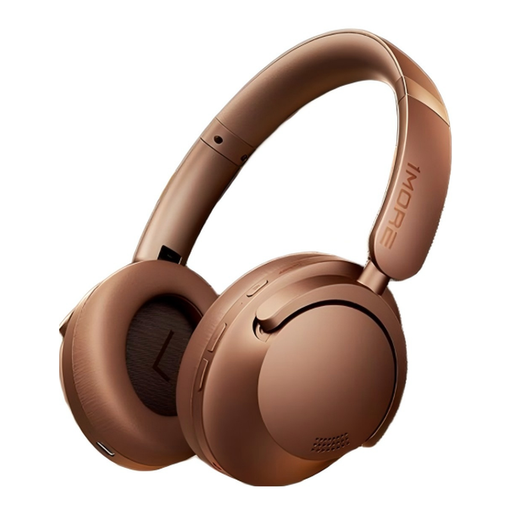
1MORE SonoFlowPro Global, Mocha Brown

1MORE SonoFlowPro Global, Mocha Brown

These wireless over-ear headphones are suitable for listening to your practice recording. The best way to check whether you can follow the part you’re looking for is to try them with your own material.

The description lists 40 mm drivers, ANC and app-based sound adjustment.

View at Joybuy
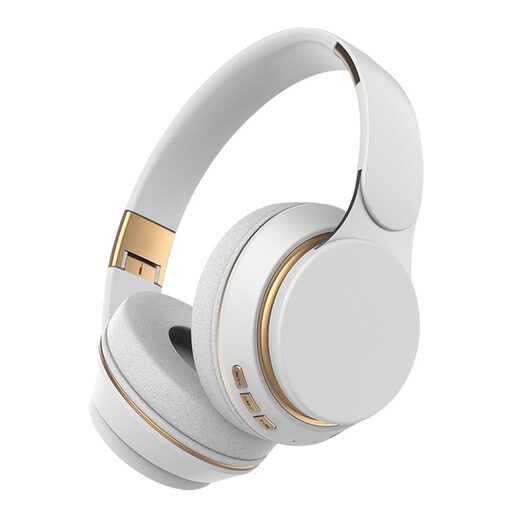
NAXSIR Wireless Over-Ear Bluetooth 5.0 Headphones, White

NAXSIR Wireless Over-Ear Bluetooth 5.0 Headphones, White

This model is described as a closed-back wireless over-ear headphone. Even so, check how much sound escapes and how it fits at your usual listening volume.

The description lists Bluetooth 5.0, 40 mm drivers, a foldable design and a wired mode with a 3.5 mm cable. Passive noise cancellation is also specified.

View at Joybuy
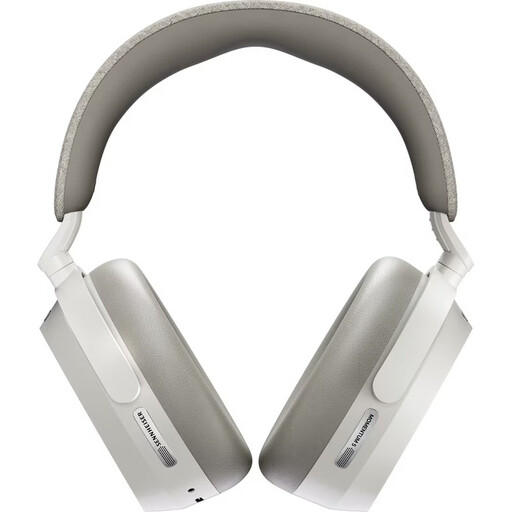
Sennheiser Momentum 5 Wireless Over-Ear, White

Sennheiser Momentum 5 Wireless Over-Ear, White

These closed-back wireless over-ear headphones are an option for listening at your study space. Try them with your own recording to see whether the voices remain clear enough.

Features listed include Bluetooth 5.4, ANC, a 3.5 mm audio cable and a replaceable battery. Battery life is stated as up to 57 hours.

View at Joybuy
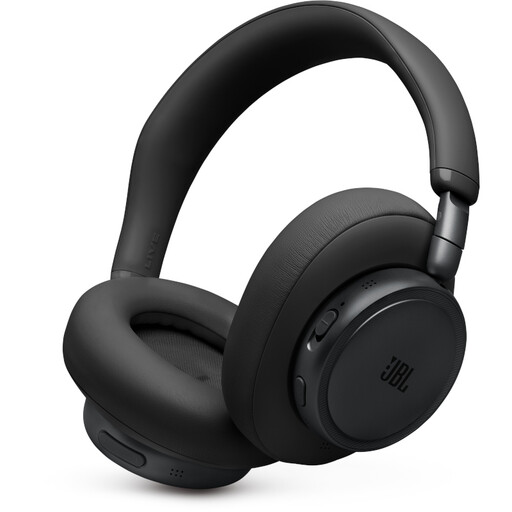
JBL Live 780NC JBLLIVE780NCBLK, Black

JBL Live 780NC JBLLIVE780NCBLK, Black

These wireless over-ear headphones are designed for listening to practice recordings. The listed features don’t show how clearly you’ll hear a particular harmony part.

The description lists Bluetooth 6.0 with multipoint, ANC, a foldable design and a USB-C to 3.5 mm cable. Battery life is stated as 80 hours.

View at Joybuy
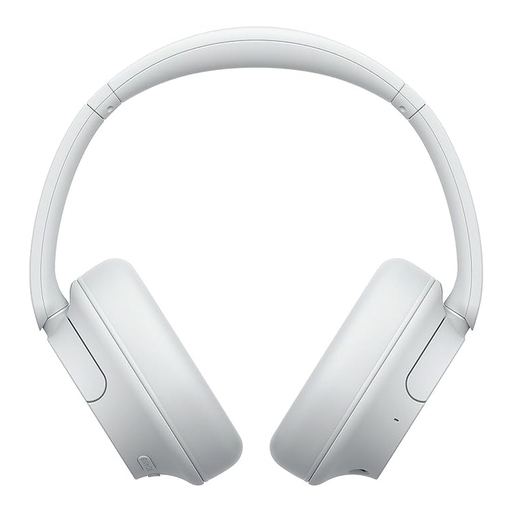
Sony WH-CH720N, White

Sony WH-CH720N, White

These wireless over-ear headphones are an option for listening at your study space. Try them with your recording to check whether you can follow the part you’re looking for.

The product details list a 3.5 mm connection and ANC. They weigh 192 g, and battery life with ANC is stated as up to 35 hours.

View at Joybuy

Frequently asked questions

Should I choose open-back or closed-back headphones for the library?

If other people are within earshot, a well-fitting pair of closed-back headphones is a sensible place to start. RTINGS.com describes open-back studio headphones as providing less isolation and allowing more sound to escape. That doesn’t mean one particular design is right for everyone.

Can I sing along loudly at the library?

Headphones won’t muffle your own voice in the room, and whether singing is allowed depends on the rules of the library you’re in. The State Library of Berlin’s user regulations also refer to its rights as the occupier and its house rules. Check the rules that apply where you’re sitting, and if they’re unclear, practise your singing somewhere suitable instead.

How can I monitor my own voice while practising without distracting delay?

You may need a microphone and a compatible audio interface with direct monitoring; headphones alone don’t provide this function. Focusrite explains that compatible interfaces let you monitor the input signal alongside a backing track with virtually no delay.

How can I keep the volume at a sensible level during longer study sessions?

Keep the volume moderate rather than turning it up to drown out background noise. The German Environment Agency notes that both the level and duration of sound exposure can damage your hearing. A maximum sound pressure specification doesn’t tell you what listening volume is safe for you personally.

What are my rights if I buy online and the fit or product isn’t right?

For qualifying online distance sales from a business seller in Germany, you generally have a 14-day right to cancel from the date of delivery. Exceptions may apply, and you may have to pay return postage. Your statutory rights if goods are faulty are separate from any voluntary manufacturer’s guarantee. For goods covered by EU rules, the legal guarantee is at least two years.