Listeners of quiet spoken-word recordings
If you want to understand softly spoken words at a comfortable volume, try a familiar recording to check the fit and how clearly voices come through.


For quiet poetry recordings, a well-fitting pair of headphones with the right level of noise isolation is a sensible place to start. Try a recording you know to check that you can make out the words at a comfortable volume without disturbing anyone else. Wired headphones are suitable if your playback device has the right connection; Bluetooth and ANC matter most if you want to listen wirelessly or there is disruptive background noise where you plan to listen.
If you want to understand softly spoken words at a comfortable volume, try a familiar recording to check the fit and how clearly voices come through.
For longer listening sessions, comfort is key. Look for suitable ear cushions or ear tips and, with wireless models, battery life that meets your listening needs.
If you want to avoid disturbing people nearby, check how much sound leaks out at your usual listening volume. A closed-back design alone doesn’t guarantee that no sound will escape.
First, check that speech remains clear at a comfortable volume, then assess the fit and sound leakage where you’ll be listening. Finally, make sure the connection and operating mode suit your playback device and how long you plan to listen.
| What matters | What to check before buying | Who should pay particular attention? |
|---|---|---|
| Understanding quiet speech | Try a familiar recording at a comfortable volume; assess the fit and, if relevant, ANC where you’ll actually be listening. | If I don’t want to drown out individual words by turning the volume up, I check speech clarity and fit first. Around 36% of consumers put clear speech first. |
| Comfort over longer periods | Try the design with your glasses on and during a typical listening session; compare battery life only with the same ANC setting. | If I listen to longer readings, I check whether the ear cushions or ear tips feel comfortable. Around 29% of consumers prioritise long-term comfort. |
| Minimal sound leakage | At your intended volume, check from a short distance whether the recording can be heard; noise isolation also depends on the fit. | If I want others at the library to be left undisturbed, I don’t want to assume sound leakage based on the design alone. Around 21% of consumers prioritise consideration for people nearby. |
| Connection and operation | Check your playback device’s connection or Bluetooth compatibility; consider cable length and battery life with your intended ANC setting. | If I use a particular playback device, I want to know whether I can connect the headphones directly or need a charged battery. Around 14% of consumers put connection and operation first. |
Noise cancellation depends on factors including fit and the type of noise. In an already quiet library, a high ANC marketing claim doesn’t prove that poetry will sound clearer.
First, try a recording of your own at a comfortable volume. Then assess ANC where you’ll actually be listening.
Battery life depends on the operating mode. Sony Germany lists different maximum figures for the WH-CH720N with ANC on and off; JBL Germany states that the Tune 770NC’s battery life of up to 70 hours applies with ANC off.
Only compare figures that apply to the settings you’ll actually use.
Sennheiser’s description of the HD 569 as noise-isolating is a manufacturer’s claim; it doesn’t establish a particular sound level at the next seat.
Check for sound leakage at your usual volume before using the headphones in the library.
The HD 569 is a wired, closed-back over-ear option for playback devices with a compatible connection.
The WH-CH720N combines a closed-back over-ear design with Bluetooth, wired listening and Ambient Sound mode.
The Tune 770NC is a foldable Bluetooth over-ear model with ANC and Smart Ambient.
According to the model specifications, Space One is an over-ear option for wired and wireless listening.
AirPods Pro 3 are a compact in-ear alternative for buyers who find ear tips comfortable.
The Joybuy models below include wired and wireless in-ear, on-ear and over-ear designs. Above all, check that the connection is compatible and that the headphones fit comfortably for your listening session.
 No image available
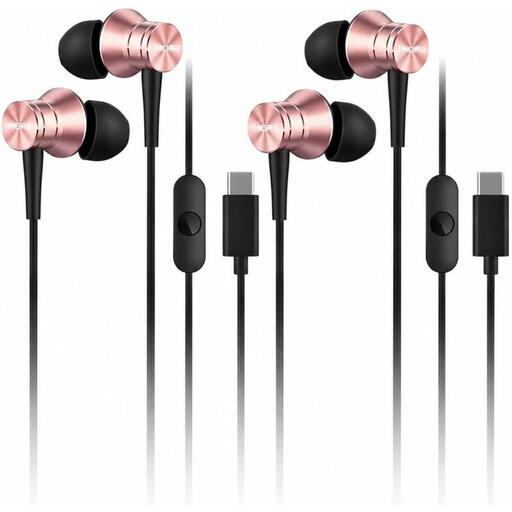
A wired in-ear option if your playback device has a compatible Type-C audio connection.
Type-C connection; check compatibility with your specific device before buying.
 No image available
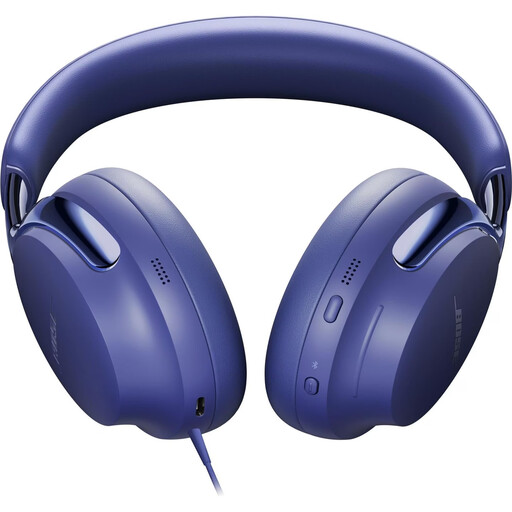
A closed-back Bluetooth over-ear option with ANC if you want to listen wirelessly or try noise control.
The product description lists a weight of around 250 g and up to 30 hours of battery life. A 2.5 mm to 3.5 mm audio cable is listed for wired listening; check that it matches your playback device’s connection.
 No image available
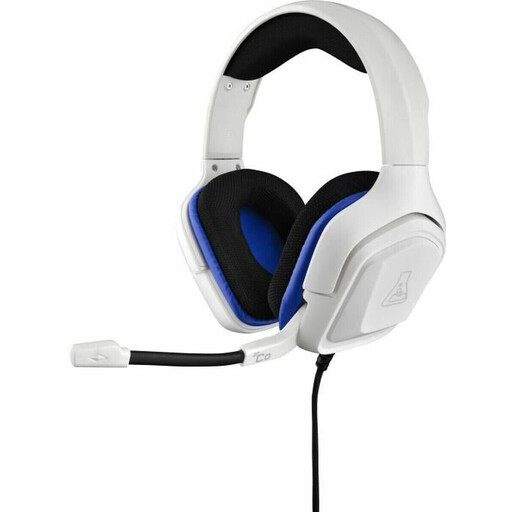
A wired over-ear option if your playback device has a 3.5 mm audio connection.
The description lists a 2.1 m cable, a weight of around 237 g and a microphone. Check whether the headset design suits where you’ll be listening.
 No image available
A wireless in-ear design if you prefer ear tips to a headband and find them comfortable to wear.
Bluetooth 5.4, touch controls and a charging case with a Type-C connection are listed in the product title.
 No image available
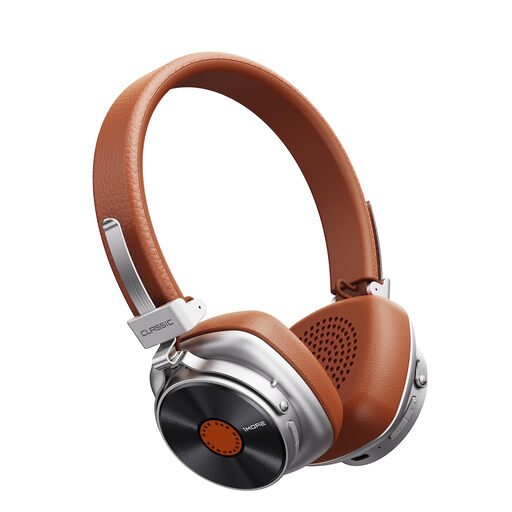
A wireless on-ear option if you prefer a headband and find the on-ear fit comfortable for longer sessions.
The product description lists EQ presets in the 1MORE app; check beforehand that you can use the app with your device.
Not necessarily. First check the fit, passive noise isolation and speech clarity at a comfortable volume. ANC is an extra option if there’s disruptive background noise where you’ll be listening. Its effectiveness also depends on the type of noise.
Check that the playback device’s connection matches the plug. The Sennheiser HD 569 is described as including, among other things, a 1.2 m cable with a 3.5 mm plug. Apple notes that dirt and earwax can affect noise control in in-ear headphones; follow the care instructions for your specific model.
Listen at the lowest volume that lets you understand the speech, and take your total listening time into account. The World Health Organization gives up to 40 hours per week at an average of 80 dB as an example for adults; this isn’t a universal limit that you can simply read off the volume control.
According to the Verbraucherzentrale, online purchases generally come with a 14-day right to cancel; check separately for exceptions and specific conditions. The German Environment Agency advises that old electrical appliances must not be put in household rubbish. If batteries can be removed without damaging the device, they should be disposed of separately.