For photographing lichens on a countryside break, a rugged compact camera with a close-up mode is a good choice if you want to take spontaneous shots without changing lenses. For landscapes and a variety of compositions, a mirrorless camera kit with a standard zoom is a flexible starting point. If you want tiny details to fill the frame, also consider a compatible macro lens: Canon UK lists 0.16x magnification with autofocus at 45 mm for the RF-S 18–45 mm, while Nikon UK gives a 1:1 reproduction ratio for the Z MC 50 mm f/2.8. A short minimum focus distance alone doesn’t tell you how large the subject will appear or how much room there’ll be between the lens and the lichen.
Which option suits you?
Lichen detail photographers
If you want to capture tiny details as large as possible in the frame, check the reproduction ratio of the specific lens or the close-up mode on the compact camera. OM Digital Solutions, Canon UK, Nikon UK and Sony UK each publish specifications for particular models or lenses.
Spontaneous nature walkers
If you want to take photos on the go in changing conditions, a camera that doesn’t require lens changes may be more practical. OM Digital Solutions lists water and dust protection for the TG-7; the Federal Agency for Nature Conservation also highlights rules requiring visitors to stay on paths and observe closures at the location.
Landscape and detail photographers on holiday
If you want to photograph landscapes and other holiday subjects as well as lichens, consider whether a standard zoom will be enough to start with or whether a macro lens better suits your subjects. Canon UK describes the EOS R50 kit with the RF-S 18–45 mm as a kit comprising a camera body and lens.
What to consider when choosing
For photographing lichens on a countryside break, it’s worth considering close-up performance, ease of spontaneous use, framing options for travel and what’s included in the complete camera system separately.
Compact camera with a close-up mode
A good fit if: You want to take spontaneous close-up shots of lichens and other holiday subjects on day trips, without changing lenses.
Trade-off: The lens is fixed; the TG-7’s stated minimum focusing distance of 1 cm from OM Digital Solutions does not mean a 1:1 reproduction ratio.
Mirrorless camera kit with a standard zoom
A good fit if: Landscapes, patches of lichen and varied travel compositions matter more to you than filling the frame with very small details.
Trade-off: Canon UK lists maximum magnification of 0.16x with autofocus at 45 mm for the RF-S 18–45 mm; this kit is therefore not a 1:1 macro system.
Mirrorless camera with a suitable macro lens
A good fit if: You want to capture fine lichen details at a larger size and are choosing a compatible lens specifically for close-up photography.
Trade-off: The camera body and lens need to be compatible. Nikon UK says that there’s around 5 cm between the lens and subject when the Z MC 50 mm f/2.8 is at its closest focusing distance.
| What you need |
What to check before buying |
Who it matters to |
| Fine lichen details |
Check the maximum reproduction ratio of the specific lens and the usable working distance. |
If I want to capture tiny lichen details as large as possible, I look at both rather than just the minimum focus distance. Around 36% of consumers prioritise frame-filling detail when choosing. |
| Spontaneous shots on the go |
Consider model-specific water and dust protection, and whether the lens is fixed or interchangeable. Check any rules requiring visitors to stay on paths and observe closures at your location; the Federal Agency for Nature Conservation highlights these kinds of restrictions. |
If I want to take spontaneous photos on a walk in changing conditions, it’s important to have a camera ready to use without changing lenses. Around 29% of consumers prioritise ease of use on the go. |
| Landscapes and varied compositions |
Check exactly what’s included in the kit and the reproduction ratio of the supplied lens; a standard zoom isn’t automatically a macro lens. |
If I want to photograph landscapes and other holiday subjects as well as lichens, flexible framing is important. Around 21% of consumers prioritise landscapes and varied compositions. |
| What’s included in the camera system |
Consider the camera body, supplied lens and any macro lens you may need as a complete setup; check the mounts and what’s included in the box. |
If I want to know which parts I’ll actually need for the close-up shots I want before buying, I check the complete system. Around 14% of consumers prioritise what’s included. |
Common buying misconceptions
-
“Macro” in the product name automatically means 1:1
The name alone doesn’t tell you how large the subject will appear on the sensor. Canon UK lists 0.5x magnification for the RF 35 mm F1.8, while Nikon UK gives a 1:1 ratio for the Z MC 50 mm f/2.8.
Compare the stated maximum reproduction ratio of the specific lens with the size of your smallest subjects.
If you need greater magnification, you may need an additional lens.
-
Comparing only the minimum focus distance
Focus distance alone doesn’t show how large the subject will appear or how much room you’ll have to position the camera and light the scene. The TG-7’s minimum focusing distance of 1 cm, as stated by OM Digital Solutions, isn’t comparable with Nikon’s 1:1 ratio and approximately 5 cm distance between lens and subject for the Z MC 50 mm f/2.8.
Check reproduction ratio and working distance separately, and pay attention to what each manufacturer’s specification refers to.
-
Assuming a kit zoom is a supplied macro lens
The EOS R50 kit described by Canon UK includes the RF-S 18–45 mm; Canon lists up to 0.16x magnification with autofocus at 45 mm for this zoom.
Check what’s included in the specific offer and the lens specifications before planning to use the kit as a complete system for frame-filling lichen details.
Key brands and lens systems
OM SYSTEM
The Tough TG-7 is a compact camera option for close-up shots on day trips, without changing lenses.
- OM Digital Solutions lists a minimum focusing distance of 1 cm in Microscope mode, along with water and dust protection for the TG-7: waterproof to 15 m (IPX8) and dustproof (IP6X).
- The 1 cm specification doesn’t indicate a 1:1 reproduction ratio. The lens can’t be replaced with a different macro lens.
Canon
The EOS R50 kit with RF-S 18–45 mm is a mirrorless camera option for varied travel compositions; an RF macro lens is a separate choice.
- Canon UK lists 0.16x magnification with autofocus at 45 mm for the RF-S 18–45 mm, and 0.5x magnification for the RF 35 mm F1.8 MACRO IS STM.
- These figures refer to different lenses and don’t indicate identical close-up performance. The kit zoom isn’t a 1:1 macro lens.
Nikon
The NIKKOR Z MC 50 mm f/2.8 is a macro lens option for a compatible Nikon Z camera body.
- Nikon UK gives a 1:1 reproduction ratio.
- Nikon UK lists a distance of approximately 5 cm between the lens and subject at the closest focusing distance. This short distance can affect how you position the camera in front of the lichen; the lens can’t be used as a camera on its own.
Sony
The E 30 mm F3.5 Macro SEL30M35 is a macro lens option for a compatible APS-C E-mount camera body.
- Sony UK lists a maximum magnification of 1x and a minimum focusing distance of 0.095 m.
- Before choosing, check that the E-mount fits and factor in the need for a separate camera body.
Panasonic
The LUMIX G H-HS030 lens is a 1:1 macro option in the Micro Four Thirds system.
- Panasonic lists a 1:1 reproduction ratio and optical stabilisation for the H-HS030.
- Panasonic’s German manufacturer website marks the variants listed there as unavailable. This doesn’t say anything about other retailers or the range as a whole; the lens also needs to fit a compatible Micro Four Thirds camera body.
Joybuy products for travel photography
The Joybuy offers below are DJI Osmo Pocket 3 travel bundles. For fine lichen details, also check whether the specific camera offers the reproduction ratio and close-focusing capability you need.
 No image available
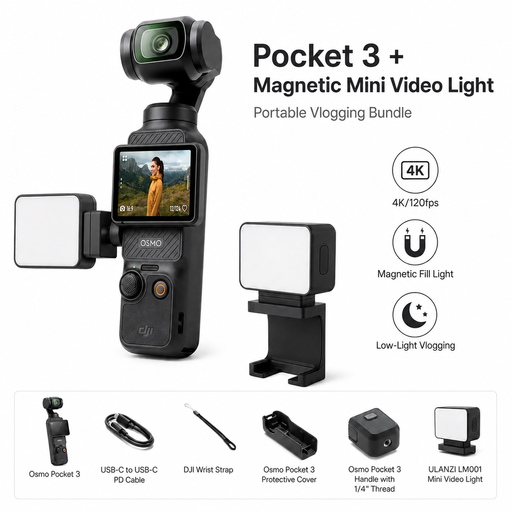
DJI Osmo Pocket 3 Standard Combo + ULANZI LM001 Pocket 3 Magnetic Mini Video Light
This bundle is described as suitable for travel photography; before buying, check the reproduction ratio achievable with the specific camera for lichen detail shots.
The product name lists a 1-inch CMOS sensor, 4K/120fps and a 3-axis gimbal.
According to the product name, the bundle includes a magnetic mini video light.
View at Joybuy
 No image available
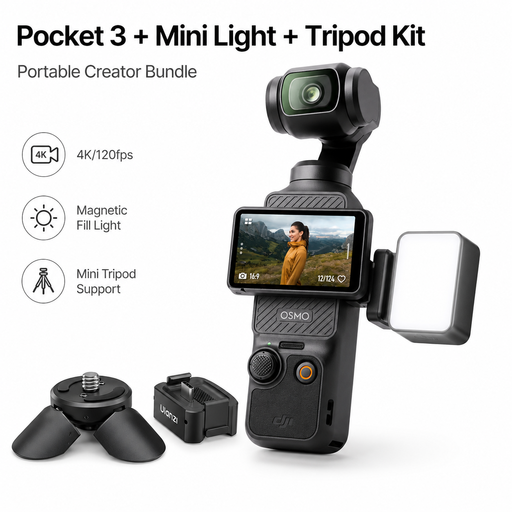
DJI Osmo Pocket 3 Standard Combo + ULANZI LM001 Magnetic Mini Video Light, Pocket 3 Adapter & Mini Tripod
This bundle is described as suitable for travel photography; before buying, check the reproduction ratio achievable with the specific camera for lichen detail shots.
The product name lists a 1-inch CMOS sensor, 4K/120fps and a 3-axis gimbal.
According to the product name, the bundle includes a magnetic mini video light, a Pocket 3 Adapter and a Mini Tripod.
View at Joybuy
Frequently asked questions
Is a standard zoom enough for photographing lichens?
A standard zoom can work well for larger patches of lichen and landscape shots. If you want tiny details to fill the frame, compare the lens’s maximum reproduction ratio: Canon UK lists 0.16x with autofocus at 45 mm for the RF-S 18–45 mm, while Nikon UK lists 1:1 for the Z MC 50 mm f/2.8.
How can I get more of my close-up subject in focus?
With focus bracketing, you can take several photos at slightly different focus settings and combine them into one image with a greater depth of field. Canon UK recommends using a tripod to keep the series of images properly aligned; also check whether your specific camera just captures the images or combines them in-camera too.
What should I check before buying, returning an item or dealing with a fault?
First, check that the offer actually includes the camera, a compatible lens and any accessories you need. For a typical online purchase, the consumer advice service Verbraucherzentrale describes a right to cancel within 14 days in most cases; you must notify the retailer that you’re cancelling. Your statutory rights against the seller are separate from any voluntary manufacturer’s warranty.


