
Lieferung heute & morgen

Qualitätsgarantie

Willkommens-Angebote freischalten: KOSTENLOSE Lieferung | Bis zu 80 % RABATT | Kostenlose 30-Tage-JoyPlus-Testphase
App herunterladen
For many owners of motorhomes, boats, or solar power systems, switching from traditional lead-acid batteries to Lithium Iron Phosphate (LiFePO4) technology is a crucial step towards greater independence and reliability. However, the market is crowded and full of technical promises. Without careful consideration, you can quickly invest in a product that fails to meet expectations. This guide will help you identify the essential features and avoid common pitfalls.
Before we dive into the technical details, you should be aware of two common marketing traps that often lead to disappointment.
To make an informed decision, focus on three core technical parameters. These determine the safety, performance, and longevity of your new LiFePO4 battery.
A high-quality BMS is non-negotiable. It protects the battery and connected devices from damage. Ensure that the BMS offers at least the following protective functions:
A battery's capacity is measured in Amp-hours (Ah) and describes how much current it can deliver over a specific period. For a better comparison, especially with different voltages, the specification in Watt-hours (Wh) is helpful (Wh = Ah × V).
For example, a 12V leisure battery with 100Ah LiFePO4 provides 1280 Wh (12.8 V × 100 Ah) of energy. Unlike lead-acid batteries, where often only 50% of the nominal capacity is usable, LiFePO4 batteries can typically be discharged to 80–100%. This means a 100Ah LiFePO4 battery often replaces a 200Ah lead-acid battery in practice. Always check the manufacturer's specified cycle count in conjunction with the underlying depth of discharge (e.g., "4500+ cycles at 80% DOD").
Your energy needs may change. Therefore, check if the battery supports system expansion. Many models allow for connecting multiple batteries in series (to increase voltage, e.g., to 24V or 48V) or in parallel (to increase total capacity). This is particularly relevant for a self-sufficient RV house battery or a larger solar battery.
Another useful feature is Bluetooth connectivity. It allows you to monitor important battery data such as State of Charge (SOC), voltage, and temperature directly on your smartphone.
Based on the criteria above, we have compiled a few products for different use cases.
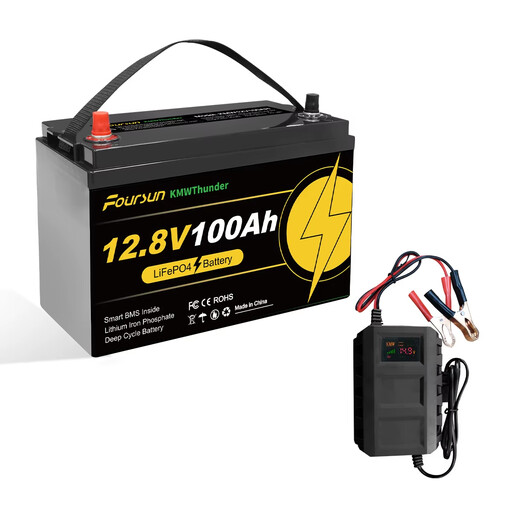
Why This Fits Their Persona: Ideal for users outfitting their first motorhome or a small camper van. The 100Ah capacity is a solid baseline for powering lights, a water pump, and small devices. The included charger simplifies the setup process.
The integrated BMS explicitly includes low-temperature protection, which prevents the common mistake of charging in cold weather. The cycle rating of over 4500 is solid and more than sufficient for an entry-level setup.
Excellent value for money; Comprehensive BMS including cold-weather protection; Charger included in the package.
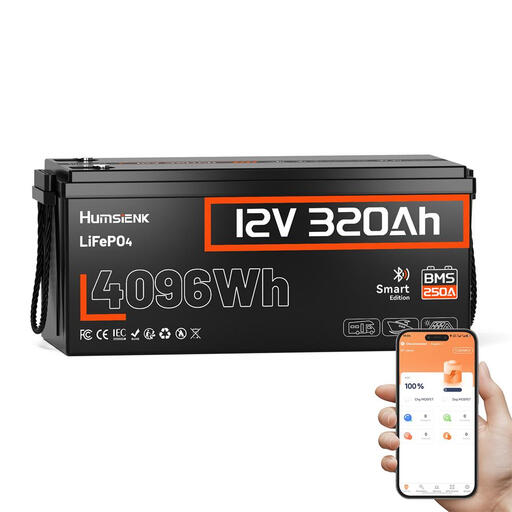
Why This Fits Their Persona: Perfect for owners of large motorhomes, yachts, or off-grid systems who want to remain self-sufficient for several days. The high capacity of 4096 Wh reliably powers even power-hungry appliances like coffee machines or air conditioners.
The powerful 250A BMS provides comprehensive protection and is designed for high currents. The Bluetooth function ensures full transparency of the battery's status, avoiding the trap of unclear performance data.
Very high capacity for maximum self-sufficiency; Smart monitoring via Bluetooth 5.0; Powerful BMS for demanding applications.
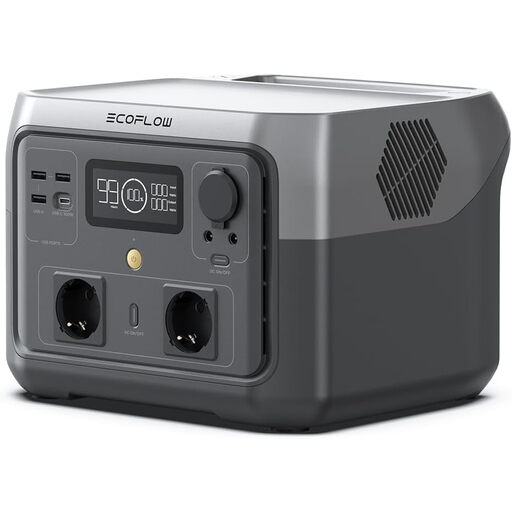
Why This Fits Their Persona: For anyone looking for a hassle-free, portable power supply for camping trips, the garden, or as emergency backup power at home. This **power station** is an all-in-one solution that requires no separate installation.
As a complete system from an established brand, all components, including the BMS and LiFePO4 cells, are perfectly matched and certified. The performance data is clearly specified, and the longevity is transparently stated with 3000+ cycles to 80% capacity.
Extremely portable and ready to use out of the box; Very fast charging (in 1 hour from a wall socket); Versatile ports (AC, USB-C, etc.).
We have compiled a complete, real-time list of products that fully satisfy these strict selection criteria and UK safety regulations.
In many cases, a direct replacement is possible, as many LiFePO4 batteries are offered in standard case sizes. However, you should check whether your existing charger or charge booster is suitable for the charging profile of LiFePO4 batteries. Many modern charge controllers can be adjusted accordingly. An unsuitable charger can impair the performance and lifespan of the new battery.
BMS stands for Battery Management System. It is an electronic circuit integrated into the battery that monitors and protects the cells. It prevents critical conditions such as overcharging, deep discharging, overheating, or short circuits. A good BMS is crucial for the safety and long life of the battery, which is why it is a key selection criterion.
The lifespan of a LiFePO4 battery is measured in charge cycles and depends heavily on usage. High-quality batteries often achieve 3,000 to 6,000 cycles at a depth of discharge of 80%. For typical use in a motorhome or as a boat battery, this can correspond to a lifespan of 10 years or more. This is a significant advantage over lead-acid batteries, which often lose capacity after just a few hundred cycles.