
Lieferung heute & morgen

Qualitätsgarantie

Willkommens-Angebote freischalten: KOSTENLOSE Lieferung | Bis zu 80 % RABATT | Kostenlose 30-Tage-JoyPlus-Testphase
App herunterladen
A LiFePO4 power station can be a practical companion for camping, motorhomes, boats or as a mobile emergency power supply. However, high wattage figures, short charging times and large capacity ratings don't automatically lead to the right purchase decision. What really matters is whether the battery, inverter, ports and charging options match your actual power consumption.
Power in watts (W) describes which devices a power station can run simultaneously. Capacity in watt-hours (Wh) tells you how long that energy will last.
A unit with 2,000 W output doesn't automatically have a particularly long runtime. A kettle drawing 1,800 W can drain a 1,000 Wh power station relatively quickly under heavy load. For runtime, you need to consider the device's power consumption, the capacity and the inverter's losses.
Many portable power stations boast a high peak or surge power rating. This is usually only available briefly for starting certain appliances. For heaters, power tools or kitchen appliances, the rated power is what counts.
So check the following before you buy:
Not every portable power station comes with a solar panel, car charging cable or all the necessary adapters. For the Jackery Explorer 1000 V2, for example, the product description states that an AC charging cable is included; a DC8020-to-USB-C adapter and a car charging cable are not part of the package.
With some DJI models too, the charging cable must be purchased separately. So check the scope of delivery and the compatibility of the ports before you order.
As a rough guide, you can calculate your energy needs like this:
Power consumption in watts × usage time in hours = energy requirement in watt-hours
Example: A laptop drawing 60 W running for five hours theoretically needs 300 Wh. You should also factor in a reserve for inverter losses and additional devices.
A LiFePO4 power station is not the same as a simple solar battery. The power station combines the battery, battery management system, inverter and multiple outputs in one housing. A separate LiFePO4 battery, on the other hand, requires suitable charging and protection technology.
LiFePO4 stands for lithium iron phosphate. With this battery type, you should pay attention to the following details:
A cycle rating does not mean unlimited lifespan. It describes how many times a battery can be charged and discharged under the stated conditions before its capacity drops to the specified reference value.
For use in the UK, 230-volt AC outputs, USB-C with Power Delivery and regulated 12-volt outputs are relevant. A USB-C port with 100 W can, for example, power compatible laptops directly, while a 12-volt output may be suitable for cool boxes or vehicle electronics.
With solar generators, also check:
For a more permanent setup in a motorhome or off-grid system, a separate 12 V LiFePO4 battery with BMS may be more suitable than a classic portable power station.
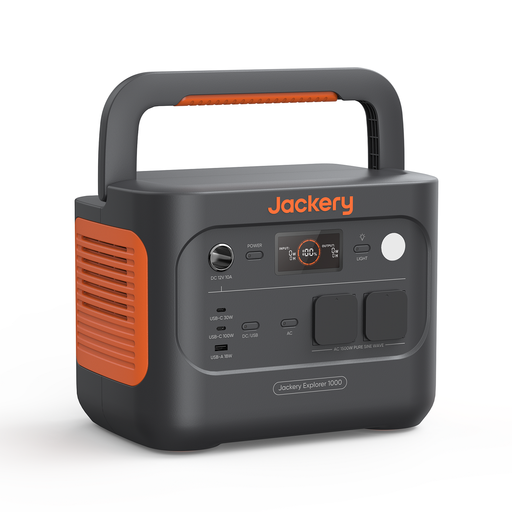
Why this product fits the profile: With 1,070 Wh, 1,500 W rated power and a weight of around 10.8 kg, this model is suitable for camping, travel and compact emergency power.
The product data lists rated and peak power separately: 1,500 W continuous and 3,000 W short-term. This makes it easier to plan your device selection realistically.
LiFePO4 battery, two USB-C outputs with up to 100 W and 30 W respectively, and a stated 4,000 cycles to at least 70 per cent capacity.
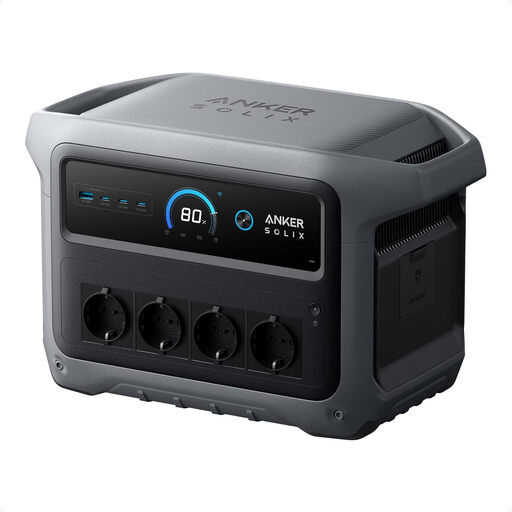
Why this product fits the profile: The combination of 1,024 Wh, 2,000 W rated power and nine outputs is designed for campers, DIY enthusiasts and flexible home use.
The stated rated power of 2,000 W is clearly distinguished from the peak power of 3,000 W. This makes it easier to check more demanding appliances.
LiFePO4 battery, 2,000 W rated power and nine outputs for multiple devices. Check the full connection details in the product description before buying.
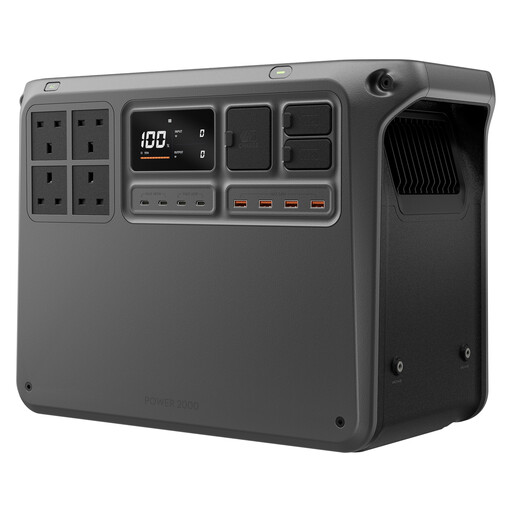
Why this product fits the profile: With 2,048 Wh capacity and 3,000 W stated power, this model is aimed at users who need longer runtimes, multiple devices or higher energy demands.
The 2,048 Wh capacity offers more energy reserve than typical 1,000 Wh units. Expansion and accessories should still be checked separately for compatibility.
2,048 Wh LiFePO4 battery, 15 outputs and, according to the product description, a UPS switchover time of 10 milliseconds.
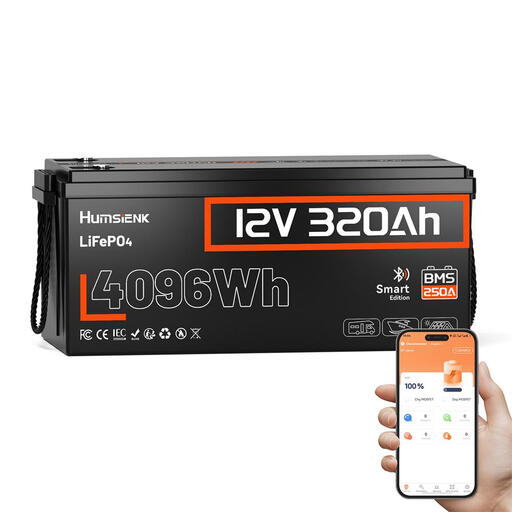
Why this product fits the profile: The 12-volt battery with 4,096 Wh is designed for motorhomes, boats and off-grid solar systems where an integrated storage unit is connected to an existing system.
The product specifications mention BMS protection, Bluetooth monitoring and possible series or parallel connection. However, suitable cables, fuses and a compatible charger are still required for installation.
4,096 Wh energy rating, 250 A BMS and Bluetooth data monitoring according to the product description. The housing is rated IP65.
We've put together a complete, regularly updated list of products that fully meet these strict selection criteria and the safety regulations in force in the EU.
The lifespan depends on cell quality, temperature, charge level and usage. Manufacturers often state a cycle count down to a certain remaining capacity. This figure is more meaningful than a general number of years. Gentle use with appropriate charge limits and dry storage can reduce ageing.
For a smartphone, light, camera and laptop, a compact portable power station up to around 1,000 Wh is often sufficient. If you also want to run a cool box, cooking appliance or multiple devices, check the rated power, 12-volt output and capacity together. For motorhomes with a fixed battery system, a 12 V LiFePO4 battery may be more suitable.
When charging from the mains, the energy required is roughly the recharged capacity plus charging losses. With a solar generator, after the initial purchase there are no consumption-based electricity costs from the sun, although you do need to factor in the solar panel, cables and a suitable charge controller. The actual costs depend on the charging source, frequency of use and battery ageing.