
Lieferung heute & morgen

Qualitätsgarantie

Willkommens-Angebote freischalten: KOSTENLOSE Lieferung | Bis zu 80 % RABATT | Kostenlose 30-Tage-JoyPlus-Testphase
App herunterladen
By a Joybuy Product Recommendation Officer Published on August 28, 2026
Light-up toys for kids are captivating at first glance and are often a top contender for a birthday gift for boys and girls. But the initial sparkle can quickly fade if the product doesn't live up to its promise. Many parents and gift-givers invest in toys with light effects, only to find them lying unused in a corner after a short time. This guide highlights the three most common pitfalls and explains which core features you should look for to make a thoughtful choice.
Before you make a decision, it's helpful to know the typical problems that often only become apparent after unboxing.
To avoid these pitfalls, focus on objective and verifiable features. These three parameters will help you realistically assess a product's quality and play value.
The most important criterion is safety. Always look for the CE marking. This mark confirms that the manufacturer declares compliance with the essential health and safety requirements of the EU, particularly the Toy Safety Directive (EN 71). Specifically, this means, among other things:
Not all light effects are created equal. There are two basic technologies with different characteristics:
A good creative educational toy integrates light effects as a reward or as part of a larger play concept, rather than making them the sole focus. Ask yourself:
A toy that answers these questions positively has a much higher chance of inspiring long-term enthusiasm.
Here are some recommendations tailored to different interests and play styles of children, which take the aforementioned quality criteria into account.
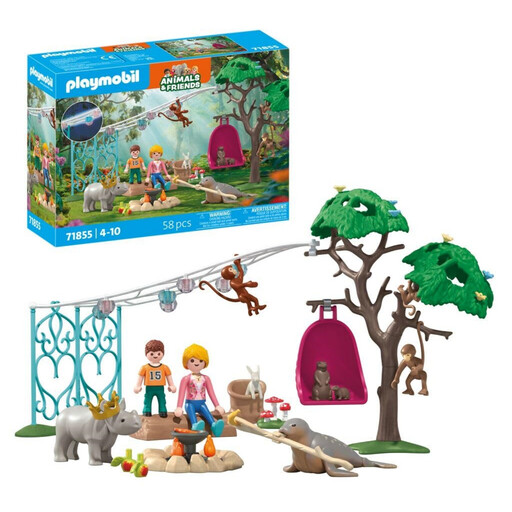
Why This Fits Their Persona: Ideal for children who love to create scenarios and immerse themselves in role-playing. The light effect here is an atmospheric detail that sparks the imagination rather than dominating the entire play experience.
Avoids the one-dimensional play value trap. The core of the game is storytelling with the figures and accessories. The glow-in-the-dark string lights are a battery-free, long-lasting bonus.
Promotes creativity and social play. The robust PLAYMOBIL quality and detailed accessories ensure long-lasting fun.

Why This Fits Their Persona: Perfect for children who love to build, construct, and experiment. This set combines the fun of magnetic building with the fascinating physics of a marble run, visually enhanced by light-up elements.
The play value lies in creative building and logical thinking. The light-up function is a reward and an additional field for experimentation, not the sole purpose. The set offers endless building possibilities.
Promotes STEM skills like spatial reasoning, logic, and problem-solving. The strong magnets and durable ABS material ensure stable constructions.
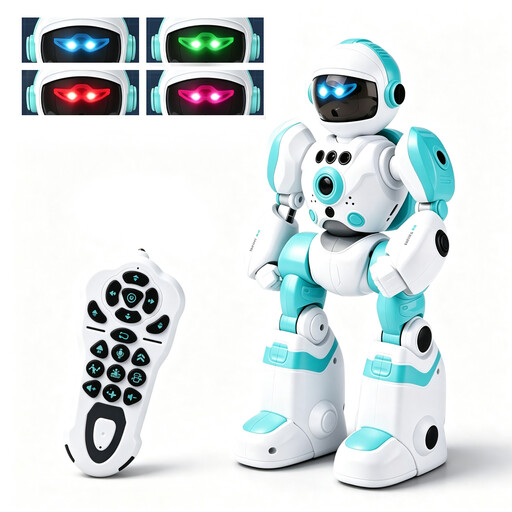
Why This Fits Their Persona: For kids interested in technology, robots, and the basics of programming logic. This robot responds to gestures, can record and play back sequences of movements, and thus offers an interactive introduction to the world of robotics.
The glowing LED eyes here are a functional feedback element, indicating the robot's status and actions. The focus is clearly on the interactive features like programming and gesture control.
Playfully introduces logical thinking and programming concepts. The robot is USB-rechargeable, which reduces running costs and is better for the environment.
We have compiled a complete, up-to-date list of products that fully meet these strict selection criteria and all required safety standards.
The CE marking is a self-declaration by the manufacturer that its product complies with all applicable EU regulations. For toys, this primarily concerns the EN 71 series of standards, which governs mechanical and physical properties, flammability, and the migration of certain chemical elements. It is not a quality seal, but it is a fundamental requirement for selling toys in the EU and a key indicator of compliance with safety standards.
Battery life varies greatly depending on the product, the type and number of LEDs, and the intensity of use. Simple LED lights can last for many hours, while complex, interactive toys with movement and sound consume more energy. Models with an integrated, USB-rechargeable battery are often a practical and more cost-effective alternative in the long run. The product description often includes information on the expected playtime per charge or set of batteries.