
Lieferung heute & morgen

Qualitätsgarantie

Willkommens-Angebote freischalten: KOSTENLOSE Lieferung | Bis zu 80 % RABATT | Kostenlose 30-Tage-JoyPlus-Testphase
App herunterladen
As a Joybuy Product Recommendation Officer, I see how the market for gaming peripherals evolves daily. Especially in the esports hardware sector, technical specs are often promoted as the sole measure of quality. But when it comes to an ultralight wireless gaming mouse, exaggerated marketing claims often lead to buyer's remorse. Before you make a decision, it's crucial to understand the most common pitfalls that can hurt your in-game performance.
The 3 Most Common Traps When Buying a Gaming Mouse:
To make an informed purchasing decision, you should focus on the technical features that directly impact your performance.
The heart of any pro gaming mouse is its sensor. Instead of focusing on the maximum DPI number, you should check the sensor model. A sensor like the Pixart 3395 is currently a benchmark in the esports scene. Key metrics for precise 1:1 tracking are:
In esports, every gram counts. A 53g gaming mouse or lighter allows for faster reactions and reduces arm fatigue during long sessions. But pure weight is only half the battle. The balance of the mouse is crucial for a controlled feel. A solid, non-perforated construction not only offers greater durability but also a more even weight distribution and a more pleasant tactile experience.
The shape of the mouse must match your hand and grip style. There are three main types:
For fast-paced titles, a mouse for FPS games needs a shape that allows for quick and precise micro-adjustments. An ergonomic gaming mouse for right-handers with a thoughtful design can offer a tangible advantage here.
Based on the criteria above, we have compiled a selection of models suited for the specific needs of competitive players.
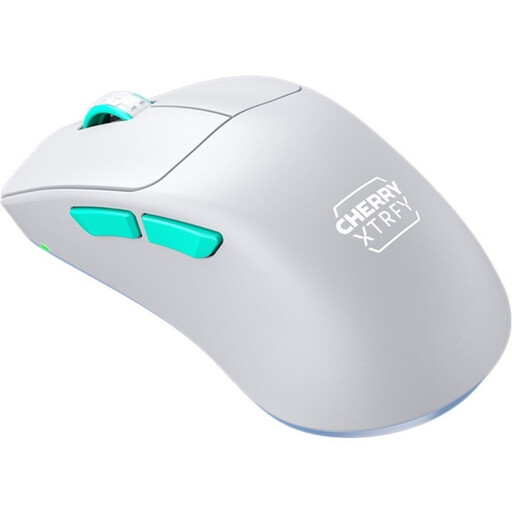
Why This Fits Their Persona: This model is designed for players who refuse to compromise. The unique, ultra-low front allows for exceptional control by bringing the fingers closer to the mousepad. Ideal for right-handed players seeking maximum precision in FPS games.
It bypasses the perforated design trap with a solid, stable shell at just 53g. The focus is on ergonomics and the proven Pixart 3395 sensor, not on an inflated DPI number.
Unique ergonomic shape with a low front for maximum control. Long battery life of up to 75 hours for extended gaming sessions.
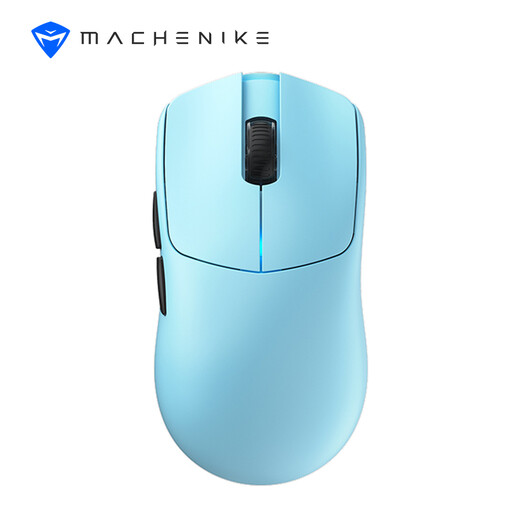
Why This Fits Their Persona: For players seeking an extremely lightweight and technologically advanced mouse. Its symmetrical shape is suitable for various grip styles, while the 8000 Hz polling rate offers ultra-low latency for maximum responsiveness.
At just 49g with a solid shell, it minimizes weight without sacrificing stability. The focus is on measurable performance (8K polling, Pixart 3395 sensor) rather than pure marketing numbers.
Extremely low weight and a dual 8000 Hz polling rate (wired and 2.4G) for minimal latency. The 700 mAh battery provides over 100 hours of runtime.
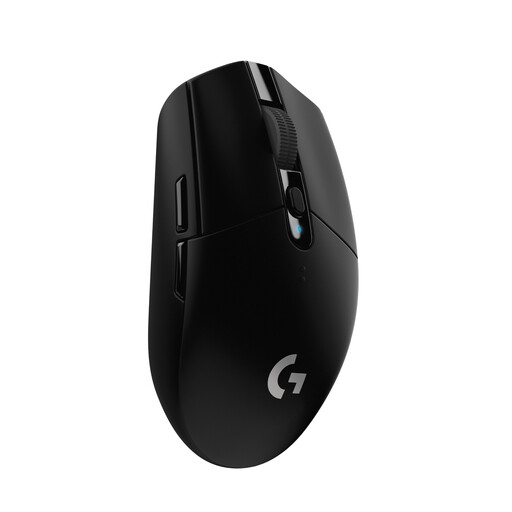
Why This Fits Their Persona: An excellent entry into the world of wireless gaming mice. It offers proven technology like the HERO sensor and lag-free LIGHTSPEED connectivity at an accessible price point.
The G305 focuses on the essentials: a precise sensor and a reliable wireless connection. It forgoes extreme weight reduction (99g) in favor of a robust build and a very long battery life.
Excellent price-to-performance ratio. The HERO sensor delivers top-tier performance and high power efficiency, resulting in up to 250 hours of battery life from a single AA battery.
We have compiled a complete, real-time updated list of products that fully meet these strict selection criteria and safety regulations.
A higher polling rate, like 4000 Hz or 8000 Hz, means the mouse reports its position to the computer more frequently, which theoretically reduces latency. The standard for a wireless esports mouse is 1000 Hz, which corresponds to a 1 ms latency and is perfectly sufficient for most players. Higher rates can offer a marginal advantage but also require more CPU power. The noticeable difference is often minimal and highly dependent on individual perception and the rest of your system setup.
Battery life is a key convenience factor. Modern ultralight mice often provide 70 to 90 hours of runtime, which is enough for a week of intensive gaming without recharging. A trade-off between weight and battery size is inevitable. Models with extremely long battery life are often heavier, while the lightest models may need to be charged more frequently. A runtime of over 50 hours is a good benchmark for ambitious players.
That depends on the manufacturer. Some mice, like the models from CHERRY XTRFY, are designed so that all important settings (DPI, Polling Rate, LOD) can be adjusted directly on the mouse. This is particularly useful for tournaments where third-party software installation is not allowed. Other manufacturers rely on a software suite that allows for more in-depth customisation, such as macros, key bindings, and lighting profiles. The choice depends on your personal preference for a plug-and-play solution versus maximum customisability.