Crocheters creating a product catalogue
If you regularly photograph your handmade figures, you’ll want consistent yarn colours, backgrounds and framing. Canon Europe notes that white balance matters when lighting conditions vary.


If you want to bring out the stitches and shape with carefully placed shadows, a freely positionable softbox with a suitable light is a good option. For small figures and evenly lit images with minimal shadows, a light tent may be more practical. Before buying, check the fitting and what’s included, the space available, and whether you can keep the colour temperature and white balance consistent for repeat shots.
If you regularly photograph your handmade figures, you’ll want consistent yarn colours, backgrounds and framing. Canon Europe notes that white balance matters when lighting conditions vary.
When photographing individual figures at home, the internal dimensions and footprint matter just as much as how easy the kit is to put away. NEEWER lists the LP40 light tent as having internal dimensions of 40 × 40 × 40 cm.
If you already own a light, you may simply be looking for a suitable modifier to create softer light and more controlled shadows. Rollei describes diffusion as a way to soften and spread light; the fitting must be compatible with your existing light.
A good choice if: you want to bring out the stitches and outline with side lighting, and adjust the position of the light.
Keep in mind: The modifier doesn’t produce light itself. With Bowens models, the fitting and light need to be compatible.
A good choice if: you don’t yet have a studio light and want to put together a light source, softbox and, if needed, a stand.
Keep in mind: The kit needs space. For the NEEWER SF40 and NK103 models, the manufacturer specifies E26 fittings, so check the exact version.
A good choice if: your figure fits inside and you want repeatable product shots with minimal shadows.
Keep in mind: A light tent limits the size and arrangement of your subject, and gives you less freedom to direct side lighting than a separate softbox.
| Consideration | What to check before buying | Who it matters to |
|---|---|---|
| Stitches and shape | Diffuser and adjustability; consider a grid if you need to control how far the light spreads. | If I want the stitches to remain visible while softening harsh shadows, control over the lighting is key. This is the top priority for around 40% of customers. |
| Yarn colours | The light’s colour temperature and whether you can keep the lighting and white balance consistent between shots. | If yarn colours need to look consistent across several shots, I want to match the light source and white balance. Around 30% of customers put colour accuracy first. |
| Space needed | The light tent’s internal dimensions or the footprint of the light and stand; remember to allow for storage space too. | At a small or shared table, I need to know whether there’s room for the figure, the framing I want and the equipment. Around 20% of customers prioritise shooting and storage space. |
| Complete setup | The modifier fitting; for a kit, check the bulb, stand and electrical specifications. | If I don’t yet own studio equipment, I want to know in advance exactly what’s included and whether the parts are compatible. Around 10% of customers prioritise a setup they can plan straight away. |
A modifier such as the Godox, Rollei and Aputure models mentioned here is an attachment for a compatible light, not necessarily a complete lighting solution.
Before buying, compare what’s included and the fitting on the specific listing with your existing equipment.
A light tent can be suitable for evenly lit product shots with minimal shadows, but it limits your freedom to create side lighting and the room available for your figure and props.
Check that your subject will fit inside the box and decide whether you want a clean, even look or more defined shadows that show its shape.
A stated CRI rating alone doesn’t guarantee that yarn colours will look unchanged in the finished photo. The colour temperature of the light and white balance also affect the image.
Keep the light source as consistent as possible between shots and compare the photographed yarn with the original.
The E26 fitting specified by NEEWER for the SF40 and NK103 models doesn’t, by itself, prove that the particular version on offer is suitable for use in Germany.
Check the fitting, power supply, what’s included, labelling and instructions for the specific listing, rather than assuming it’s compatible based on a similar model.
Godox lists the SB-FW6060 as a rectangular 60 × 60 cm softbox with a Bowens fitting and grid. It’s a modifier, not a confirmed complete kit with continuous lighting.
For its click softbox with grid, Rollei specifies inner and outer diffusers. The 60 × 90-cm version is a rectangular modifier with a Bowens S-Type fitting.
NEEWER offers different types of products: the LP40 is a light tent with built-in LEDs, while the SF40 and NK103 are separate softbox kits.
Aputure describes the Quick Dome 60 as a round, foldable Bowens modifier with a 60 cm diameter.
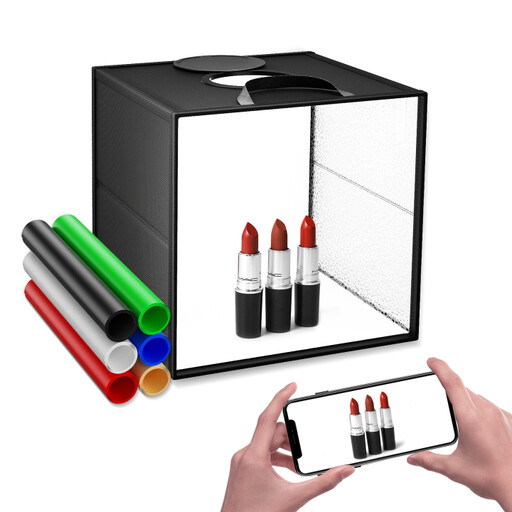
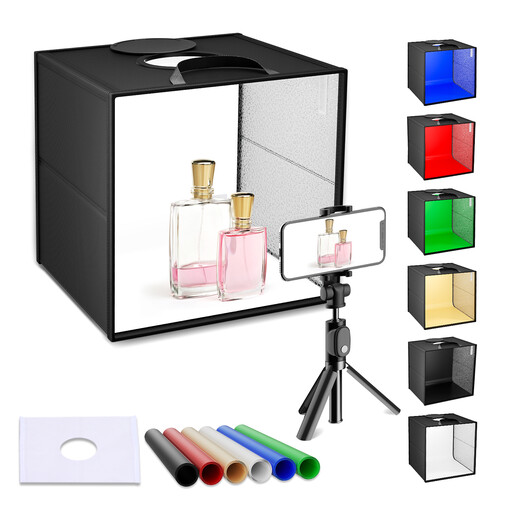
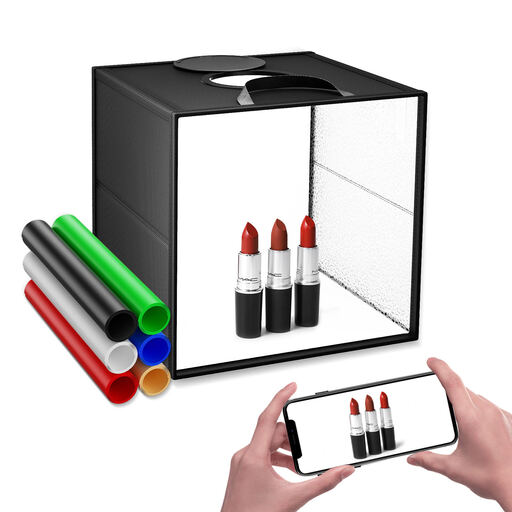
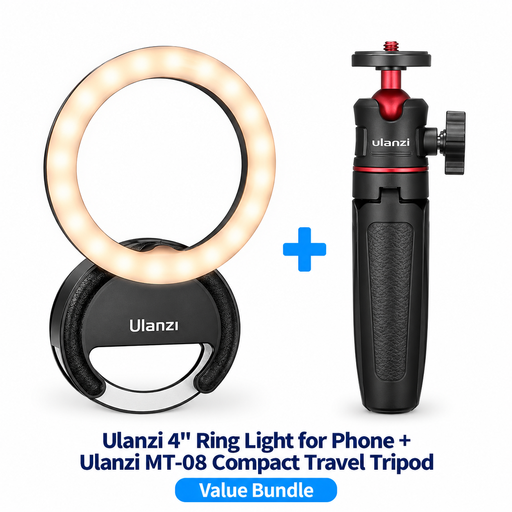
The products below are mainly small photo boxes with built-in lighting, along with a compact ring light. The ring light isn’t a softbox modifier.
 No image available
For small figures when table space is limited; described as a foldable mini photo studio.
Oxford fabric; six coloured backdrops; dimmable lighting; openings for front and overhead shots.
 No image available
For small product shots with different backdrops and adjustable lighting.
Six backdrops; three colour temperatures; nine brightness levels; openings for front and overhead shots.
 No image available
For figures that fit inside a compact photo box; this model is described as foldable and supplied with a carry bag.
120 dimmable LEDs; three colour temperature modes; six backdrops; diffusion fabrics; openings for front and overhead shots.
The even, low-shadow lighting may show less defined shadows that emphasise the figure’s shape.
 No image available
For compact tabletop shots when a small ring light is an option instead of a softbox or photo box.
Colour temperature from 3000K to 7000K; five brightness levels; mini tripod with adjustable ball head and 1/4-inch screw mount.
This is a ring light, not a softbox modifier.
Keep the light source as consistent as possible between shots and adjust the white balance to suit the light you’re using. Canon Europe explains that different lighting conditions affect white balance; with RAW images, you can adjust it afterwards.
The Godox, Rollei and Aputure modifiers mentioned here need a separate compatible light source. Check the fitting on the specific model and what’s included; by contrast, NEEWER’s LP40 light tent comes with LEDs.
Start with a simple background and keep the framing consistent. Then adjust the direction of the diffused light until the stitches and outline are clear, without the shadow distracting from the subject. A light tent may also work for shots with as few shadows as possible.
The E26 specification alone doesn’t confirm whether a particular kit is suitable for its intended use. NEEWER specifies this fitting for the SF40 and NK103; check the fitting, power supply and what’s included with the actual kit on offer.
Check the labelling and electrical specifications for the specific product. The EU explains that CE marking is required only for product groups covered by relevant harmonised legislation; some electrical and electronic equipment falls into this category. When carrying out market surveillance checks, the German Federal Network Agency looks at factors including labelling, manufacturer details and German-language instructions. This general guidance does not confirm that any individual listing is compliant.