
Lieferung heute & morgen

Qualitätsgarantie

Willkommens-Angebote freischalten: KOSTENLOSE Lieferung | Bis zu 80 % RABATT | Kostenlose 30-Tage-JoyPlus-Testphase
App herunterladen
Lightweight cushioned trail running shoes have to meet several demands at once: they need to roll comfortably on tarmac, provide grip on forest paths, and offer the right support on longer runs. Fancy terms like "maximum cushioning" or "all-terrain" don't automatically lead to the right purchase decision. What really matters is the specific sole construction, the upper material, and the fit.
A highly compressible midsole can feel comfortable on flat ground. On uneven trails, however, a shoe that is too soft can compromise stability. So don't just look at the cushioning rating – also pay attention to the heel construction and lateral support.
With the Li-Ning YUEYING 6, for example, a full-length Tempo-Bounce midsole is combined with a heel that is 2 mm wider and PROBAR-LOC support. These details describe the construction, but they are not a medical guarantee of effectiveness.
According to manufacturers, breathable running shoes with an open mesh can wick away heat and moisture more quickly. At the same time, a very thin fabric offers less protection against branches, scree and abrasion. For simple forest paths, a breathable mesh may be sufficient; on rocky terrain, additional reinforcement is a good idea.
The term "non-slip" shouldn't be taken as a guarantee for every surface. Instead, check the sole material, the tread pattern, and the intended use. Wet roots, mud, loose sand and smooth tarmac all present different challenges. A profiled rubber outsole can aid grip, but it doesn't replace proper running technique in difficult conditions.
With running shoes featuring EVA cushioning, the material composition of the midsole is an important indicator. EVA foam is widely used because it combines a relatively low weight with a springy construction. The actual effect depends on density, structure, shoe geometry and your personal running style.
For shoes for road and trail, a balanced ratio between cushioning and ground feel is practical. If you mostly run on tarmac and only occasionally switch to surfaced forest paths, you usually don't need an overly aggressive tread. For mountainous routes with stones or loose ground, a grippier outsole is more relevant.
A suitable outsole should match the terrain. Look out for:
According to product information, the PELLIOT models use a ROCKYTEC rubber sole. For selected variants, Vibram Megagrip is also mentioned. Since this feature doesn't automatically apply to every version, check the specific product variant before you buy.
Enough toe room prevents your toes from hitting the front when running downhill. Running shoes with a wide toe box can be more suitable for runners with a wider forefoot or for thicker sports socks. However, a wide fit shouldn't cause your heel to slip.
Check the size chart using your foot length in millimetres. According to product information, the Li-Ning YUEYING 6 is described as true to size; for wider feet or if you want more room in the toe area, going up half a size is recommended. The PELLIOT models are available in standard and, in some cases, a narrower fit.
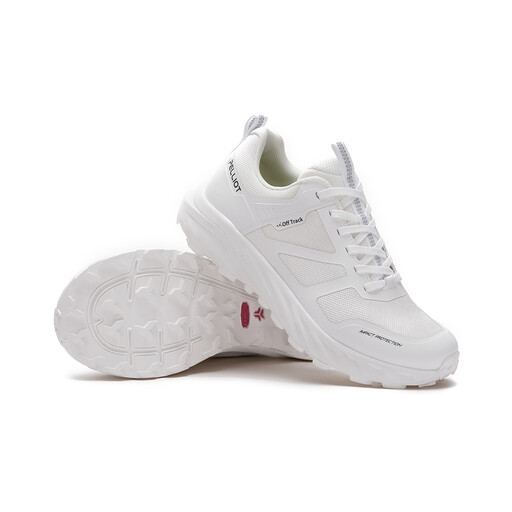
Why this product fits the profile: This unisex running shoe combines a lightweight mesh and fabric upper with an EVA midsole. It's suitable for switching between city paths, surfaced forest paths and moderate all-terrain routes.
The product details mention both the breathable upper and the EVA midsole used. This allows you to make your choice based on concrete features rather than just general marketing terms.
Sandwich mesh and highly elastic EVA foam; ROCKYTEC rubber outsole according to the product description.
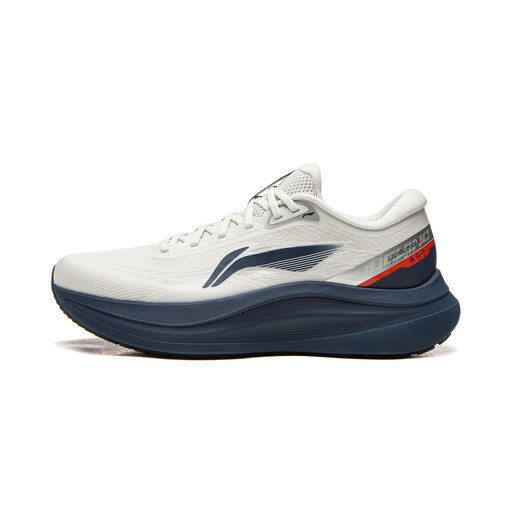
Why this product fits the profile: The construction is aimed at users who value a defined fit, heel hold and full-length cushioning. The stated wide toe box can offer extra room if your foot shape suits it.
The widened heel and HEEL LOC+TUFF RB heel counter address the common uncertainty about heel hold. The rubber outsole is profiled in zones.
Full-length Tempo-Bounce midsole; PROBAR LOC and textile upper construction with padding on the tongue and collar.

Why this product fits the profile: For frequent switching between roads, forest paths and more demanding nature trails, this model offers an upper with mesh and fabric, plus a profiled ROCKYTEC outsole.
The product description distinguishes between standard and narrow fit. In addition, the outsole is explicitly stated for wet rocks, mud and loose sand; the specific version should be checked before purchase.
Highly elastic EVA midsole; abrasion-resistant upper and ROCKYTEC rubber according to product details.
The lifespan depends on body weight, running volume, terrain, weather and storage. A shoe used mostly on tarmac wears differently from one used on rocky mountain paths. Check regularly for:
Mesh shoes should be cleaned with a damp cloth or by hand washing with mild soap. Dry them at room temperature and not on a radiator or in direct, intense sunlight. The manufacturer's specific care instructions take precedence.
We've put together a full, regularly updated list of products that fully meet these strict selection criteria and the safety regulations in force in the EU.
Models with a moderate tread and a larger contact area can be suitable for mixed routes of tarmac, gravel and surfaced forest paths. If you mostly run on hard ground, avoid an unnecessarily aggressive tread, as this can affect the rolling motion.
There should be a small amount of movement space between your longest toe and the end of the shoe. This is especially important for mountain runs and descents. Measure both feet in the afternoon and compare the result with the size chart for the specific model.
It's not possible to give a reliable mileage figure for every pair. Frequent runs on gravel, rocks or wet paths increase the strain. What matters is visible tread wear, deformed cushioning and reduced stability. These signs are more meaningful than a general usage period.