
Lieferung heute & morgen

Qualitätsgarantie

Willkommens-Angebote freischalten: KOSTENLOSE Lieferung | Bis zu 80 % RABATT | Kostenlose 30-Tage-JoyPlus-Testphase
App herunterladen
Lightweight running shoes should make running feel comfortable without unnecessary compromises in cushioning, support or traction. In practice, however, searching for the right pair can quickly lead to disappointing purchases: an especially low weight says little about stability, a breathable upper cannot compensate for an unsuitable foot shape, and soft foam will not automatically suit every running style.
As a Joybuy Product Recommendation Officer, I filter the most important product details according to clear, verifiable criteria. This makes it easier to assess whether a model is suitable as a training running shoe, marathon running shoe, racing running shoe or trail running shoe.
A lightweight shoe can feel comfortable during everyday training. However, the key question is what construction lies beneath the surface. A very thin midsole may provide less cushioning, while a wider chassis or stabilising plate can add weight but offer more support. So do not compare gram figures alone. Also look at the midsole construction, heel hold and outsole tread.
Claims such as “more energy return” or “improved traction” can only be assessed properly when the reference point and testing conditions are clearly stated. Product-description figures should therefore be understood as manufacturer specifications, not universally applicable proof of performance. According to the manufacturer, the LI-NING RED HARE 9 PRO features a two-layer BOOM midsole and a widened platform, for example. This describes the construction, but does not guarantee individual running performance.
Running shoes that are too tight can cause pressure points, while models that are too wide may slip around the midfoot. Men’s running shoes in particular can vary in last width, toe-box shape and heel profile. Measure your foot length in the afternoon where possible, and allow for your running socks. There should be a little room for movement between your toes and the front of the shoe, without your foot sliding forwards.
A cushioned running-shoe construction generally consists of a foam midsole made from EVA, PEBA or a brand-specific material. Soft cushioning can feel comfortable during long, easy runs, while firmer foams often provide a more direct connection with the ground. For marathon and fast-paced runs, the rocker geometry and energy return are also relevant.
According to the manufacturer, the LI-NING FEI DIAN 6 ELITE features a SUPER BOOM CAPSULE midsole, a T1000 carbon-fibre plate and a stated energy return of 95 per cent. These figures come from the product description and should be treated as technical manufacturer specifications. A carbon-fibre plate can alter the roll-through of the shoe and is not suitable for every beginner runner.
Stable running shoes do not have to be heavy. More important factors include a sufficiently wide base, secure midfoot hold and controlled torsion. According to the manufacturer, the RED HARE 9 PRO features a widened platform and a TPU plate in the midfoot. Its wider last provides more room around the forefoot and heel. People with narrow feet should pay particular attention to the fit and check the size guide.
A neutral running style does not necessarily require additional stability features. However, if the shoe shifts sideways during fitting or the heel area feels noticeably loose, choose a model with better hold or a different last shape.
Breathable running shoes often use mesh, woven textiles or sandwich materials. These can improve airflow, but they are not automatically waterproof. For road running, a flexible upper is usually sufficient. For trail running, abrasion resistance, protection from branches and a durable tread are also important.
The outsole should suit the surface:

Why this product suits this profile: This model is designed for running on roads, paved paths and routes that transition into off-road terrain. The standard fit suits a wide range of foot shapes; according to the product details, a slim version is also available.
The product description specifies materials such as sandwich mesh, an EVA midsole and ROCKYTEC rubber, rather than simply using the word “lightweight”.
Breathable upper, highly elastic EVA midsole and lugged outsole for a variety of surfaces.
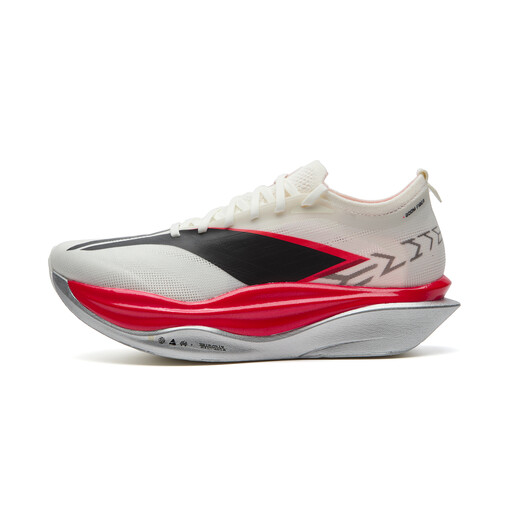
Why this product suits this profile: This racing shoe is aimed at people looking for a race-focused fit and dynamic roll-through during marathons or fast road runs.
The construction lists the midsole, carbon-fibre plate, upper and outsole separately. This makes it easier to distinguish the model from general claims of high speed.
SUPER BOOM CAPSULE, T1000 carbon-fibre plate and GCU outsole according to the manufacturer; race-focused fit.
Why this product suits this profile: This model is designed for transitions from road to trail and for different surfaces. It is suitable for runners who do not want to switch between two shoe categories.
The ROCKYTEC rubber outsole and abrasion-resistant upper address specific off-road requirements instead of simply claiming to be suitable for every use.
Sandwich mesh, highly elastic EVA midsole and lugged outsole; according to the product details, available in standard and slim fits.
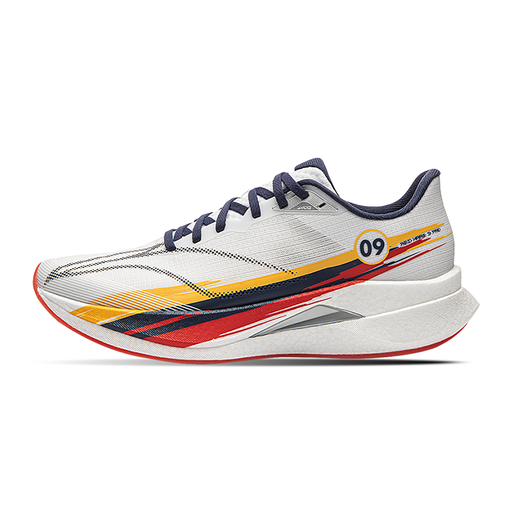
Why this product suits this profile: According to the product description, this shoe combines a widened platform with a lightweight construction, making it suitable for daily runs, longer distances and controlled fast-paced runs.
The specifications list the last width, TPU plate, midsole, upper and rubber compound. This makes it easier to assess the level of support and intended use.
Two-layer BOOM midsole, BOOM-FIBER upper and GCR outsole; according to the manufacturer, with a widened platform.
We have put together a complete, regularly updated list of products that fully meet these strict selection criteria and the safety regulations applicable in the EU.
Durability depends on body weight, running surface, training volume, running technique and materials. A fixed mileage figure is therefore not a reliable guide for every model. Check regularly:
Clean running shoes with a damp cloth or – depending on the product instructions – mild soap and cold water. Dry them at room temperature rather than on a radiator. Direct heat can damage adhesives, foam and textiles. If you train frequently, you can alternate between two pairs so that the materials have time to dry completely between runs.
It depends on the fit, cushioning, stability and your personal familiarity with the shoe. Marathon running shoes with a carbon- or glass-fibre plate should be tested over several training runs before race day. For many runners, a well-fitting training running shoe is the more dependable choice if they have not yet used highly dynamic racing models.
This depends on the running distance, surface, pace and your personal comfort preferences. A more highly cushioned construction can be useful for long road runs. For short, fast-paced runs, many runners prefer a more direct feel. The key is that your foot feels secure and the midsole does not become unpleasantly soft or unstable after just a few minutes.
Replace your pair when the tread, midsole or upper has noticeably deteriorated and the fit is no longer reliable. Age alone is not the deciding factor. Regular visual checks and how the shoes feel when you run provide better everyday guidance than an arbitrary mileage limit.