
Lieferung heute & morgen

Qualitätsgarantie

Willkommens-Angebote freischalten: KOSTENLOSE Lieferung | Bis zu 80 % RABATT | Kostenlose 30-Tage-JoyPlus-Testphase
App herunterladen
As a Joybuy Product Recommendation Officer, I analyse product information daily to provide you with objective and practical advice. When searching for a lightweight wireless gaming mouse, it's easy to get lost in a jungle of marketing terms and technical data. Many promises lead to disappointment and unnecessary expense. This guide focuses on the crucial facts to help you make an informed decision.
Before we turn to the important specifications, let's look at the three most common marketing traps that often lead to a poor purchase.
To find a mouse that excels in competitive use, you should focus on three core aspects instead of pure marketing numbers.
An ultra-lightweight gaming mouse should not achieve its weight reduction at the expense of durability. Modern models weighing under 60 grams use advanced materials like thin-walled plastic or carbon fibre and an optimised internal structure to achieve a low weight with a closed, stable shell. A solid body reliably protects the electronics and often offers a more pleasant tactile feel without the disadvantages of a perforated shell.
The sensor is the heart of any gaming mouse. Instead of just looking at the maximum DPI value, it makes more sense to rely on proven sensor models. The PAW3395 sensor, for example, is well-established in the esports scene and known for its precision, low error rate, and reliable tracking. It offers a high tracking speed (IPS) and high maximum acceleration (G), which are crucial for fast, reactive movements in games. A mouse with such a sensor delivers consistently high performance even at lower DPI settings.
For a wireless esports gaming mouse, a stable, low-latency connection is essential. 2.4 GHz wireless technology is the standard here and is superior to the Bluetooth protocol in terms of speed and stability. The polling rate indicates how often the mouse reports its position to the computer. 1000 Hz is a solid standard, while 4000 Hz or 8000 Hz can offer a noticeable advantage for players with very high refresh rate monitors (240 Hz and above). At the same time, shape is crucial. An ergonomic mouse that fits well in your hand and suits your grip style (Palm, Claw, or Fingertip Grip) is the foundation for hours of comfortable gaming.
Here are some models tailored to specific user profiles that avoid the pitfalls mentioned.
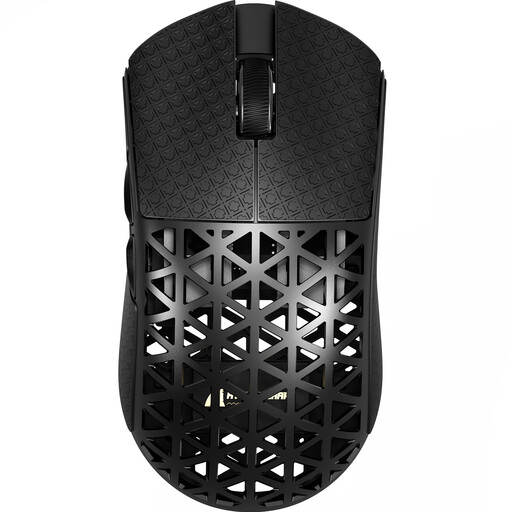
Why it's a match: This model is aimed at gamers who make no compromises. The extremely low weight is achieved through a carbon fibre construction, not holes. The combination of a PAW3950 sensor and an 8K polling rate provides the technical foundation for top-tier performance.
It achieves its ultra-light weight of approx. 42g with a solid shell made of advanced material, thus bypassing the stability and dirt issues of perforated designs.
Offers a wireless 8000 Hz polling rate for minimal latency, combined with a high-end sensor for maximum precision.
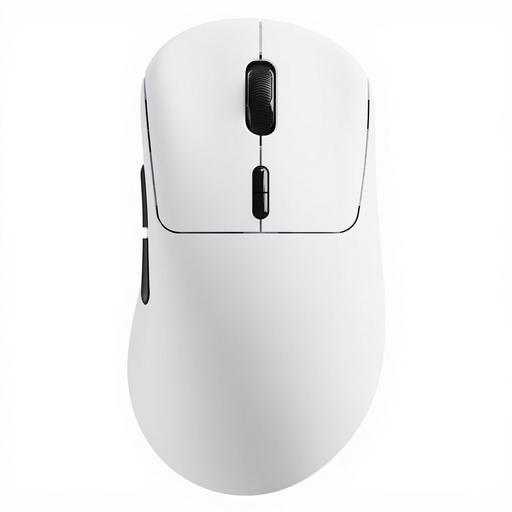
Why it's a match: For gamers who value long, uninterrupted use without constantly thinking about recharging. It combines a low weight of 53g with an exceptionally long battery life and a comfortable, ergonomic shape for right-handers.
Instead of focusing solely on a high polling rate that drains the battery quickly, this model offers enormous battery life at the 1000 Hz setting, which is sufficient for most gamers.
According to the manufacturer, it offers a long battery life of up to 750 hours (at 1000 Hz). The asymmetrical, ergonomic design is optimised for long gaming sessions.
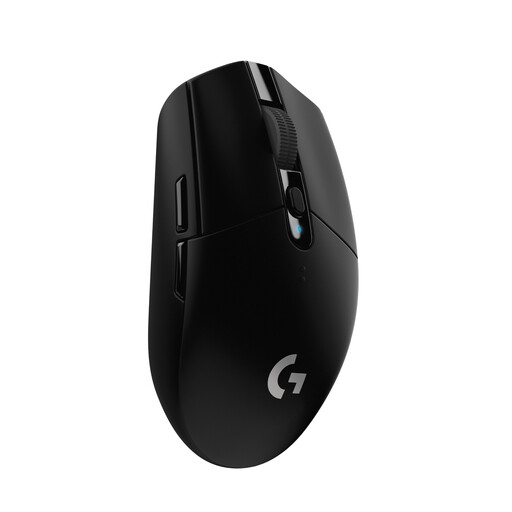
Why it's a match: The G305 is a proven choice for anyone seeking reliable wireless gaming performance without the premium price tag of esports-grade specifications. It provides a solid foundation for competitive play with technology that has been proven over years.
It forgoes the race for the highest DPI and polling rate numbers, focusing instead on the essentials: a lag-free connection (LIGHTSPEED) and a precise sensor (HERO).
Offers highly reliable wireless performance and a long battery life of 250 hours on a single AA battery, making it a practical and cost-effective option.
We have compiled a complete, up-to-date list of products that fully meet these strict selection criteria and German safety regulations.
For the majority of gamers, a 1000 Hz polling rate is perfectly sufficient and already provides a very responsive experience. An 8K Polling Rate can offer a minimal, yet potentially decisive, advantage in reducing input lag for professional esports athletes using monitors with extremely high refresh rates (e.g., 240 Hz or 360 Hz). However, be aware that this high polling rate requires more processing power from your CPU and can significantly shorten battery life.
Battery life varies greatly depending on the model and usage. Ultra-lightweight mice often have smaller batteries to save weight and may offer 40 to 70 hours of playtime. Other models focus on long battery life and can last several hundred hours on a single charge, especially if the polling rate is set to 1000 Hz and RGB lighting is disabled. Some products come with a convenient gaming mouse with a charging dock, which simplifies recharging between sessions.
An ergonomic mouse is typically asymmetrically shaped to conform to the natural posture of a right or left hand. This shape is particularly well-suited for the "Palm Grip," where the entire hand rests on the mouse, and the "Claw Grip." Players with a "Fingertip Grip" often prefer symmetrical mice, as they offer more flexibility for fine adjustments with the fingers. The choice ultimately depends on hand size and personal preference.