
Lieferung heute & morgen

Qualitätsgarantie

Willkommens-Angebote freischalten: KOSTENLOSE Lieferung | Bis zu 80 % RABATT | Kostenlose 30-Tage-JoyPlus-Testphase
App herunterladen
For competitive gamers, choosing the right mouse isn't an afterthought—it's a critical factor that can decide victory or defeat. However, the market for a lightweight wireless gaming mouse is saturated with marketing promises and technical specs that often confuse more than they clarify. Many players invest in equipment that fails to improve their performance and may even hinder it through unnoticed flaws.
This guide is designed to provide clarity. We'll highlight the most common purchasing pitfalls and reveal which technical features truly matter, enabling you to make an informed decision that will noticeably improve your performance in games like CS2, Valorant, or Apex Legends.
Before we dive into recommendations, it's crucial to recognise the common marketing traps that often lead to bad purchases.
To make a well-informed choice, you should focus on the following three core aspects. These parameters determine the actual performance and comfort of your future wireless gaming mouse.
For fast-paced shooter games, a low weight of under 70 grams is a clear advantage. It allows for quicker reactions, more precise flick shots, and reduces wrist fatigue during long sessions. The shape is equally important. An ergonomic gaming mouse is specifically shaped for right-handed users, offering high comfort for palm and claw grip users. Symmetrical mice, on the other hand, are suitable for both left- and right-handed users as well as for the fingertip grip, as they offer more flexibility in handling.
A high-quality optical sensor is the heart of every professional gaming mouse. Look for flawless tracking without smoothing, filtering, or acceleration at the DPI levels relevant to you. The polling rate, measured in Hertz (Hz), indicates how often the mouse reports its position to the computer.
Modern wireless mice are on par with their wired counterparts in terms of latency, provided they use a stable 2.4 GHz wireless connection. Bluetooth is practical for office tasks but is unsuitable for competitive gaming. A long battery life ensures you don't run out of power in the heat of battle. Models with a gaming mouse with a charging dock offer added convenience, as the mouse can be easily and stylishly recharged after each session.
Based on the criteria above, we have identified several models that are particularly well-suited for different needs and playstyles.
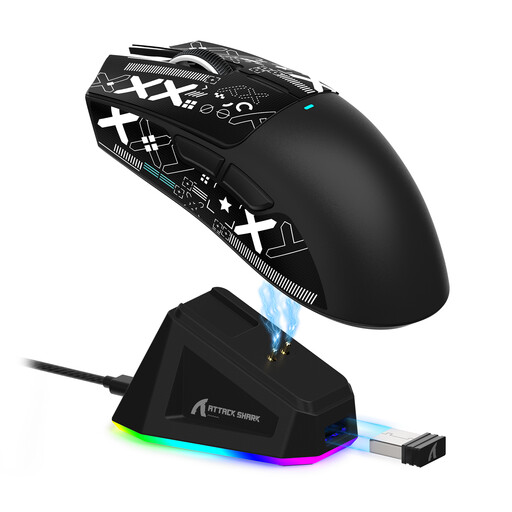
Why This Fits Their Persona: This model is ideal for ambitious gamers seeking high performance without the premium price tag. It combines a very low weight with a solid sensor and the convenience of a charging dock—a package rarely found in this price range.
It sidesteps the DPI myth by focusing on a proven PAW3311 sensor that delivers reliable performance at practical DPI levels, rather than advertising uselessly high maximum values.
Weight: 59 g. Connectivity: Tri-Mode (2.4G, BT, USB-C). Special Feature: Includes charging dock for high convenience.
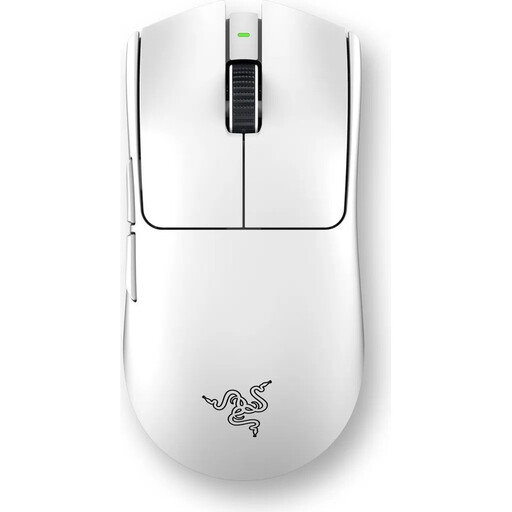
Why This Fits Their Persona: For players where every millisecond counts. This mouse was developed in collaboration with esports pros and is engineered for maximum performance. The extremely low weight and 8000 Hz polling rate provide a measurable advantage at the highest level of play.
It avoids the weight trap by achieving an ultra-light 54g in a solid, closed-shell body that ensures stability and longevity, rather than relying on a fragile perforated design.
Weight: 54 g. Polling Rate: True 8000 Hz wireless. Sensor: Focus Pro 35K Gen-2 for ultimate precision.
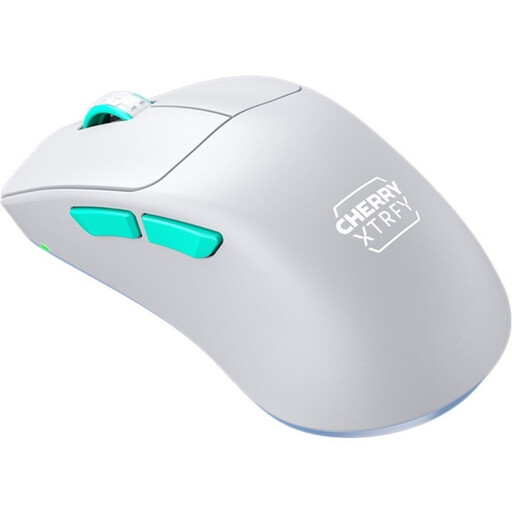
Why This Fits Their Persona: Perfect for gamers who play for hours and prioritise comfort and hand health. The unique ergonomic shape with a very low front allows for a more natural hand posture and improved control, which prevents fatigue.
It debunks the sensor illusion by integrating a top-tier sensor (Pixart 3395) into a thoughtfully engineered, ergonomic design where the shape optimally supports the sensor's performance, rather than just relying on the component itself.
Weight: 53 g. Design: Unique ergonomic shape with a low front for enhanced control. Battery Life: Up to 75 hours.
We have compiled a complete, real-time updated list of products that fully meet these strict selection criteria and rigorous safety standards.
An 8000 Hz polling rate sends eight times more data per second than the 1000 Hz standard. This results in minimally lower latency and smoother cursor movements. The advantage is most noticeable for professional players using monitors with very high refresh rates (e.g., 240 Hz or 360 Hz). For most casual gamers, the difference from 1000 Hz is marginal, while the higher rate also consumes more CPU resources.
The choice depends on your hand, grip style, and personal preference:
Long battery life is a major convenience factor. Modern, lightweight gaming mice often provide 70 hours or more per charge, which is sufficient for several days of intense gaming. Models with a charging dock simplify the process further, as the mouse is simply placed on it to charge after each use. Conversely, a short battery life can lead to frustrating interruptions if the mouse dies in the middle of an important match.