
Lieferung heute & morgen

Qualitätsgarantie

Willkommens-Angebote freischalten: KOSTENLOSE Lieferung | Bis zu 80 % RABATT | Kostenlose 30-Tage-JoyPlus-Testphase
App herunterladen
For competitive players and esports enthusiasts, every millisecond and every movement counts. An imprecise or heavy mouse can mean the difference between victory and defeat. However, the search for the right lightweight wireless gaming mouse is often clouded by marketing promises and a flood of technical specs.
This article serves as a guide. We'll highlight the crucial technical features that matter in a pro gaming mouse and present a selection of current models that are suitable for demanding users based on their specifications.
Before we look at specific models, it's helpful to understand the most important criteria. These three aspects are crucial for in-game performance.
An ultralight gaming mouse (typically under 65 grams) reduces inertia and allows for faster, more precise movements. This not only reduces strain on your wrist during long sessions but also enables finer aim corrections. At the same time, the shape is critical. An ergonomic gaming mouse that fits your grip style (Palm, Claw, or Fingertip Grip) ensures comfort and control. Pay attention to the dimensions and shape to find a model that fits securely in your hand.
The sensor is the heart of any gaming mouse. Modern optical sensors offer high DPI (Dots Per Inch) values, high tracking speed (IPS), and can handle strong acceleration (G) without tracking loss. A particularly relevant feature for esports is the polling rate, measured in Hertz (Hz). An 8K gaming mouse (8000 Hz) sends its position data to the computer 8,000 times per second. The result is a visibly smoother cursor movement and minimized input lag compared to the 1000 Hz standard.
Concerns about latency in a wireless gaming mouse are largely unfounded today. Modern 2.4 GHz wireless technologies provide a stable and extremely fast connection that is on par with wired mice. While Bluetooth is an option, it is less suitable for competitive gaming due to higher latency. A gaming mouse with long battery life is also an important factor for ensuring uninterrupted gaming sessions. Many models today offer 70 hours or more and can continue to be used via cable while charging.
Here is a selection of models that are interesting for demanding gamers due to their technical specifications. The selection is based on objective product features like weight, sensor technology, and connectivity.
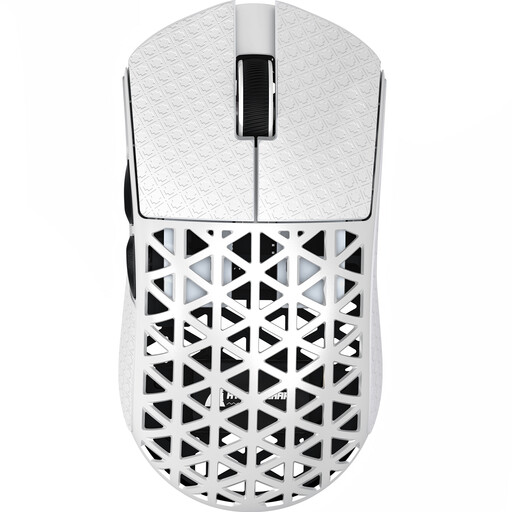
What makes it stand out: The ATTACK SHARK R5 Ultra sets a new standard in lightweight construction with its injection-molded carbon fiber composite shell. Weighing only approx. 42 grams, it's one of the lightest models on the market. Paired with a wireless 8000 Hz polling rate, it aims for maximum speed and responsiveness.
Advantages:
Who it's for: Players for whom every gram counts and who need the maximum polling rate for the fastest-paced FPS and MOBA games.
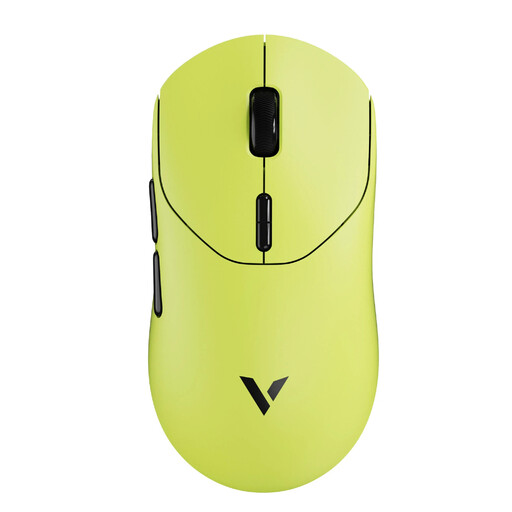
What makes it stand out: The RAPOO VT2 combines a very low weight of 53 grams with an exceptionally long battery life. According to the manufacturer, up to 750 hours are possible in power-saving mode at 1000 Hz. At the same time, it offers a native wireless 8K polling rate and a precise PAW3398 sensor.
Advantages:
Who it's for: Users who want a lightweight, high-performance mouse but don't want to constantly think about charging.
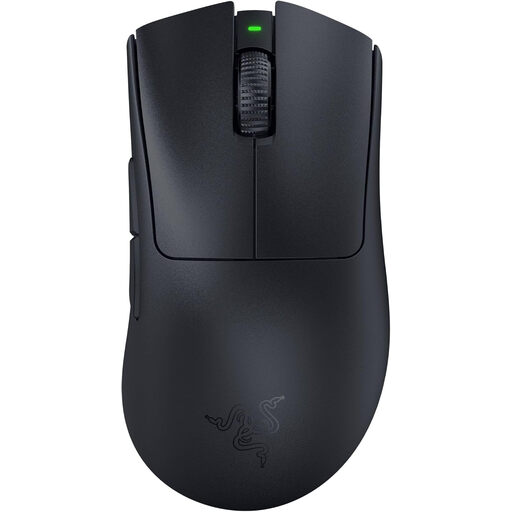
What makes it stand out: The DeathAdder series is renowned for its ergonomic shape. The V3 Pro continues this tradition in an ultralight version at just 63 grams. It is equipped with Razer's Focus Pro 30K sensor and 3rd generation optical switches, designed to ensure high precision and a long lifespan.
Advantages:
Who it's for: Gamers who place the highest value on a proven ergonomic shape for right-handers and are looking for mature, all-around performance.
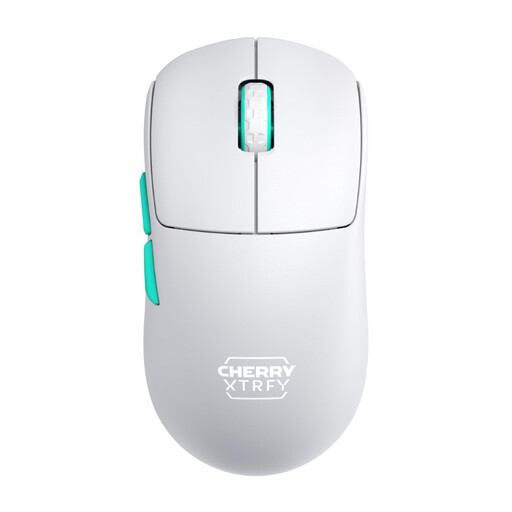
What makes it stand out: The CHERRY XTRFY M68 offers a unique symmetrical shape with a very low front. This design allows you to position your fingers closer to the mousepad, which can improve control and precision. At 53 grams, it is also extremely light and designed for esports use.
Advantages:
Who it's for: Gamers who prefer a symmetrical, very light mouse with a special form factor designed for control.
The models presented here focus on low weight and high performance. If you're looking for a mouse with specific features, such as extra side buttons for MMOs or a different shape, you can find more options in our category.
? Discover our full range of wireless gaming mice with side buttons
1. Is a wireless gaming mouse really as fast as a wired one? Yes. Modern 2.4 GHz wireless technologies, like those used in the featured models, offer latency times that are identical to or indistinguishable from high-quality wired mice. They are fully suitable for professional esports use.
2. What does an 8K polling rate mean for a gaming mouse? A polling rate of 8000 Hz (8K) indicates that the mouse reports its position to the computer 8,000 times per second. Compared to the standard 1000 Hz, this results in significantly smoother cursor movement on the screen and minimal delay between your hand movement and the in-game response.
3. How important is the weight of a gaming mouse? For competitive players, especially in fast-paced genres like First-Person Shooters (FPS), an ultralight gaming mouse is a significant advantage. A lower weight allows for faster reactions, more precise aim corrections ("flick shots"), and reduces hand and wrist fatigue during long gaming sessions.