
Lieferung heute & morgen

Qualitätsgarantie

Willkommens-Angebote freischalten: KOSTENLOSE Lieferung | Bis zu 80 % RABATT | Kostenlose 30-Tage-JoyPlus-Testphase
App herunterladen
A glass set can seem easy to compare at first glance: the number of glasses, capacity and design are all straightforward to check. In practice, though, unclear material information, unsuitable temperature ranges and incorrect care instructions can often lead to disappointing purchases. So whether you’re choosing glasses for your home, a restaurant or a celebration, don’t focus on looks alone.
A glass with a capacity of 400 ml isn’t necessarily intended to hold 400 ml of drink. With long drinks, ice cubes or cocktails, you need to leave room for other ingredients and a safe fill level. For water and juice, 250 to 310 ml is often enough, while highball glasses with a capacity of 390 to 540 ml offer more room for ice, mixed drinks and garnishes.
Not every drinking glass is heat-resistant. Traditional soda-lime glass can crack if exposed to a sudden change in temperature. A dessert glass designed for cold dishes shouldn’t be filled with boiling water. The manufacturer’s specific instructions also apply to double-walled glasses. So check whether the glass is suitable for hot drinks, cold drinks only, or both.
With dishwasher-safe glasses, harsh detergents, high temperatures or an unsuitable wash cycle can gradually affect the surface. Coloured glasses and delicate decorations often need more careful handling. If a set is specifically labelled as not dishwasher-safe, you should factor hand-washing into your decision.
Borosilicate glass is often used for double-walled glasses and, according to product descriptions, is suitable for hot and cold drinks. Even so, sudden temperature changes should be avoided. Depending on the model, traditional glass may be better suited to cold drinks, water, juice or desserts.
For glasses intended for food contact, it’s also helpful to look for clear information about the material. One example is lead-free soda-lime glass. The Fleur de Rose Ice Cream Cup is stated to comply with EU Regulation (EC) No 1935/2004 on materials intended to come into contact with food. According to the product details, it is designed for cold foods at temperatures from 0 to 60 °C and is not suitable for hot liquids.
Also consider the base, rim thickness and height. Tall glasses need more space in your cupboard and dishwasher. Slim shapes can look more elegant, but may not be as comfortable to hold as low tumblers when used frequently at home or in a restaurant.
A 6-piece glass set is a practical choice for families, house shares and regular hosts. A 4-piece glass set may be enough for smaller households or as an addition to your existing tableware. For bars, cafés and restaurants, it’s also worth considering whether you can buy replacements, whether the glasses have a consistent shape and how easy they are to clean.
Look for clear statements such as “dishwasher-safe” or “not dishwasher-safe”. Hand-washing is often gentler on coloured and decorated surfaces, even if a gentle dishwasher cycle is permitted.
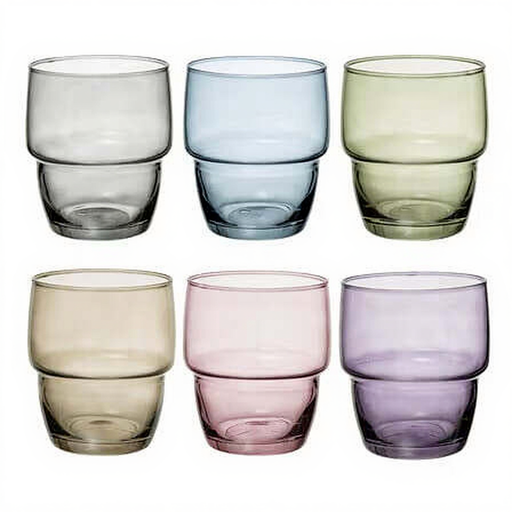
Why this product suits this profile: This 6-piece set includes six clear, low glasses, each with a capacity of 28 cl, for everyday use with water, juice and cold mixed drinks.
The clear information on the number of glasses and their 28 cl capacity makes it easier to plan, without having to buy an oversized long drink glass.
6 glasses, each with a capacity of 28 cl; stated as dishwasher-safe in the product description.
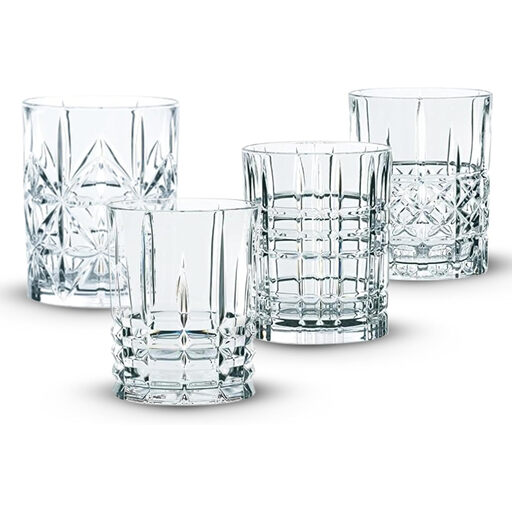
Why this product suits this profile: This 4-piece set of clear crystal glasses is for buyers who want to combine a clean look with clearly specified care instructions.
The description clearly specifies the material, number of glasses and dishwasher suitability, rather than relying on a vague claim about quality.
4 clear crystal tumblers; stated as dishwasher-safe in the product description.
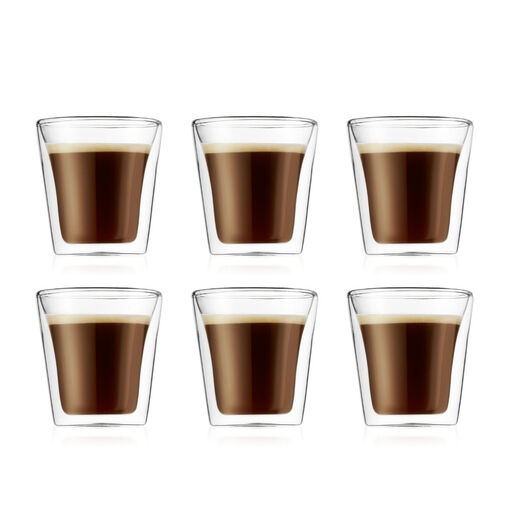
Why this product suits this profile: These small, double-walled glasses have a capacity of 100 ml, making them suitable for espresso, liqueur, whisky or small dessert portions.
The small capacity means you won’t end up choosing a large water glass for concentrated servings or smaller drinks.
6 double-walled glasses made from heat-resistant borosilicate glass, according to the product description; 0.1 l per glass.
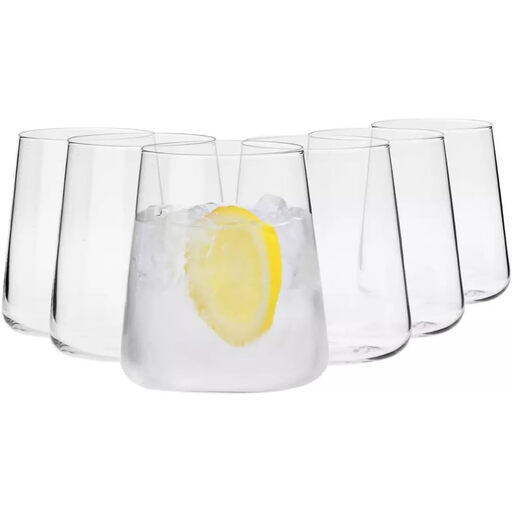
Why this product suits this profile: These six tall, clear glasses have a capacity of 430 ml, with room for water, juice, cocktails, ice cubes and decorative dessert layers.
The stated capacity shows there’s enough room for ice and mixed drinks, without suggesting the set is suitable for every type of drink.
6 clear highball glasses with a capacity of 430 ml; designed for water, juices, cocktails and cold desserts.
For desserts, shape and opening size matter more than having a particularly large capacity. A deep ice cream glass helps reduce the chance of ice cream or pieces of fruit falling out when served. The Fleur de Rose Ice Cream Cup has a capacity of 25 cl, a deep bowl and, according to the product description, is designed for ice cream, pudding, fruit salad and other cold foods. Make sure you stay within the temperature range of 0 to 60 °C.
For small layered desserts or aperitif portions, a low verrine glass with a capacity of around 27 cl may be a better choice. Before buying, check whether its stackability, dishwasher suitability and rim shape suit the way you plan to use it.
We’ve put together a complete, regularly updated list of products that meet these strict selection criteria and fully comply with the safety regulations in force in the EU.
Glasses with a capacity of 250 to 310 ml are often practical for water, juice and soft drinks. If you’d also like to serve ice, lemon slices or larger drinks, you could choose a highball glass with a capacity of around 390 to 430 ml.
It depends on the material and the manufacturer’s instructions. Borosilicate glass is often used for hot and cold drinks. Even so, don’t pour boiling liquids into a glass unless it’s specifically stated to be suitable. Sudden temperature changes can still cause breakage.
Its lifespan depends on the thickness of the glass, how it’s used, how it’s cleaned and how it’s stored. Knocks, scratches and sudden temperature changes can damage any glass. Don’t continue using glasses that are cracked or chipped. For long-lasting use, look for clear care instructions, store your glasses appropriately and choose a set with the right number of pieces for your needs.